Short Answer
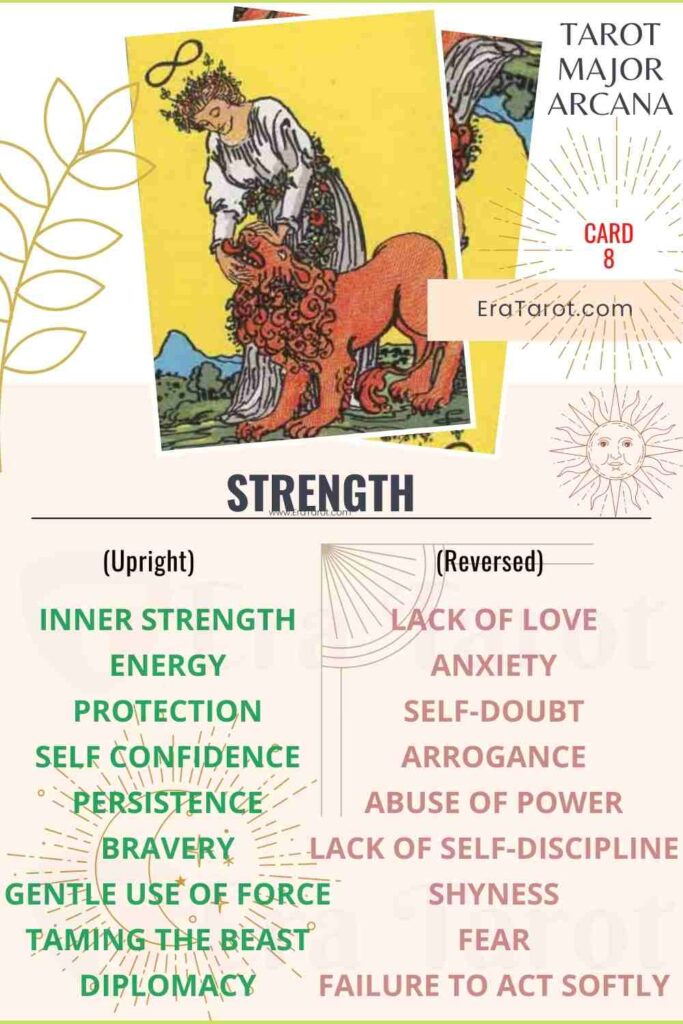
The 8th Tarot card, known as Strength, resonates profoundly within the realm of Christian symbolism, encapsulating themes of inner fortitude, divine power, and the moral imperative toward compassion. This card, adorned with a striking illustration often depicting a lion and a woman, serves as a poignant reminder of the interplay between gentleness and authority, echoing the teachings of Christ on humility and the transformative power of love.
Within the immediate context of the Tarot, Strength encompasses more than mere physical prowess; it embodies emotional resilience and spiritual fortitude. In Christianity, these traits are exalted through scriptural narratives demonstrating that true strength is intrinsically linked to one’s faith and convictions. This card’s representation encourages believers to muster their inner courage, much like David confronted Goliath, wielding not sword, but unshakeable faith and trust in God’s providence.
Metaphorically, the lion represents the tenacity of one’s spirit, ferocious yet instilled with a gentle heart. In Christian theology, the lion can be likened to Christ himself, referred to as the Lion of Judah, who embodies both strength and majesty. The woman, often depicted in serene control over the lion, signifies the harmony between power and grace, a lesson in wielding authority with responsibility and love.
At first glance, one might perceive the bond between the lion and the maiden as simply a tale of domination. However, within the Christian framework, it reveals a deeper narrative: that true strength manifests when one renders control into surrender, akin to the teachings of Matthew 11:30, “For my yoke is easy, and my burden is light.” It is through the recognition of our vulnerabilities that we are gifted the grace to navigate life’s adversities.
In examining the attributes of the Strength card, one notes its connection to emotional intelligence—a quality lauded within Christianity. Emotional intelligence enables believers to approach interactions with an empathetic heart, fostering compassion and understanding. Just as the woman atop the lion approaches her formidable companion with gentleness, Christians are invited to extend grace and kindness to those around them, particularly to the marginalized and vulnerable. In essence, Strength heralds the call for a faithful engagement with the world, one that cultivates peace through humility and serves to uplift the downtrodden.
Furthermore, the card embodies the concept of spiritual bravery, drawing parallels to notable biblical figures such as Esther, who exemplified courage amidst peril to save her people. Each act of bravery in the face of adversity heightens the spiritual protagonist’s relationship with God, reflecting a profound trust that transcends despair. The Strength card implores one to tap into such divine courage, urging a leap of faith when confronted by life’s daunting tribulations.
In the analysis of Strength’s symbolism, the language of duality comes to the forefront—a theme prevalent within the Christian tradition. The juxtaposition of softness against the backdrop of strength serves as a powerful metaphor for Christ’s own journey. His life and sacrifice resonate with an intrinsic duality: the meekness of a servant interwoven with the formidable might of redemption. This duality invites contemplation, urging one to reflect on how internal strength can coexist harmoniously with vulnerability. It serves as a reminder that surrender does not equate to weakness but rather embodies profound trust in God’s sovereign will.
The message of Strength extends into the Christian approach toward self-discipline. The act of mastering oneself, a form of inner control, aligns with the teachings of the Apostle Paul, who states in Galatians 5:23 that self-control is a fruit of the Spirit. The wielding of such control over one’s impulses cultivates a pathway toward spiritual maturity, positioning individuals toward a deeper alignment with the divine will. Here, the battle one faces is not merely external but often an internal struggle against one’s fears and desires—an endeavor in which divine strength can lead to overwhelming victory.
Ultimately, the 8th Tarot card, in its Christian interpretation, serves as an intricate tapestry intertwining themes of love, courage, and moral strength. It implores reflection on the essential qualities that define a faithful follower: integrity, compassion, and the indomitable spirit to love fiercely in the face of adversity. Through the lens of the Strength card, believers are reminded that the heart’s capacity for love can wield more power than sheer might, echoing Christ’s own teachings that “the greatest among you will be your servant” (Matthew 23:11).
In this synthesis of the Tarot’s Strength card with Christian perspectives, one uncovers an invitation—an invitation to embrace complexities of life with grace, to act with courageous affection, and to navigate the world not with brute strength but with the transformative power of compassion. As believers engage in their respective spiritual quests, let them do so, fortified by the profound lessons embodied in this singular card, grounded in faith, and driven by love.
FAQ
What is the primary meaning of the Strength tarot card?
Strength primarily signifies inner power, emotional resilience, and the ability to overcome obstacles through compassion and courage.
How does the Strength card relate to Christian teachings?
The card parallels Christian themes of faith, humility, and moral strength, often reflecting Christ’s teachings and biblical stories of courage.
What does the lion symbolize in the Strength card?
The lion represents the tenacity of spirit, ferocity tempered by gentleness, and is linked to Christ as the Lion of Judah.
Can the Strength card indicate personal growth?
Yes, it encourages emotional intelligence, self-control, and spiritual bravery to face life's challenges.
Leave a Reply