Short Answer
The Justice card in Tarot is often imbued with profound symbolism and meaning, particularly when viewed through a Christian lens. This card, typically associated with fairness, truth, and the balancing of scales, elucidates themes consistent with biblical teachings—integrity, accountability, and divine justice. As we delve into the multifaceted dimensions of the Justice card in Tarot, it is essential to consider the intertwining of its significances with Christian doctrine.
1. The Symbolism of the Justice Card
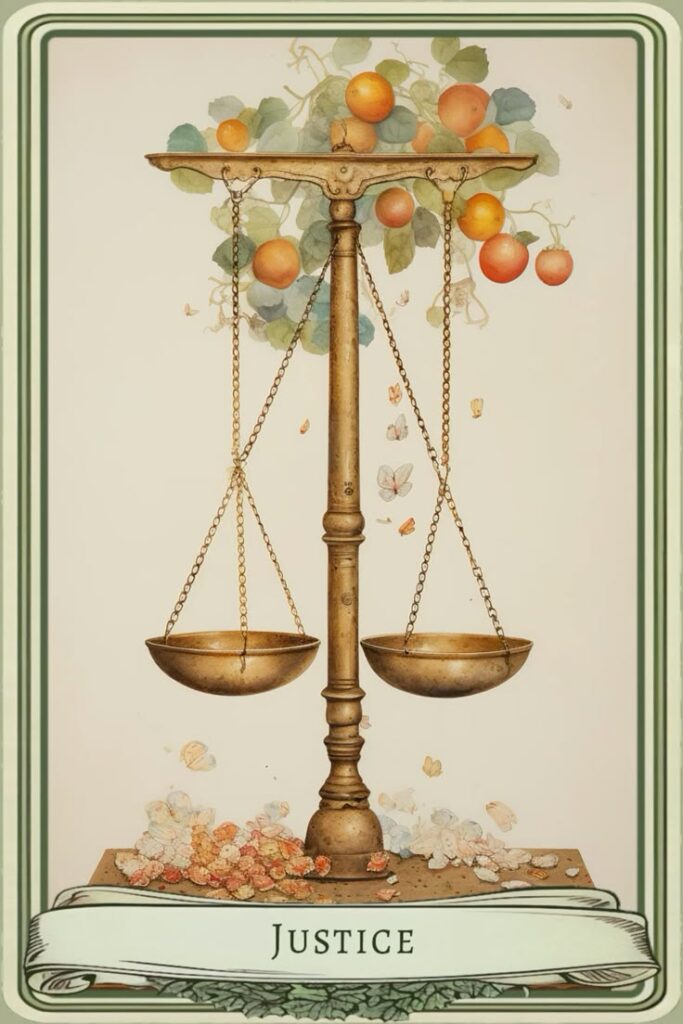
The Justice card is represented by a figure seated upon a throne, often holding a sword in one hand and a set of scales in the other. The scales symbolize the balance of justice, reflecting the biblical principle that God is a righteous judge, ensuring equity and honesty. The sword denotes the clarity of truth—it cuts through deception and ignorance, illuminating the path towards moral rectitude. From a Christian perspective, these symbols resonate profoundly, invoking imagery of divine judgment and the ultimate accountability of humanity before a higher power.
2. Biblical Parallels
In the Christian tradition, several scriptures resonate with the essence of the Justice card. For instance, Proverbs 21:15 states, “When justice is done, it brings joy to the righteous but terror to evildoers.” This passage encapsulates the dual nature of justice—wherein it serves as both a comfort to the pious and a warning to those who choose to transgress. Similarly, Psalm 89:14 cites, “Righteousness and justice are the foundation of your throne; steadfast love and faithfulness go before you.” Here, the principles that underlie divine governance align seamlessly with the principles represented by the Justice card.
3. Moral Integrity and Individual Responsibility
One of the pivotal messages of the Justice card is the emphasis on moral integrity and the notion of individual responsibility. Christianity advocates for believers to act justly, as outlined in Micah 6:8: “He has shown you, O mortal, what is good. And what does the Lord require of you? To act justly and to love mercy and to walk humbly with your God.” In the context of the tarot reading, the Justice card serves as a clarion call for introspection, urging individuals to assess their actions and choices in alignment with Christian values.
4. The Quest for Truth
The pursuit of truth is integral not only to the Justice card but to Christianity itself. In John 8:32, Jesus asserts, “And you will know the truth, and the truth will set you free.” The emphasis here is on discerning truth from deception, an endeavor mirrored in the interpretations of the Justice card. Whether in personal situations or broader societal issues, this card suggests a need for a thorough examination of motives and beliefs, urging one to seek biblical truths as their guiding compass.
5. Consequences of Actions
Justice is not merely an ideal; it embodies the reality of consequences arising from the choices one makes. Galatians 6:7 states, “Do not be deceived: God cannot be mocked. A man reaps what he sows.” This principle resonates profoundly with the Justice card, which posits that the outcomes of one’s actions will eventually manifest—often in unexpected ways. When the Justice card appears in a reading, it may serve as a divine reminder to be cognizant of the karmic implications of one’s behavior.
6. The Balance of Forgiveness and Justice
In Christian teachings, a tension often exists between justice and mercy, a duality that the Justice card encapsulates beautifully. Ephesians 4:32 encourages believers to “Be kind and compassionate to one another, forgiving each other, just as in Christ God forgave you.” The presence of the Justice card can suggest the need to reconcile these aspects, illustrating that while justice must be upheld, the Christian faith also calls for forgiveness and empathy. This delicate balance can be encapsulated in the narrative of the Prodigal Son, where justice meets grace, illustrating the overarching theme of redemption.
7. Spiritual Growth Through Justice
Moreover, the Justice card can symbolize spiritual growth through the lens of moral reckoning. The challenges and dilemmas one faces often serve as conduits for personal development. James 1:2-4 encourages believers to “Consider it pure joy… whenever you face trials of many kinds, because you know that the testing of your faith produces perseverance.” Thus, encountering the Justice card may indicate a phase in life where moral challenges are refining one’s character, leading them towards a deeper understanding of faith and righteousness.
8. Seeking Guidance and Wisdom
Finally, the Justice card encourages individuals to seek wisdom in their decision-making processes. Proverbs 2:6 reminds us, “For the Lord gives wisdom; from his mouth come knowledge and understanding.” In Tarot readings, when the Justice card appears, it may suggest the need for discernment and the consultation of divine wisdom, urging one to align their choices with not only their desires but also God’s will.
In conclusion, the Justice card is a rich tapestry of meaning, intertwining the nuances of justice with the teachings of Christianity. Whether one is grappling with moral dilemmas, seeking truth, or navigating the complexities of human relationships, this card serves as a poignant reminder of the importance of equity, accountability, and the spiritual growth that arises from our choices. Engaging with the messages of the Justice card offers not only guidance but also a profound opportunity for reflection on one’s spiritual journey.
FAQ
What does the Justice card mean in Tarot?
The Justice card signifies fairness, truth, and accountability, often encouraging introspection regarding one's moral choices.
How does the Justice card relate to Christianity?
The Justice card's themes resonate with Christian teachings on integrity, accountability, and the pursuit of truth.
Leave a Reply