Short Answer
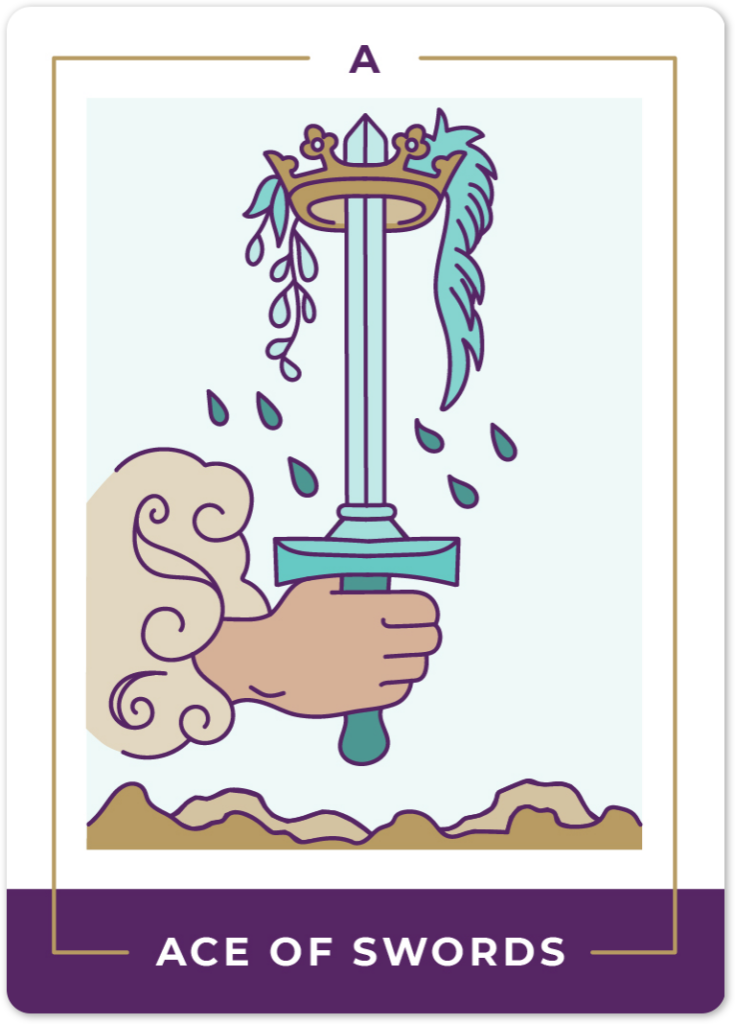
The Ace of Swords holds a unique position in the tarot, particularly when viewed through a Christian lens. In a world often filled with ambiguity, the clarity and decisiveness symbolized by this card becomes a poignant commentary on the nature of truth, morality, and divine guidance. It invites introspection and challenges the observer to consider the broader ramifications of wisdom and understanding.
To comprehend the Ace of Swords in the context of Christian teachings, one must first examine its intrinsic symbolism. The sword itself is a powerful emblem across many cultures, including Christianity. It denotes not only a weapon but also the power of divine truth and justice. In Hebrews 4:12, the Bible remarks on the Word of God as a double-edged sword, capable of discerning thoughts and intentions of the heart. Therefore, the Ace of Swords encapsulates this duality, representing both clarity in thinking and the potential for conflict that arises from confronting profound truths.
This card is originated from the suit of Swords, which is often associated with intellect, conflict, and the pursuit of truth. In a Christian context, these themes resonate with the eternal struggle faced by individuals striving for righteousness and understanding in a morally complex world. The Ace of Swords signifies a new beginning, an awakening of consciousness that encourages believers to wield their mental faculties to discern right from wrong, echoing the biblical mandate to seek wisdom. Proverbs 2:6 declares, “For the Lord gives wisdom; from His mouth come knowledge and understanding.” The intuitive response to challenges, facilitated by divine illumination, leads individuals down paths aligned with God’s will.

One notable aspect of the Ace of Swords is its portrayal of clarity amid chaos. Life’s decisions often present a labyrinth of moral dilemmas and uncertainties. In this light, the Ace of Swords serves as a metaphorical beacon, illuminating the path towards truth and wisdom. It advocates a proactive approach: it urges believers to let go of complacency and embrace an active pursuit of understanding through prayer, contemplation, and the study of scripture. Engaging these tools helps to form a coherent worldview that honors divine teachings.
However, the journey facilitated by the Ace of Swords is not without its challenges. The process of discerning truth often invites conflict, both internally and externally. In a Christian framework, this corresponds with the admonitions found in Matthew 10:34, where Jesus forewarns of the potential discord that might arise from following Him. The pursuit of truth has implications that might alienate friends or family, yet those who embody the Ace of Swords are called to remain steadfast in their convictions. The essence of faith is not merely in belief but in living out those beliefs even when faced with opposition.
In the fight for clarity, the Ace of Swords also symbolizes the necessity of honesty. Integrity is one of the cornerstones of Christian morality. This card challenges individuals to examine not only their external surroundings but also their internal motivations. Are they acting with clarity of purpose? Are their thoughts and actions conducive to love and compassion? These questions lead to deeper introspection and align with Jesus’ teachings on the importance of sincerity in both word and deed. The sword slices through pretense, revealing a desire for authentic relationships forged on truth.
Furthermore, the card’s connotation of new beginnings improves the notion of redemption and transformation, central to Christian belief. Like the sharp blade that cuts through veils of ignorance, believers are equipped to discard past misunderstandings and embrace a renewed sense of purpose. This renewal fosters a proliferating awareness of God’s promises and an understanding of His kingdom on Earth. It encourages individuals to engage actively in their spiritual journeys—equipped with wisdom, they are called to share their insights with others, contributing to communal growth and enlightenment.
The Ace of Swords encourages believers not only to uncover divine truths on a personal level but also to spread these realizations to the broader community. This mandate convenes the faithful, inviting them to collectively enter dialogues that challenge prevalent paradigms. By examining the depths of moral ambiguities together, communities find strength in their shared experiences, leading to a more profound understanding of Christ’s teachings.
Moreover, the Ace of Swords serves as a reminder of the transformative power of love and forgiveness. Each sword’s edge may represent the harsh truths that need revealing, yet the underlying message always points towards reconciliation—a core tenet of Christian doctrine. The love that envelops honesty enables individuals to navigate conflicts with grace rather than resentment, promoting healing on both personal and communal scales.
In conclusion, the Ace of Swords encapsulates a rich tapestry of meanings when interpreted through a Christian perspective. By advocating clarity, truth, and decisive action, it aligns seamlessly with biblical teachings. It challenges believers to seek wisdom relentlessly, leading to both individualized and communal enlightenment. As one engages with this powerful card, the call to action becomes resolute, emboldening each person to embrace the divine gift of discernment. Ultimately, truth, akin to the blade of the sword, cuts through the myriad layers of life’s complexities, illuminating the path towards deeper faith and understanding.
FAQ
What does the Ace of Swords represent?
The Ace of Swords represents clarity, truth, and the pursuit of wisdom, often interpreted through a Christian perspective.
How is the Ace of Swords interpreted in a Christian context?
In a Christian context, the Ace of Swords symbolizes divine truth, the struggle for righteousness, and the call for introspection and moral clarity.
Leave a Reply