Short Answer
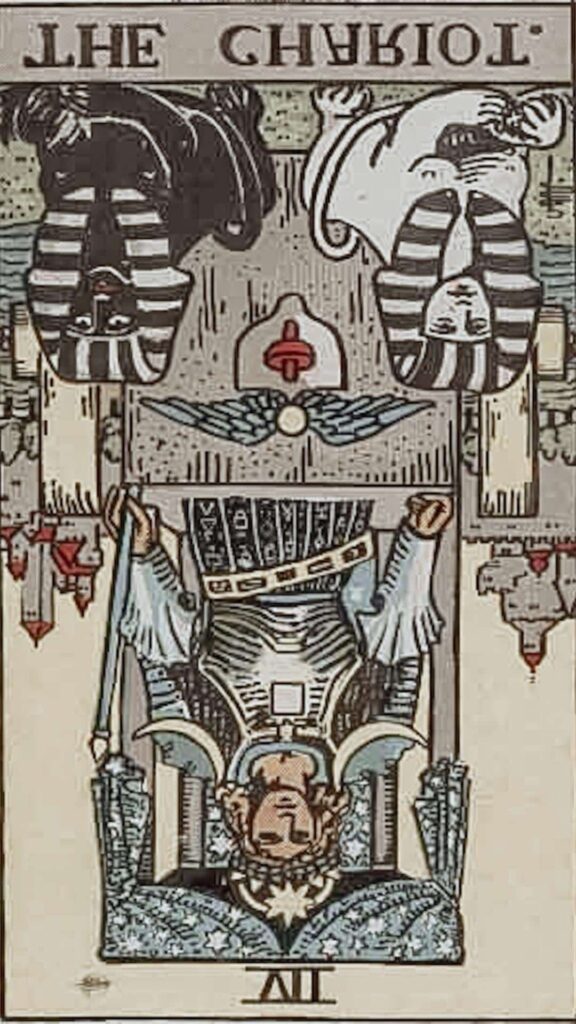
When examining the Chariot tarot card, particularly in its reversed position, one can find layers of meaning that invite deeper introspection. This card, often associated with triumph, willpower, and control, adopts a contrasting narrative when flipped upside down. From a Christian perspective, the implications of the Chariot in its reversed state become not only intriguing but also serve as a catalyst for personal reflection and spiritual growth.
What if you pondered this question: Are you navigating your life’s journey with resolute focus, or has your path become riddled with distractions and conflicts? The reversed Chariot compels one to confront the challenges of disarray, conflict, and uncertainty, inviting believers to reassess their alignment with spiritual principles while navigating life’s tumultuous waters.
The Chariot’s imagery, depicting a figure commanding two opposing sphinxes, symbolizes the ability to harness disparate forces. However, when the card appears reversed, this command falters. The once harmonious integration of aspects of the self may descend into chaos. This disruption can be likened to a journey where the traveler loses sight of their destination, perhaps the ultimate divine purpose laid out by God. As Christians, one might ask themselves if their priorities reflect deeper spiritual truths or if they have become ensnared by earthly distractions.
In an upside-down state, the Chariot may illuminate feelings of being overwhelmed and out of control. This sense of chaos could mirror the lives of many believers today, struggling between secular demands and their faith. For example, consider how societal expectations often warp our desires and priorities. When one is driven solely by ambition and personal success, does it not lead to a conflict of spirit? The reversed Chariot serves as a theological reminder to realign one’s purpose with divine will, cultivating a genuine commitment to God’s path.
Moreover, the card encourages Christians to examine areas of their lives where conflicts prevail. In communities of faith, unresolved disputes can lead to fragmentation. This may extend from internal conflicts about belief systems to interpersonal conflicts within the church. These discordant forces can serve to move one off course, steering away from the unity envisioned in the body of Christ. The reversed Chariot acts as a prompt to reconcile differences, emphasizing the need for healing and the restoration of peace.
Another pivotal aspect of the reversed Chariot is its implications regarding discernment. The card may suggest a theological examination of the choices being made. Are decisions being guided by mere ambition, or are they aligned with spiritual wisdom? In Christian doctrine, the concept of walking in faith requires us to reflect on our decisions and their motivations. When the Chariot reverses, it becomes imperative to pause and evaluate whether actions stem from genuine convictions or the allure of worldly gains.
Furthermore, consider the potential for stagnation inherent in this card’s reversal. Many spiritual journeys may become dormant when one fails to harness their inner strength to propel forward. The Chariot reversed can symbolize a fear of failure or an inability to confront such fears. This hesitation can act as a barrier, impeding spiritual progress and leaving an individual in a place of inertia. Questions of faith come forth—are we allowing past failures to dictate our current spiritual trajectory? The Chariot demands that we confront our fears and challenges with courage, reminding believers that perseverance is key to a fulfilling faith journey.
Additionally, the reversed Chariot prompts considerations regarding guidance and mentorship. In Christian life, the importance of community and mutual support cannot be understated. At times, individuals may fail to seek the counsel of wise mentors. This neglect could lead to misguided ventures and a deepening of conflict within one’s heart. The card serves as a reminder of the biblical wisdom found in Proverbs 15:22: “Plans fail for lack of counsel, but with many advisers they succeed.” Embracing guidance can refocus efforts toward the divine and assist in untangling the distractions illustrated by the reversed Chariot.
In summary, while the Chariot card typically signifies control, determination, and direction, its reversed interpretation within a Christian context unveils a plethora of pivotal challenges. Believers are invited to self-examine their lives and consider the extent to which they remain anchored in faith. Are distractions clouding their vision, or are they in harmonious pursuit of God’s plan? This card encapsulates a call for contemplation; a chance to reclaim the reins of one’s spiritual chariot, steering it back on course toward divine purpose, distant from chaos and conflict.
In conclusion, the Chariot, when viewed through the lens of Christian faith, becomes a powerful symbol of introspection. It challenges individuals to navigate the murky waters of life’s struggles with clarity and commitment. Embracing the reflective prompt the reversed Chariot offers can ultimately transform a believer’s journey, leading to renewed strength and deeper understanding. As we traverse our lives, may we always seek the Way that aligns our path with His purpose.
FAQ
What does the reversed Chariot tarot card mean?
The reversed Chariot tarot card symbolizes chaos, lack of control, and the need for self-reflection and realignment with spiritual principles.
How does the reversed Chariot relate to Christian beliefs?
It serves as a reminder for Christians to examine their priorities and ensure they are aligned with divine will, rather than being distracted by worldly ambitions.
Leave a Reply