Short Answer
The Death card, numbered 13 in the Tarot deck, is frequently misunderstood and often induces fear. Yet, the card does not signify a physical demise but rather symbolizes transformation and profound change. This aspect of transformation resonates deeply within Christian perspectives, which often view death as a precursor to rebirth, akin to the resurrection of Christ. Understanding the Death card’s meaning through this lens can unveil layers of wisdom relevant to both spiritual and everyday life.
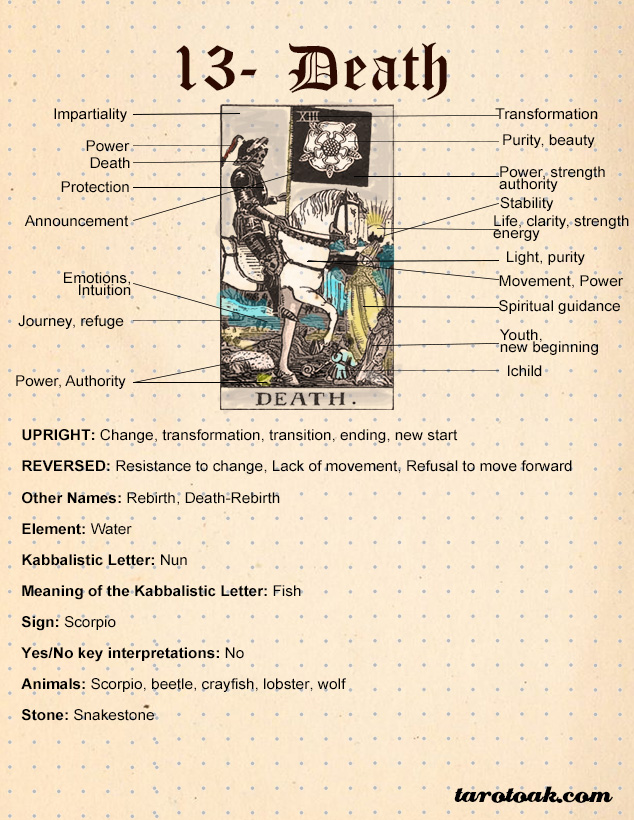
At first glance, the image typically depicted on the Death card—a skeletal figure riding a horse—might seem macabre and foreboding. However, upon closer inspection, one can discern a theme of renewal. In Christianity, death serves as a gateway to eternal life, a fundamental doctrine rooted in the belief of resurrection. Just as a seed must perish to give rise to new life, the Death card prompts individuals to embrace the cycles of existence, allowing for personal metamorphosis and spiritual growth.
This card invites the seeker to contemplate those aspects of their life that may require an ending—a relationship, a habit, or an outdated belief system. In Christianity, the teachings of Jesus emphasize the notion of letting go of the old to embrace the new. Each instance of physical death within the Christian narrative—most notably Christ’s passion—carries the message of hope and the promise of what lies beyond earthly existence.
Furthermore, the Death card speaks to the idea of purgation. It calls for introspection and self-examination, akin to the Christian practice of confession. Just as the Dead Sea Scrolls illuminate the teachings of faith through their journey to discovery, the Death card illuminates the inner sanctum of the psyche where shadows reside, urging the seeker to confront their fears. This confrontation is essential for personal evolution, paralleling the Christian pathway of repentance that leads to spiritual reconciliation and renewal.
Symbolically, the skull in the Death card represents the transience of life—an echo of the Christian teaching on mortality. We are reminded that life, in its essence, is fleeting. In the Book of Ecclesiastes, it reads, “Vanity of vanities; all is vanity.” This points to the importance of living authentically, focusing on what truly matters: spiritual growth, acts of kindness, and striving toward a deeper relationship with God.
The presence of the horse within the card can be interpreted as a vehicle for transition. In Christian symbolism, the horse often represents strength and power—qualities required to navigate the tumultuous waters of change. The rider, a harbinger of transformation, propels us toward new adventures, urging us to trust divine providence as we navigate through the inevitable changes that life presents. Just as Christ rode into Jerusalem, symbolizing a profound transition in faith, the rider of the Death card urges us to welcome the transformative processes in our lives.
This Tarot card, with its insistence on the necessity of endings, also highlights the poignant beauty of personal growth following loss. In a Christian context, the spiritual journey often includes periods of sorrow, solitude, and tribulation, yet it also embodies the promise of hope and restoration. Consider the story of Job: through immense suffering and loss, he ultimately gained wisdom and renewed purpose. Such narratives emphasize that after experiencing despair, one may find greater faith, clarity, and understanding. The pain encountered during the endings signifies growth; it nurtures the soul toward enlightenment and grace.
Add to this the associated imagery of the sun rising in the background of the Death card, symbolizing hope and resurrection. This metaphor aligns with the Christian belief in new beginnings. Each dawn brings possibilities anew, a reminder that every ending is an opportunity for renewal. Much like the dawn that follows a dark night, each transformation allows for a fresh start, echoing the resurrection narrative of Jesus as the ultimate testament to hope and renewal.
Moreover, the concept of surrender is pivotal in understanding the Death card in a Christian context. This surrender, analogous to the act of faith, invites relinquishment of control over life’s uncertainties. In Christianity, trust in God’s plan allows for the emergence of new opportunities and joys. Just as Jesus surrendered to the will of the Father in the Garden of Gethsemane, the Death card compels us toward a similar act of faith, ushering in a process of rebirth and enlightenment after significant transitions.
Ultimately, the Death card acts as a reminder of life’s impermanence and the importance of embracing change. It can be perceived as an invitation to transform fear into faith, finding strength in the promise of rebirth that is a cornerstone of Christianity. Rather than viewing it as a harbinger of doom, the card encourages seeing it as a sacred passage, essential not only for personal growth but also for deeper spiritual understanding.
In conclusion, the Death card, rich with metaphorical depth and imbued with Christian symbolism, evokes a profound realization of life’s cyclical nature. It beckons adherents to confront themselves, to embrace endings, and ultimately to surrender in faith before the transformation that awaits. Each layer of meaning interweaves the fabric of existence, leaving a tapestry vibrant with the hues of hope, renewal, and divine purpose.
FAQ
What does the Death card symbolize?
The Death card symbolizes transformation, change, and the end of one phase to make way for new beginnings.
Is the Death card a negative omen?
No, the Death card is often misunderstood; it signifies positive transformation and the cycles of life.
Leave a Reply