Short Answer
In the realm of tarot card readings, two cards often evoke profound contemplation and discussion: the Death card and The Lovers card. At first glance, one might perceive the Death card with trepidation, encapsulated in its ominous name and unsettling imagery. Conversely, The Lovers card exudes an aura of romance and harmony. However, when examined through the prism of Christian theology, their meanings converge in intriguing and thought-provoking ways. This exploration aims to unravel the enigmatic layers of these tarot cards, shedding light on their significance within a Christian perspective.
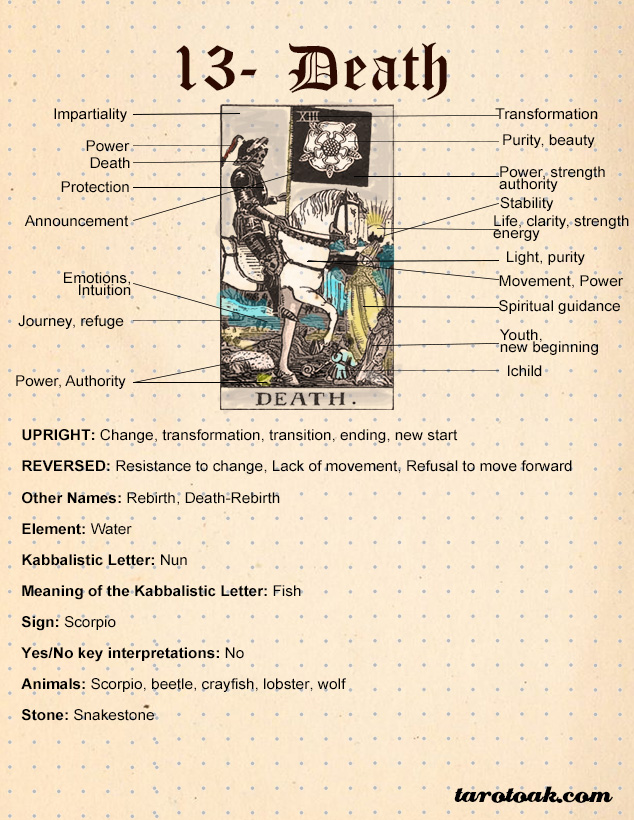
The Death card, often represented by the notorious image of a skeletal figure riding a horse, signifies transformation and rebirth rather than an end. In many Christian interpretations, death constitutes a transition rather than a cessation of existence. Just as Christ’s resurrection symbolizes new life, the Death card serves as a metaphor for spiritual awakening and the shedding of the old to embrace the new. It embodies the necessary processes of change that lead to spiritual growth. This notion echoes the biblical concept of sanctification, where the old self dies to give way to a renewed identity in Christ.
Conversely, The Lovers card, often adorned with imagery of Adam and Eve or other romantic duos, prompts reflections on relationships, choices, and the divine aspects of love. Within a Christian framework, love is considered the highest virtue—God’s very essence. Ephesians 5:25 states, “Husbands, love your wives, just as Christ loved the church.” This foundational principle reinforces the significance of love in the Christian doctrine. However, love in this context transcends mere romantic interludes; it encompasses agape, the selfless, unconditional love that mirrors God’s relationship with humanity.
To delve deeper, one might consider the juxtaposition of these two cards as a narrative of the human experience. Life on Earth is fraught with trials, tribulations, and changes that often elicit fear and uncertainty. The Death card reflects the inevitability of change, challenging individuals to confront their mortality and embrace transformation as a divine mechanism for spiritual evolution. This can be paralleled with the Christian beliefs surrounding mortality and the promise of eternal life. Jesus’ sacrifice and resurrection are the epitome of this transformative journey; death is not an end but a passage to a more profound existence.
Meanwhile, The Lovers card compels us to navigate our choices in the light of love. The relationships we foster serve as mirrors for our spiritual journeys, reflecting our values, beliefs, and the love we have for ourselves and others. Choices, while often burdened with the weight of consequence, can be approached through the lens of divine guidance. Just as the parable of the Good Samaritan illustrates, love is actionable and transcends societal boundaries. Thus, The Lovers card prompts introspection about how love influences decision-making in a believer’s life.
Furthermore, the interaction between the Death and The Lovers cards also hints at the transformative power of love. Love can catalyze profound changes in one’s life, prompting one to shed old habits, mend broken relationships, or embrace a new path illuminated by faith. In Jesus’s teachings, love plays a pivotal role in the doctrine of grace—allowing individuals to experience renewal through sacrificial love. Thus, when viewed in conjunction, these cards illuminate the journey between death to self and the vibrant life cultivated through authentic love.
As one contemplates the symbolic imagery of these cards, it becomes evident that their meanings are interwoven into the fabric of Christian theology. For instance, the act of sacrificial love, epitomized in the relationship between Christ and the Church, exemplifies the dynamic interplay of death and love. The cross represents personal sacrifice and an end to worldly pursuits, yielding an avenue for love to flourish. It is through surrendering the self—akin to the realm of the Death card—that one can engender a deeper connection to God and embody the principles found in The Lovers card.
Moreover, the fascination surrounding these cards can be attributed to their universal themes. Death invokes fear and resistance—natural human responses to the unknown. The Lovers, meanwhile, instills hope and joy. Together, they speak to the heart of the Christian experience; navigating through the trials of existence towards a higher calling governed by love. This duality resonates deeply, reflecting the human condition where love and loss are intertwined elements of our spiritual journey.
In conclusion, the meanings of the Death and The Lovers tarot cards, when assessed through a Christian lens, reveal a nuanced understanding of transformation and love. They encourage believers to embrace change as divine, fostering spiritual growth. Amidst life’s impermanence, love serves as the constant—a guiding light that can lead to authentic connections with others and with God. To engage with these cards, in essence, is to partake in a deeper narrative of the human experience—one that grapples with change while celebrating the profound power of love. Through this exploration, one learns that both death and love are not merely events but integral components of the sacred journey toward fulfillment and grace.
FAQ
What does the Death card mean in tarot?
The Death card symbolizes transformation and rebirth, representing the shedding of the old to embrace the new.
How is The Lovers card interpreted in a Christian context?
The Lovers card reflects the significance of love as a divine virtue, emphasizing selfless and unconditional love.
Leave a Reply