Short Answer
Embarking on your tarot journey? Whether you’re a curious beginner or someone looking to deepen your understanding, this guide will walk you through the 78 Tarot Meanings List: Every Card Decoded. You’ll uncover the secrets behind each card, learn how to interpret their messages, and even tackle the challenges they might pose. By the end, you’ll feel confident pulling cards and deciphering their wisdom—no psychic powers required!
Why Start with a “Playful Question”?
Before diving into the cards, ask yourself: What playful question can I pose to the universe today? Tarot thrives on curiosity, so start with something lighthearted—like “Should I try that new café?” or “Will my weekend plans go smoothly?” A playful question sets the tone for a relaxed reading, but beware: the cards might surprise you! They could reveal hidden fears or unexpected advice, turning your lighthearted query into a deeper reflection. The challenge? Staying open to answers that might not align with your initial expectations.
The Major Arcana: Your Life’s Big Themes
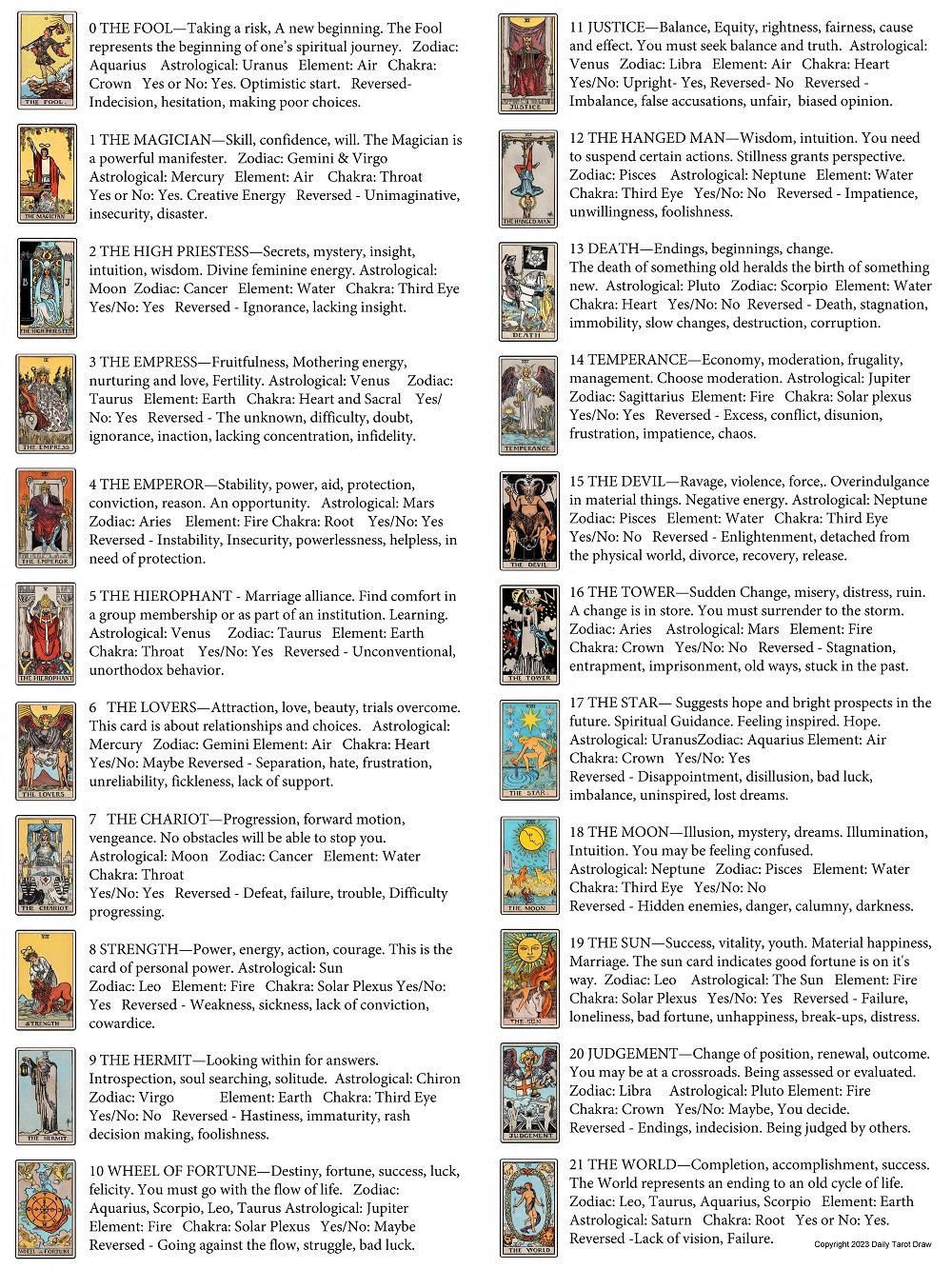
The Major Arcana consists of 22 cards, each representing significant life lessons, spiritual growth, or karmic influences. These cards often appear in readings to signal major turning points. For example:
- The Fool (0): A carefree spirit about to leap into the unknown. Challenge: Are you taking reckless risks or embracing spontaneity?
- The Lovers (VI): More than romance—it’s about choices, values, and harmony. Challenge: What relationship in your life needs deeper alignment?
- Death (XIII): Transformation, not literal demise. Challenge: What old habit or belief is it time to release?
Pro tip: When a Major Arcana card appears, pay close attention—it’s rarely a coincidence!
The Minor Arcana: Everyday Adventures
Split into four suits—Wands, Cups, Swords, and Pentacles—the Minor Arcana (56 cards) reflects daily experiences, emotions, and obstacles. Each suit has its own energy:
- Wands (Fire): Passion, creativity, and ambition. Example: The Three of Wands suggests expansion but may challenge your patience.
- Cups (Water): Emotions, relationships, and intuition. Example: The Five of Cups highlights grief—but also the cups still standing behind you.
- Swords (Air): Intellect, conflict, and clarity. Example: The Ace of Swords demands sharp thinking but warns against over-analysis.
- Pentacles (Earth): Money, health, and practicality. Example: The Ten of Pentacles celebrates family wealth but may ask: Are you prioritizing security over joy?
Challenge: Minor Arcana cards often highlight small but persistent issues. Are you ignoring a recurring theme in your life?
Court Cards: People and Personalities
The 16 Court Cards (Page, Knight, Queen, King for each suit) represent people, traits, or even situations. For instance:
- Queen of Cups: A nurturing, empathetic person—or your own emotional intuition.
- Knight of Swords: Fast-moving energy, but can be impulsive. Challenge: Are you charging ahead without considering consequences?
Pro tip: Court Cards can also reflect your own qualities. Ask: Which card mirrors my current energy?
Reading the Cards: Spreads and Challenges
Try a simple three-card spread: Past, Present, Future. But be prepared for surprises! The cards might reveal:
- A past challenge you’ve suppressed.
- A present obstacle disguised as opportunity.
- A future that hinges on your choices.
Challenge: What if the cards contradict your hopes? Use this as a chance to reflect—sometimes the truth is harder than the story we tell ourselves.

Common Pitfalls for Beginners
Even with the best intentions, tarot novices often stumble:
- Over-reliance on guides: Trust your intuition! If a card feels personal, lean into that.
- Fear of “bad” cards: The Tower or Ten of Swords isn’t a curse—it’s a wake-up call.
- Ignoring reversals: Upside-down cards aren’t failures; they highlight blocked energy or internal struggles.
Challenge: Can you reframe a “negative” card as a teacher?
Practice Makes Perfect
Pull a card daily and jot down your impressions. Over time, patterns emerge. Ask:
- What emotions does this card evoke?
- Does it relate to my current life?
- What action does it suggest?
Challenge: Stick with it for a month—even when the cards feel “boring.” Consistency reveals deeper layers.
Conclusion
Tarot is a mirror, not a crystal ball. It won’t predict the future with 100% accuracy, but it will guide you to ask better questions, confront hidden truths, and embrace life’s twists with curiosity. Start with playful queries, stay open to challenges, and remember: every card has a lesson. Now, shuffle up and let the deck speak!
FAQ
What are the Major Arcana cards?
The Major Arcana consists of 22 tarot cards representing significant life themes, spiritual lessons, and karmic influences, often indicating major turning points in readings.
How do Minor Arcana cards differ from Major Arcana?
Minor Arcana cards are divided into four suits—Wands, Cups, Swords, and Pentacles—and reflect everyday experiences, emotions, and challenges.
What do Court Cards represent in tarot?
Court Cards represent people, personality traits, or situations, and can also reflect the querent's current energy or qualities.
How should beginners interpret reversed tarot cards?
Reversed cards often indicate blocked energy, internal struggles, or challenges rather than simply negative meanings.
What is a simple tarot spread for beginners?
A common beginner spread is the three-card spread representing Past, Present, and Future, which helps provide insight into a situation’s timeline.
Leave a Reply