Short Answer
Embark on a journey into the enigmatic world of the Aloneness Tarot, where solitude is not a void but a canvas of self-discovery and empowerment. This guide unravels the profound metaphor of aloneness as both a lonely prison and a liberating sanctuary, offering insights into how the tarot deck transforms isolation into a path of inner strength. Whether you’re a seasoned tarot enthusiast or a curious newcomer, you’ll discover how the imagery, symbolism, and messages of the Aloneness Tarot can illuminate your relationship with solitude, independence, and personal growth.
The Dual Nature of Aloneness: Loneliness vs. Liberation
Aloneness is a double-edged sword—it can feel like a heavy burden or a liberating freedom, depending on one’s perspective. In the Aloneness Tarot, this duality is not just acknowledged but celebrated as a fundamental truth of human existence. The deck challenges the conventional view of solitude as something to fear or avoid, instead framing it as a necessary and even sacred state. Through its cards, the tarot invites you to explore the difference between loneliness—a state of lack—and liberation—a state of self-sufficiency and empowerment.
The imagery in the Aloneness Tarot often depicts solitary figures in vast, open landscapes, emphasizing the vastness of the inner world that can be explored when one is alone. These visuals serve as a reminder that aloneness is not about being cut off from the world but about being fully present with oneself. The cards encourage you to reframe your relationship with solitude, seeing it as an opportunity rather than an obstacle.
Symbolism and Imagery: The Language of Solitude
The Aloneness Tarot speaks in a language of symbols, where every image, color, and figure carries deep meaning. The use of stark, minimalist designs often highlights the essence of solitude, stripping away distractions to focus on the core of the human experience. For example, a card depicting a lone figure under a starry sky might symbolize the vastness of the universe and one’s place within it, while a card showing a solitary tree in a barren landscape could represent resilience and growth in isolation.
Colors play a crucial role in the deck’s symbolism. Dark, muted tones might evoke the heaviness of loneliness, while bright, warm hues could signify the warmth and comfort of self-acceptance. The interplay of light and shadow in the imagery mirrors the internal struggle between fear and acceptance, urging you to embrace the full spectrum of your emotions. By learning to interpret these symbols, you gain a deeper understanding of your own journey through aloneness.
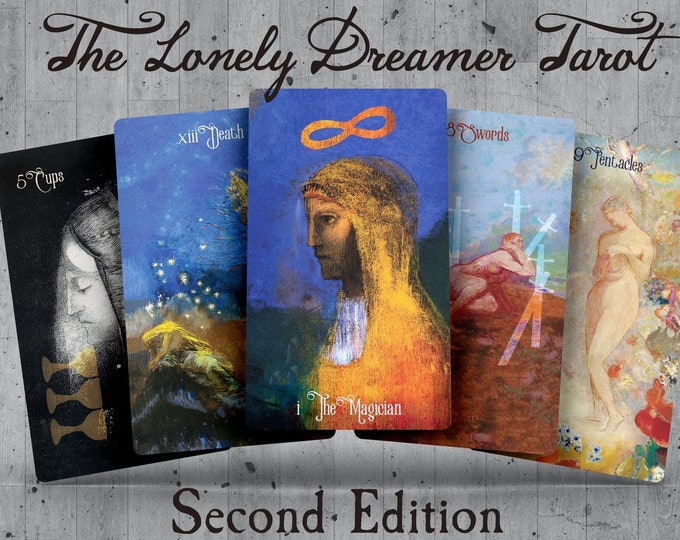
Key Cards and Their Messages: Decoding the Journey
The Aloneness Tarot features a variety of cards, each offering a unique perspective on the theme of solitude. One of the most striking cards is The Hermit, which embodies the wisdom of introspection and the search for inner truth. This card often appears when you’re called to retreat from the noise of the world to reflect and recharge. Its message is clear: solitude is not a punishment but a gift, a time to listen to your inner voice.
Another powerful card is The Moon, which delves into the darker aspects of aloneness. It represents the fears, illusions, and uncertainties that can arise when you’re alone with your thoughts. However, the card also offers hope, suggesting that these shadows are not to be feared but explored, as they hold the key to deeper self-awareness. The Aloneness Tarot encourages you to face these inner demons with courage, knowing that they are part of your journey toward liberation.
The card The Star serves as a beacon of hope, symbolizing the light at the end of the tunnel. It represents faith in oneself and the universe, reminding you that even in the darkest moments of solitude, there is always a guiding star to lead you forward. This card is a powerful affirmation that aloneness can be a source of inspiration and creativity, a space where new ideas and dreams take shape.
The Therapeutic Power of Aloneness Tarot
Beyond its symbolic depth, the Aloneness Tarot serves as a therapeutic tool, offering a safe space to explore and process feelings of isolation. For those who struggle with loneliness, the deck can be a comforting companion, validating their emotions while gently guiding them toward a more empowering view of solitude. The act of drawing cards and reflecting on their meanings can be a meditative practice, helping you to sit with your emotions without judgment.
The tarot also encourages self-compassion, reminding you that it’s okay to need time alone and that solitude is not a sign of weakness but of strength. By embracing the messages of the Aloneness Tarot, you can transform your relationship with solitude from one of fear to one of curiosity and growth. It becomes a journey of self-discovery, where every card drawn is a step toward understanding yourself on a deeper level.
How to Use the Aloneness Tarot in Your Practice
Incorporating the Aloneness Tarot into your daily or weekly practice can be a transformative experience. Start by setting an intention for your reading—are you seeking clarity on a specific situation, or are you exploring your general feelings about solitude? Shuffle the deck while focusing on your question or intention, then draw cards to guide your reflection.
Journaling can enhance your tarot practice, allowing you to record your interpretations and track your progress over time. Pay attention to recurring themes or cards, as they often hold significant messages for your journey. You might also use the tarot as a tool for visualization, imagining yourself embodying the qualities of the cards you draw. For example, if you draw The Hermit, visualize yourself in a quiet space, surrounded by the wisdom of your inner self.

Aloneness as a Creative Catalyst
History is filled with examples of artists, writers, and thinkers who thrived in solitude, using it as a catalyst for creativity and innovation. The Aloneness Tarot taps into this universal truth, suggesting that solitude is not a barrier to connection but a fertile ground for creation. The deck’s imagery often evokes a sense of stillness and introspection, qualities that are essential for the creative process.
Whether you’re an artist, a writer, or simply someone looking to tap into their creative potential, the Aloneness Tarot can serve as a muse. The cards can inspire new ideas, help you overcome creative blocks, and remind you that solitude is a space where imagination can flourish. By embracing the messages of the deck, you can unlock your creative spirit and find joy in the quiet moments of your life.
Conclusion: Embracing Aloneness as a Path to Freedom
The Aloneness Tarot is more than just a deck of cards—it’s a mirror that reflects the dual nature of solitude and a guide that illuminates the path to liberation. Through its rich symbolism, therapeutic power, and creative inspiration, the deck invites you to see aloneness not as a prison but as a sanctuary. It challenges you to reframe your relationship with solitude, transforming it from a source of fear into a source of strength and self-discovery.
As you explore the Aloneness Tarot, remember that solitude is not a state to be escaped but a journey to be embraced. Each card you draw is an opportunity to learn, grow, and connect with your inner self. Whether you’re seeking clarity, healing, or inspiration, the Aloneness Tarot offers a unique and powerful tool to guide you on your path. So, take a deep breath, shuffle the deck, and let the cards reveal the wisdom that lies within your solitude.
FAQ
What is the Aloneness Tarot?
The Aloneness Tarot is a tarot deck that explores the dual nature of solitude, portraying it as both a source of loneliness and a path to personal liberation.
How can I use the Aloneness Tarot in my practice?
To use the Aloneness Tarot, set an intention, shuffle the deck, draw cards, and reflect on their meanings, possibly journaling your insights.
Leave a Reply