Short Answer
In this guide, you’ll explore the deeper layers of the Devil Tarot card, uncovering its symbolism, meanings, and the psychological forces it represents. Whether you’re a seasoned tarot reader or a curious beginner, you’ll gain insights into how this card reflects temptation, addiction, and the struggle for control in life. By the end, you’ll understand why the Devil resonates so strongly with people and how to interpret its messages in readings.
The Devil Tarot Card: An Overview
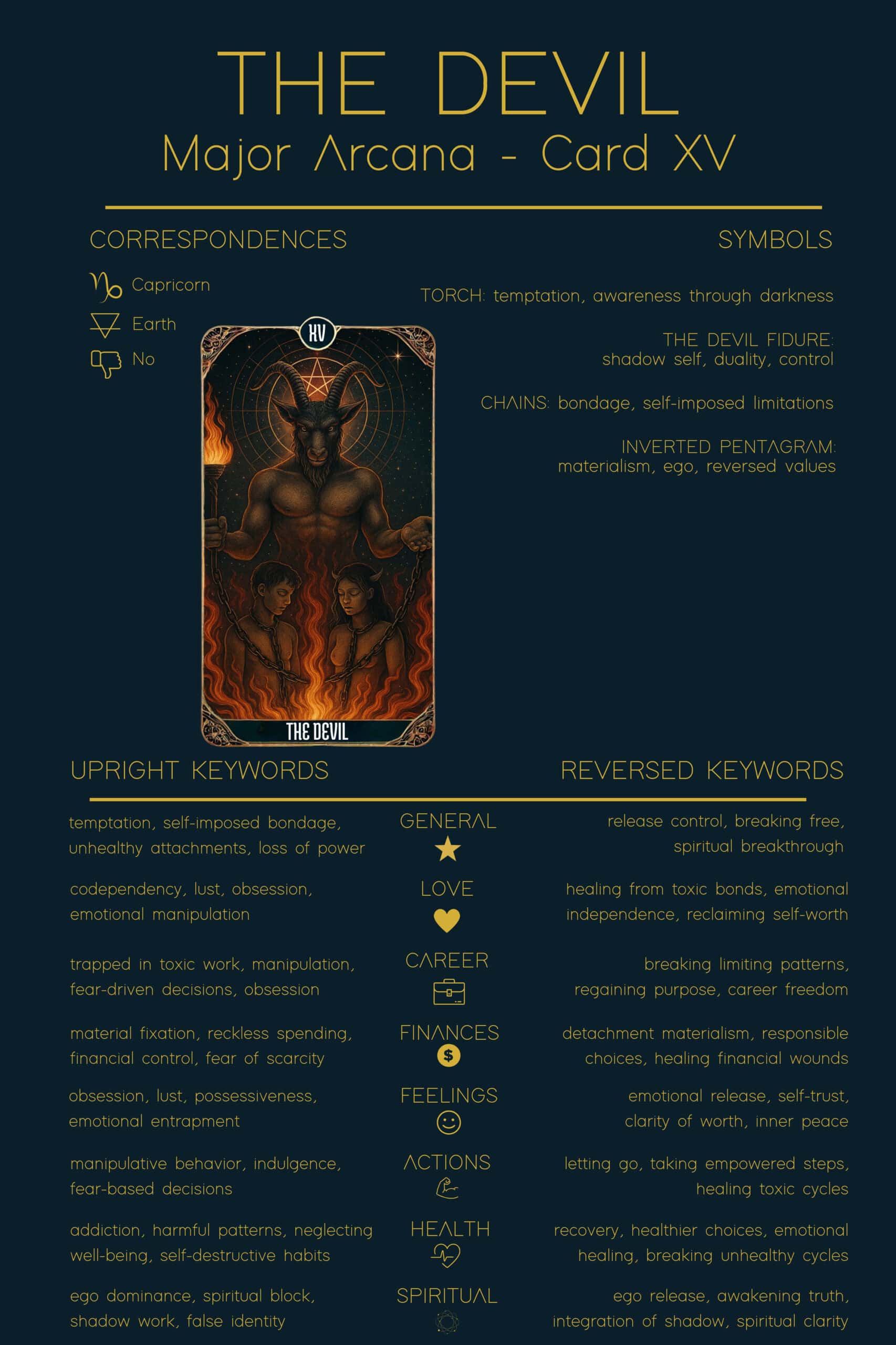
The Devil Tarot card is the fifteenth card in the Major Arcana and often evokes a sense of unease or intrigue. Depicted as a horned figure with clawed hands, it sits atop a pedestal, surrounded by two chained figures—often misinterpreted as captives. In reality, these figures are willingly bound, symbolizing the chains of addiction, unhealthy attachments, or self-imposed limitations. The card represents materialism, bondage to desires, and the shadow side of human nature. It challenges us to confront the illusions we cling to and the fears that keep us trapped.
Unlike the more overtly ominous imagery of some Tarot cards, the Devil’s power lies in its subtlety. It doesn’t force chains upon its victims; instead, it offers them willingly, playing on their deepest insecurities and unmet needs. This dynamic makes the Devil a card of self-reflection, urging you to examine the habits, relationships, or thought patterns that may be holding you back.
Temptation: The Devil’s Alluring Grip
Temptation is the Devil’s most immediate and recognizable association. This card often appears when you’re facing a moral dilemma, a risky decision, or a situation where instant gratification clashes with long-term well-being. The Devil doesn’t just represent external temptations like substances or reckless spending; it also highlights internal ones—procrastination, self-sabotage, or the urge to escape reality through distractions. The card’s imagery of chains serves as a metaphor for the invisible bonds we create when we prioritize short-term pleasure over lasting fulfillment.
For example, if you’re considering a career change but fear financial instability, the Devil might appear to warn you against clinging to a job that drains your spirit simply because it offers security. Similarly, in relationships, the Devil can signal codependency or toxic dynamics where one person enables unhealthy behaviors in the other. Recognizing these patterns is the first step toward breaking free from their hold.
Addiction: The Chains We Choose
Addiction, in its broadest sense, is another key theme of the Devil card. While it’s easy to associate addiction solely with substances like drugs or alcohol, the card encompasses a wider range of compulsive behaviors. These might include excessive screen time, gambling, overworking, or even obsessive thoughts about a person or goal. The Devil highlights the cyclical nature of addiction: the initial thrill or relief is followed by guilt, shame, or emptiness, yet the cycle repeats because the temporary high feels better than facing the underlying pain.
The card’s chains are a powerful reminder that addiction isn’t just about losing control—it’s about willingly surrendering to something that promises comfort but delivers suffering. For instance, someone might binge-watch TV to avoid dealing with loneliness, only to feel more isolated afterward. The Devil urges you to ask: What am I using to numb myself, and what am I avoiding? Breaking free often requires addressing the root cause rather than just the symptom.
Control: The Illusion of Power
The Devil also explores the paradox of control—how the desire to dominate others or situations can become a form of self-destruction. The card’s horned figure, often depicted with a raised hand in a blessing or commanding gesture, represents false power. It’s the illusion that controlling external factors (people, outcomes, or even your own emotions) will bring security. Yet, true control lies in surrender—accepting what you cannot change and focusing on what you can.
In readings, the Devil might appear when you’re exerting excessive control over a situation or person, only to realize that your efforts are backfiring. Alternatively, it could indicate that someone in your life is manipulating you or that you’re allowing others to dictate your choices. The card serves as a wake-up call to reclaim your autonomy and recognize when you’re giving your power away, whether to a toxic relationship, a harmful habit, or an unachievable standard.

Why Are We So Fascinated by the Devil?
The Devil’s enduring appeal lies in its ability to mirror our deepest fears and desires. It’s a card that forces us to confront the parts of ourselves we’d rather ignore—the shadows that whisper, “Just one more time.” This fascination isn’t just about morbid curiosity; it’s a reflection of our collective struggle with free will versus compulsion. In a world filled with distractions, instant gratification, and societal pressures, the Devil resonates because it’s a universal experience.
Moreover, the card’s imagery taps into archetypal fears of the unknown, the taboo, and the forbidden. It challenges us to question societal norms and personal boundaries, making it a potent symbol for those seeking deeper meaning. Whether you’re drawn to the Devil’s dark allure or repelled by it, the card invites you to explore the duality of human nature—our capacity for both destruction and redemption.
How to Interpret the Devil in a Reading
When the Devil appears in a Tarot spread, its meaning depends heavily on the surrounding cards and the question asked. Here are some key interpretations:
- Blocked Creativity or Stagnation: The Devil may indicate that fear of failure or judgment is stifling your creative expression or personal growth.
- Toxic Relationships: It can point to a relationship where one or both parties are enabling unhealthy behaviors, whether through codependency or manipulation.
- Self-Sabotage: The card might reveal patterns of procrastination, avoidance, or self-destructive habits that are hindering your progress.
- Materialism Over Spirituality: It could be a sign that you’re prioritizing material wealth or status over emotional or spiritual fulfillment.
To counteract the Devil’s influence, focus on breaking free from illusions. Ask yourself what you’re truly seeking in your current situation and whether your actions align with your long-term values. Sometimes, the solution is as simple as setting boundaries, seeking support, or practicing self-compassion.
Breaking Free from the Devil’s Chains
Overcoming the Devil’s hold requires self-awareness and courage. Start by identifying the areas of your life where you feel trapped, whether by a habit, a relationship, or a mindset. Then, take small steps to reclaim your power. This might involve setting boundaries, seeking therapy, or practicing mindfulness to stay present instead of escaping into distractions.
Remember, the Devil isn’t an evil force—it’s a mirror. It reflects the parts of yourself that need healing or the external influences that are holding you back. By facing these challenges head-on, you transform the Devil from a symbol of bondage into a catalyst for growth.
Conclusion
The Devil Tarot card is a complex and multifaceted symbol that invites you to explore the darker corners of your psyche. It’s not just about temptation, addiction, or control—it’s about the choices you make and the illusions you create. By understanding its messages, you can break free from self-imposed chains and step into a life of greater freedom and authenticity. Whether the Devil appears in a reading or in your daily life, remember: its power lies in your willingness to confront it.
FAQ
What does the Devil Tarot card represent?
The Devil Tarot card represents temptation, addiction, and control, reflecting the darker aspects of human nature.
How can I interpret the Devil in a Tarot reading?
In a Tarot reading, the Devil can indicate blocked creativity, toxic relationships, self-sabotage, or a focus on materialism over spirituality.
FAQ
What does the Devil Tarot card symbolize?
The Devil Tarot card symbolizes temptation, addiction, and the struggle for control, encouraging self-reflection on unhealthy patterns.
How can one interpret the Devil in a reading?
Interpretations of the Devil in a reading may include themes of blocked creativity, toxic relationships, self-sabotage, and prioritizing materialism over spirituality.
Leave a Reply