Short Answer
Welcome to your comprehensive guide on free tarot meanings. Whether you’re a beginner or an experienced reader, this resource will help you explore the rich symbolism and interpretations of tarot cards without spending a dime. Below, you’ll find a variety of content types designed to enhance your understanding, from printable charts to detailed card descriptions. By the end of this guide, you’ll have the tools to deepen your tarot practice effortlessly.
Understanding Tarot Card Meanings
Tarot cards are a powerful tool for self-reflection, divination, and spiritual growth. Each card in the deck carries unique symbolism, archetypes, and interpretations that can provide insight into life’s challenges and opportunities. The Major Arcana represents significant life themes, while the Minor Arcana focuses on everyday situations. Familiarizing yourself with these meanings is the first step toward mastering tarot readings. Start by studying the core interpretations of each card, paying attention to both upright and reversed positions, as reversals often indicate blocked energy or internal struggles.
Printable Tarot Cards with Meanings
One of the most practical ways to learn tarot is by using printable tarot cards. These resources combine visual representations of the cards with their corresponding meanings, making it easy to study offline or reference during readings. Printable decks often include detailed descriptions of each card’s symbolism, numerology, and astrological associations. Some even offer spreads and layouts to help you practice different types of readings. Download a printable tarot deck to create your own reference guide, or use it as flashcards to memorize card meanings more effectively.
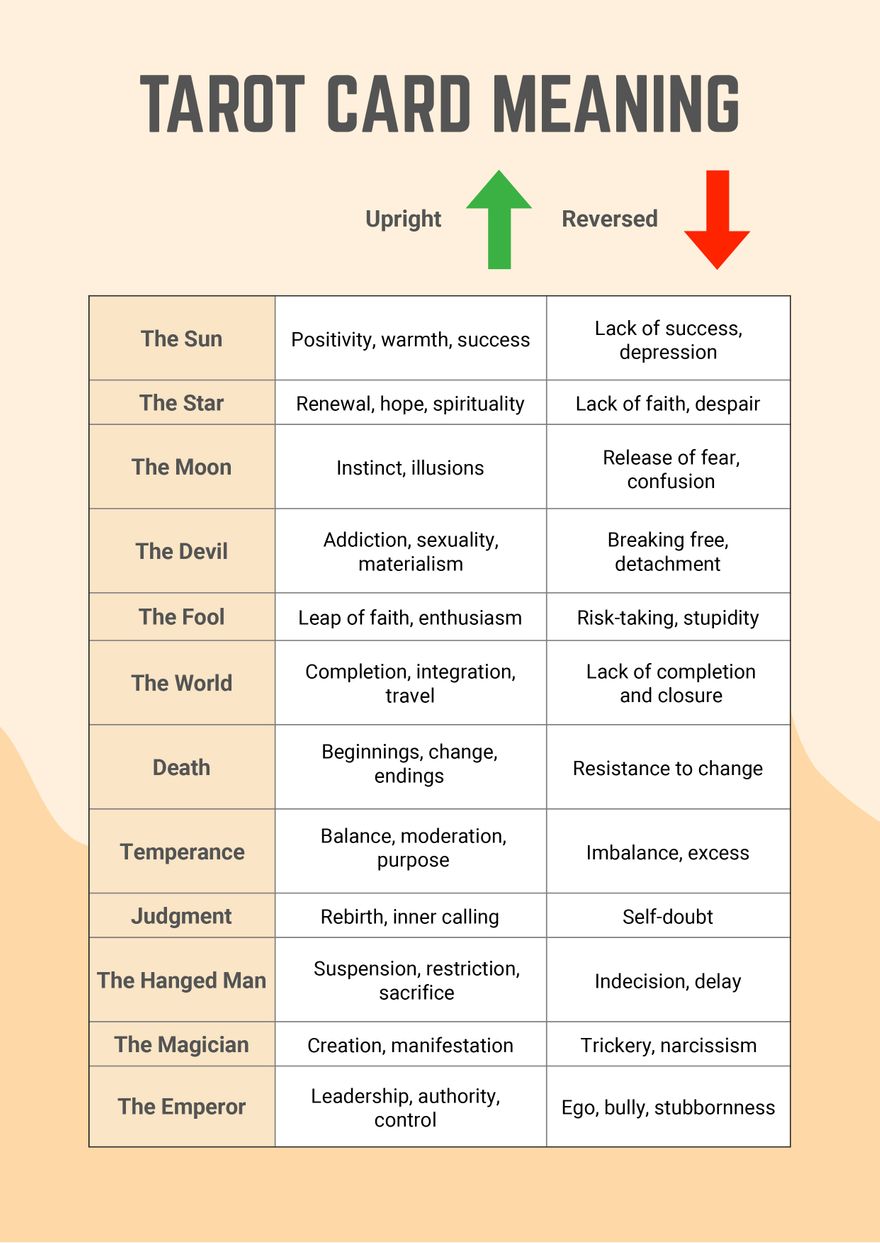
Tarot Meanings Charts for Quick Reference
Tarot meanings charts are invaluable for both beginners and seasoned readers. These charts provide a concise overview of each card’s upright and reversed meanings, allowing you to quickly look up interpretations during a reading. Charts often categorize cards by suit (Cups, Pentacles, Swords, Wands) or by their position in the Major Arcana, making it easier to identify patterns and themes. Keep a chart on your phone, tablet, or as a physical printout to have a reliable reference at your fingertips. Many charts also include keywords and phrases to help you interpret cards more intuitively.

Detailed Tarot Card Descriptions and Interpretations
For a deeper dive into tarot, explore detailed card descriptions that go beyond basic meanings. These resources often include historical context, cultural significance, and psychological interpretations of the cards. For example, The Fool card may represent new beginnings and spontaneity, but its imagery—such as the cliff edge or the small dog—can reveal deeper layers of meaning. Look for guides that explain the symbolism in each card’s artwork, as this can provide richer insights during readings. Additionally, some descriptions include advice on how to interpret cards in different contexts, such as love, career, or personal growth.
Free Online Tarot Resources and Communities
The internet offers a wealth of free tarot resources, from blogs and YouTube channels to online forums and social media groups. These platforms provide tutorials, card interpretations, and opportunities to connect with other tarot enthusiasts. Many experienced readers share their knowledge through free guides, podcasts, and live Q&A sessions. Joining a tarot community can also help you refine your skills, as you can ask questions, share readings, and receive feedback from others. Look for reputable sources that emphasize ethical practices and avoid fear-based interpretations.
Using Tarot for Self-Reflection and Personal Growth
Tarot isn’t just for divination—it’s also a tool for self-reflection and personal development. By pulling cards daily or weekly, you can gain clarity on your thoughts, emotions, and life path. Journaling your interpretations can help you track patterns and progress over time. For example, if you consistently draw The High Priestess, it may indicate a need to trust your intuition or explore your subconscious. Use tarot as a mirror to better understand yourself and make empowered decisions. Remember, the cards are a guide, not a prediction; your free will and actions shape your future.
Creating Your Own Tarot Journal
A tarot journal is a fantastic way to document your readings, insights, and personal growth. Start by noting the date, the cards drawn, and your initial impressions. Then, write about the context of your reading—whether it’s a question you asked or a situation you’re exploring. Over time, you’ll notice recurring themes, symbols, and messages that resonate with you. Your journal can also include sketches of the cards, interpretations in your own words, and reflections on how the readings apply to your life. This practice not only deepens your understanding of tarot but also enhances your intuition and connection to the cards.
Exploring Different Tarot Spreads
Tarot spreads are layouts that determine how many cards you draw and their positions in a reading. While the classic three-card spread (past, present, future) is a great starting point, there are countless other spreads to explore. For example, the Celtic Cross spread offers a more detailed look at a situation, while the Horseshoe spread focuses on challenges and opportunities. Experiment with different spreads to see which ones resonate with you. Many free resources online provide step-by-step guides on how to use each spread, including sample interpretations. Don’t be afraid to modify spreads to suit your needs or create your own unique layouts.
Conclusion
Free tarot meanings open the door to a world of self-discovery, spiritual growth, and intuitive development. By utilizing printable charts, detailed descriptions, and online resources, you can build a strong foundation in tarot without spending money. Whether you’re using tarot for divination, self-reflection, or personal growth, the key is to approach the practice with an open mind and a willingness to learn. Keep a journal to track your progress, explore different spreads to deepen your readings, and connect with the tarot community for support and inspiration. With dedication and curiosity, you’ll uncover the profound wisdom that tarot has to offer.
FAQ
What are the Major Arcana in tarot?
The Major Arcana consists of 22 cards that represent significant life themes and lessons in tarot readings.
How can I use tarot for personal growth?
Tarot can be used for self-reflection and personal development by journaling insights and tracking patterns over time.
Leave a Reply