Short Answer
Welcome to your comprehensive guide to the Major Arcana Tarot cards! Here, you’ll uncover the profound meanings behind each card, explore their symbolic imagery, and learn how they influence your tarot readings. Whether you’re a seasoned reader or a curious beginner, this guide will deepen your understanding of the Major Arcana’s role in divination and personal growth. By the end, you’ll be able to interpret these powerful cards with confidence and even pose playful questions to challenge your intuition.
The Role of the Major Arcana in Tarot
The Major Arcana consists of 22 cards, each representing significant life themes, spiritual lessons, and archetypal energies. Unlike the Minor Arcana, which focuses on everyday events, the Major Arcana cards often signify major turning points, karmic influences, or deep personal transformations. They serve as a roadmap for your soul’s journey, offering insights into your past, present, and future.
When a Major Arcana card appears in a reading, it’s rarely a coincidence—it’s a message from the universe. For example, The Fool might suggest a new beginning, while Death could indicate a profound change rather than literal demise. These cards act as mirrors, reflecting your inner world and guiding you toward self-awareness.
Key Themes of the Major Arcana
The Major Arcana is divided into three distinct sections, each representing a phase of the Fool’s journey—a metaphorical path that mirrors our own life experiences:
- Innocence and Beginnings (Cards 0–3): The Fool, The Magician, The High Priestess, and The Empress. These cards embody curiosity, potential, intuition, and nurturing energy.
- Challenge and Growth (Cards 4–14): The Emperor, The Hierophant, The Lovers, and The Chariot. Here, structure, wisdom, choices, and determination come into play.
- Transformation and Mastery (Cards 15–21): The Devil, The Tower, The Star, and The World. These cards delve into shadow work, upheaval, hope, and completion.
Each section builds upon the last, creating a narrative of personal evolution. The final card, The World, symbolizes wholeness and achievement, while The Fool represents the cyclical nature of life—always beginning anew.
Detailed Meanings of Major Arcana Cards
Below is a breakdown of each Major Arcana card, including its traditional meaning, symbolic imagery, and key questions to ask when it appears in a reading.
The Fool (0)
 The Fool is the card of new beginnings, spontaneity, and unlimited potential. Depicted as a carefree traveler with a small bag and a loyal dog, this card encourages you to take a leap of faith. It’s a reminder that life is an adventure—sometimes you need to trust the unknown.
Key Questions: Where in your life do you need to embrace spontaneity? What fears are holding you back from taking the first step?
The Magician (I)
The Magician is the master of manifestation, wielding tools of creation—wand, cup, sword, and pentacle. This card signifies resourcefulness, skill, and the power to turn dreams into reality. When it appears, it’s a sign to harness your talents and take action.
Key Questions: What skills do you possess that you can use to achieve your goals? Are you fully utilizing your potential?
The High Priestess (II)
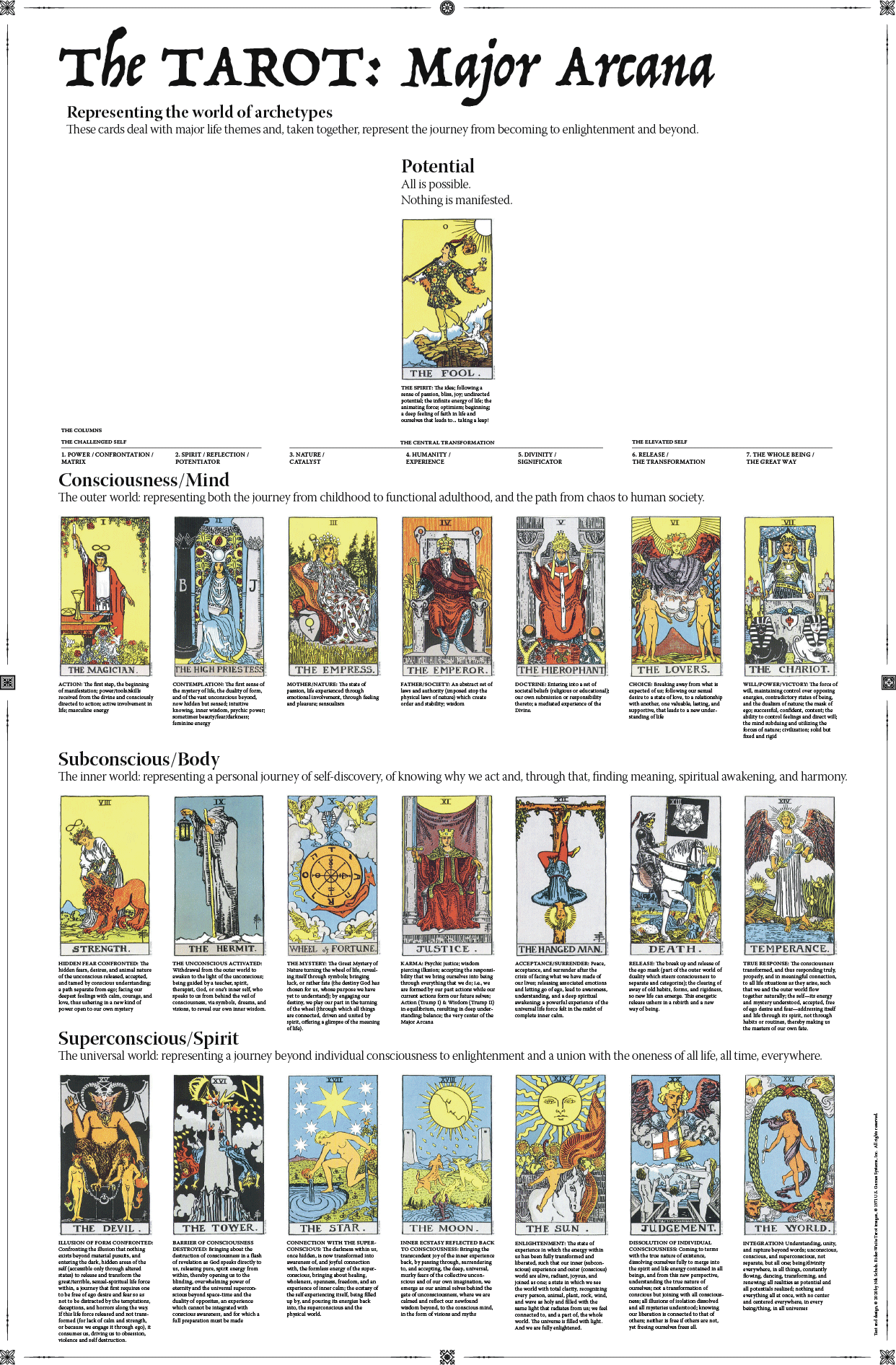 The High Priestess sits between the pillars of light and dark, representing intuition, mystery, and hidden knowledge. She urges you to listen to your inner voice and trust your instincts. This card often appears when you need to look beyond the surface.
Key Questions: What intuitive messages have you been ignoring? Where do you need to trust your gut feeling?
The Empress (III)
The Empress embodies femininity, abundance, and nurturing energy. She is the mother of creation, symbolizing fertility, growth, and sensuality. When she appears, it’s a sign to embrace pleasure, creativity, and self-care.
Key Questions: How can you cultivate more joy and abundance in your life? Are you nurturing yourself as well as others?
The Emperor (IV)
The Emperor represents authority, structure, and leadership. He is the father figure of the tarot, offering stability and discipline. This card often appears when you need to take control of a situation or establish boundaries.
Key Questions: Where do you need to assert your authority? Are you balancing structure with flexibility?
The Hierophant (V)
The Hierophant is the spiritual teacher, guiding you toward tradition, wisdom, and moral lessons. He represents organized religion, mentorship, and seeking deeper truths. When this card appears, it’s a call to explore your beliefs or seek guidance from a mentor.
Key Questions: What traditions or beliefs resonate with you? Are you open to learning from others?
The Lovers (VI)
The Lovers card is often misunderstood—it’s not just about romance. It symbolizes choices, harmony, and alignment with your higher self. This card may indicate a significant decision, a union of opposites, or a need to follow your heart.
Key Questions: What choices are you facing that require alignment with your values? Are you listening to your heart or your head?
The Chariot (VII)
 The Chariot represents determination, willpower, and victory. It shows a warrior in a chariot pulled by two sphinxes—one black, one white—symbolizing the balance of opposing forces. This card is a sign that you can achieve your goals through focus and perseverance.
Key Questions: What obstacles are you determined to overcome? Are you balancing your ambitions with patience?
Playing with the Major Arcana: A Challenge for Your Intuition
Now that you’re familiar with the Major Arcana, why not put your knowledge to the test? Try this playful challenge:
- Draw Three Cards: Pull three Major Arcana cards from your deck and lay them out in a row.
- Interpret the Story: What narrative do these cards tell? Do they represent a past event, a current challenge, or a future outcome?
- Pose a Question: Ask the cards a lighthearted question, like, “What lesson is my soul yearning to learn right now?” or “What energy should I embrace this week?”
- Reflect and Journal: Write down your interpretations and any insights that arise. How do the cards resonate with your current life?
This exercise isn’t just about divination—it’s about deepening your connection to the tarot’s wisdom. The more you engage with the Major Arcana, the more intuitive you’ll become.
Conclusion
The Major Arcana is more than just a set of tarot cards—it’s a profound tool for self-discovery and spiritual growth. Each card carries a unique message, offering guidance, warnings, and affirmations tailored to your journey. By studying their meanings, you unlock the ability to interpret their messages in your readings and your life.
Remember, the tarot is a mirror. The Major Arcana reflects not just external events but your inner world—your fears, desires, and potential. Embrace the journey of the Fool, learn from the wisdom of the cards, and trust that every reading is an opportunity to grow.
Now, go shuffle your deck and let the Major Arcana guide you. What will your next card reveal?
FAQ
What are the Major Arcana cards?
The Major Arcana consists of 22 Tarot cards that represent significant life themes and spiritual lessons.
How do Major Arcana cards influence tarot readings?
They signify major turning points and deep personal transformations, often reflecting the reader’s inner world.
Leave a Reply