Short Answer
This guide explores the intriguing connection between Malefic Time Cards and the Marseille Tarot, with a special focus on the Eight of Swords. You’ll discover the symbolic meanings, historical context, and psychological interpretations of these cards, along with why they captivate tarot enthusiasts and scholars alike. By the end, you’ll understand their deeper significance and how they reflect universal human experiences.
The Marseille Tarot: A Timeless Tradition
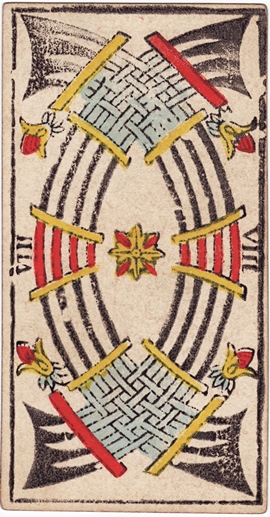
The Marseille Tarot is one of the oldest and most iconic tarot decks, originating in 17th-century France. Unlike modern decks, it retains a raw, symbolic simplicity that emphasizes archetypal imagery rather than intricate details. The Eight of Swords in the Marseille tradition depicts a bound figure surrounded by eight upright swords, often interpreted as a state of mental imprisonment or self-imposed limitations. This card’s stark visual contrasts with the elaborate designs of later decks, making it a focal point for those studying tarot’s evolution.
The Marseille Tarot’s structure—consisting of 22 Major Arcana and 56 Minor Arcana—serves as a foundation for many contemporary decks. Its themes of duality, fate, and human struggle resonate across cultures, reinforcing its status as a timeless tool for divination and introspection. The Eight of Swords, in particular, challenges readers to confront the illusions that bind them, a theme that aligns closely with Malefic Time’s thematic explorations.
Malefic Time Cards: A Modern Twist on Classic Themes
Malefic Time is a contemporary tarot deck that reimagines traditional imagery with a dark, cinematic aesthetic. Created by French artist Jodorowsky and writer Patrice Serres, the deck blends surrealism with psychological depth, often amplifying the ominous undertones of classic cards. The Eight of Swords in Malefic Time takes on a more sinister tone, with the bound figure appearing trapped in a labyrinth of shadowy blades, evoking themes of existential dread and inescapable fate.
What makes Malefic Time compelling is its ability to bridge the gap between historical tarot and modern anxieties. The deck’s visual language speaks to contemporary struggles with isolation, mental health, and societal constraints—issues that mirror the Eight of Swords’ traditional message. By recontextualizing classic symbols, Malefic Time invites readers to reflect on how timeless themes manifest in today’s world, making it a favorite among those seeking deeper, more personal interpretations.
Symbolism of the Eight of Swords: Breaking Down the Layers
The Eight of Swords in both the Marseille and Malefic Time decks is rich with symbolism. In the Marseille version, the blindfolded figure represents a lack of clarity or denial, while the swords encircling them symbolize limiting beliefs or external pressures. The card often suggests a need to recognize one’s own agency—despite feeling trapped, the figure could step away from the swords at any moment. This duality between perception and reality is central to the card’s message.
In Malefic Time, the Eight of Swords adopts a more visceral tone. The figure’s blindfold is often darker, and the swords cast long, ominous shadows, reinforcing a sense of inevitability. Here, the card may reflect feelings of being overwhelmed by circumstances beyond one’s control, or a struggle with self-doubt that feels inescapable. The contrast between the two decks highlights how symbolism evolves with cultural and artistic shifts, yet the core themes remain universally relatable.
Psychological and Spiritual Interpretations
From a psychological perspective, the Eight of Swords embodies the concept of cognitive distortion—the mental traps we create for ourselves. In therapy, this card might represent a client’s belief that they are powerless, despite evidence to the contrary. The Marseille Tarot’s straightforward imagery makes it an excellent tool for identifying such patterns, while Malefic Time’s darker aesthetic can help individuals confront these shadows more directly.
Spiritually, the Eight of Swords is often linked to the idea of surrender. The bound figure’s blindness suggests a need to trust in a higher power or the universe, even when the path forward is unclear. In some traditions, the card is seen as a call to release control and embrace uncertainty. Malefic Time’s interpretation leans into this theme with a sense of foreboding, suggesting that true liberation may require facing one’s deepest fears.
Why These Cards Fascinate Us: A Deeper Look
One reason the Eight of Swords—and tarot in general—holds such enduring appeal is its ability to articulate the human condition. We’ve all experienced moments of paralysis, whether due to fear, societal expectations, or self-doubt. The Eight of Swords gives form to these intangible struggles, making them tangible and, in turn, manageable. The Marseille Tarot’s simplicity allows for broad interpretation, while Malefic Time’s intensity forces a confrontation with these themes on a visceral level.
Another layer of fascination lies in the cards’ adaptability. The Eight of Swords can represent anything from a toxic relationship to a career rut, depending on the reader’s perspective. This versatility ensures that the card remains relevant across generations and cultures. Additionally, the visual contrast between the two decks highlights how art and symbolism shape our understanding of tarot. The Marseille Tarot’s clarity offers a mirror, while Malefic Time’s darkness acts as a spotlight, illuminating aspects of the human psyche we might otherwise ignore.
Practical Applications: Using These Cards in Readings
For tarot readers, the Eight of Swords is a powerful tool for addressing feelings of confinement. In a spread, it might indicate a need to question limiting beliefs or seek external perspectives. Paired with the High Priestess or The Hermit, it could suggest a period of introspection to uncover hidden truths. In contrast, when combined with The Chariot or Strength, it may signal an impending breakthrough after a phase of struggle.
When working with the Malefic Time deck, the Eight of Swords can be particularly effective for shadow work or deep psychological readings. Its dark aesthetic makes it ideal for exploring repressed emotions or confronting fears. Readers might use it to guide clients through difficult realizations, encouraging them to see their “prison” as a construct rather than an absolute truth. The Marseille Tarot, with its lighter imagery, can then offer a more hopeful counterpoint, reinforcing the idea that liberation is always within reach.
Conclusion
The interplay between the Marseille Tarot’s Eight of Swords and Malefic Time’s darker interpretation offers a profound exploration of human limitation and transcendence. Whether through the lens of historical tradition or modern surrealism, these cards remind us that the cages we perceive are often of our own making. By studying their symbolism, we gain not only insight into tarot’s evolution but also tools for navigating our own mental and emotional landscapes. Ultimately, the Eight of Swords—whether in its classic or contemporary form—serves as a mirror, reflecting our deepest fears and, more importantly, the power we hold to reshape our realities.
FAQ
What does the Eight of Swords represent?
The Eight of Swords represents feelings of confinement, mental imprisonment, and self-imposed limitations.
How do the Malefic Time and Marseille decks differ?
The Malefic Time deck adopts a darker aesthetic and modern themes, while the Marseille Tarot retains a traditional, symbolic simplicity.

Leave a Reply