Short Answer
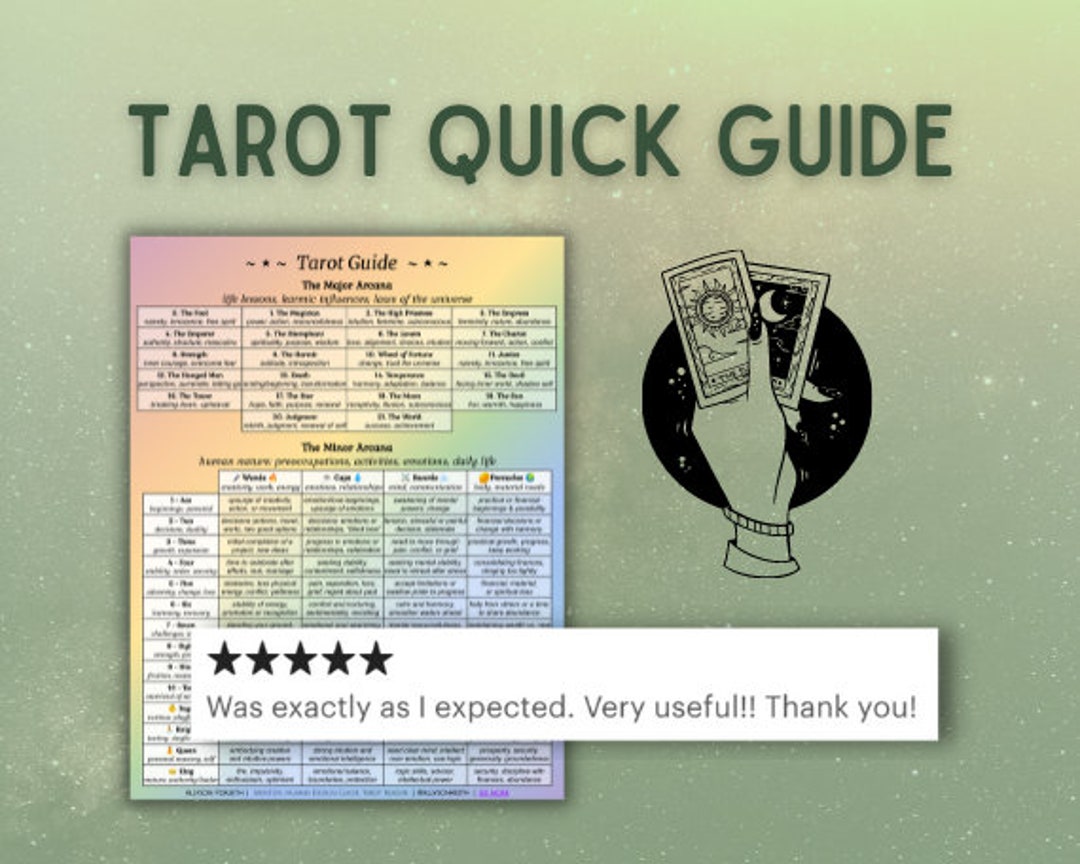
A Quick Reference Tarot Guide is an invaluable tool for both beginners and seasoned tarot readers. This one-page resource consolidates essential information into a compact format, making it easy to access key details at a glance. Whether you’re learning the meanings of the Major Arcana, interpreting Minor Arcana suits, or exploring card combinations, a well-designed quick reference guide streamlines your practice. This guide will walk you through the different types of content you can expect in a Quick Reference Tarot Guide, helping you maximize its utility for readings, study, and self-reflection.
Understanding the Structure of a Quick Reference Tarot Guide
A well-organized Quick Reference Tarot Guide typically begins with an overview of the tarot deck’s structure. This section breaks down the 78 cards into two main categories: the Major Arcana and the Minor Arcana. The Major Arcana consists of 22 cards representing significant life themes and spiritual lessons, while the Minor Arcana includes 56 cards divided into four suits—Cups, Pentacles, Swords, and Wands—each corresponding to different aspects of daily life. The guide may also include a brief explanation of court cards (Page, Knight, Queen, King) and their roles in readings. By understanding this foundational structure, readers can quickly identify which cards are influencing a situation and interpret their meanings more effectively.

Major Arcana: The Fool’s Journey
The Major Arcana cards are central to tarot readings, often representing pivotal moments or karmic influences. A Quick Reference Tarot Guide will typically feature each Major Arcana card with its traditional name, number, and a concise interpretation of its upright and reversed meanings. For example, The Fool (0) symbolizes new beginnings, spontaneity, and taking a leap of faith, while The Tower (XVI) signifies sudden change or upheaval. Some guides also include keywords or phrases to help readers associate each card with its core themes, such as “innocence” for The Fool or “sudden revelation” for The Tower. Additionally, the guide may highlight the Fool’s Journey—a narrative arc that traces the protagonist’s growth from innocence to enlightenment through the Major Arcana. This section is particularly useful for those studying tarot’s deeper symbolism and storytelling aspects.

Minor Arcana: Daily Life and Practical Insights
The Minor Arcana cards provide insights into everyday situations, challenges, and opportunities. A Quick Reference Tarot Guide organizes these cards by suit, offering a clear breakdown of their meanings. For instance, the Cups suit is associated with emotions, relationships, and intuition, while Pentacles relate to finances, career, and material stability. Each suit contains numbered cards (Ace through 10) and court cards, which represent people or personality traits. The guide may include brief descriptions of each card’s upright and reversed meanings, such as the Ace of Cups for new emotional beginnings or the Five of Pentacles for financial struggle. Some guides also highlight elemental correspondences—Cups for Water (emotions), Pentacles for Earth (material world), Swords for Air (intellect), and Wands for Fire (passion)—to help readers connect the cards to their elemental energies. This section is essential for interpreting everyday situations and understanding the nuances of tarot symbolism.
Card Combinations and Spreads
One of the most powerful features of a Quick Reference Tarot Guide is its ability to help readers interpret card combinations and spreads. This section often includes examples of how cards interact when they appear together in a reading. For example, pairing The Lovers (Major Arcana) with the Two of Cups (Minor Arcana) might suggest a harmonious relationship or a deep emotional connection, while The Chariot (Major Arcana) alongside the Three of Wands (Minor Arcana) could indicate progress toward a goal. The guide may also provide simple spread templates, such as a three-card spread for past-present-future or a Celtic Cross layout, along with instructions on how to interpret the positions. By understanding these combinations, readers can craft more nuanced and accurate readings that resonate with their querents.
Reversed Cards: Uncovering Hidden Meanings
Reversed tarot cards add depth and complexity to readings by indicating blocked energy, internal struggles, or subconscious influences. A Quick Reference Tarot Guide will include a section dedicated to reversed meanings, offering interpretations for when a card appears upside down. For example, the upright Three of Swords represents heartbreak, while its reversed meaning might suggest healing or forgiveness. Some guides also provide keywords or phrases to help readers quickly assess the card’s reversed energy, such as “delayed” for the reversed Six of Wands or “self-doubt” for the reversed Eight of Swords. Additionally, the guide may explain how reversed cards interact with surrounding cards in a spread, helping readers avoid misinterpretations and uncover hidden layers of meaning. This section is particularly valuable for advanced readers looking to refine their intuitive skills.
Practical Tips for Using Your Quick Reference Tarot Guide
To get the most out of your Quick Reference Tarot Guide, consider these practical tips. First, familiarize yourself with the guide’s layout and symbols—whether it uses traditional Rider-Waite imagery or another deck’s style. Second, practice interpreting single cards before moving on to combinations, as this builds a strong foundation. Third, use the guide as a starting point for your intuition; while the interpretations are helpful, your personal insights are equally important. Fourth, keep the guide handy during readings to reference meanings quickly, especially when working with clients or conducting self-readings. Finally, update your guide as you learn more about tarot, adding notes or personal interpretations to tailor it to your unique style. By integrating these practices, you’ll transform your Quick Reference Tarot Guide into a dynamic tool that enhances your tarot practice.
Conclusion
A Quick Reference Tarot Guide is more than just a cheat sheet—it’s a gateway to deeper tarot understanding and intuitive growth. From the foundational structure of the Major and Minor Arcana to the nuanced interpretations of reversed cards, this one-page resource covers essential topics that cater to readers of all levels. By exploring card combinations, elemental correspondences, and practical spread techniques, you’ll gain the confidence to conduct insightful and meaningful readings. Whether you’re a beginner seeking clarity or an experienced reader looking to refine your skills, a Quick Reference Tarot Guide serves as a trusted companion on your tarot journey. Keep it close, use it often, and let it inspire your exploration of the tarot’s rich symbolism and wisdom.
FAQ
What is a Quick Reference Tarot Guide?
It is a condensed resource that provides key information about tarot cards, including their meanings and combinations, to facilitate quick and effective readings.
How do I use a Quick Reference Tarot Guide?
Familiarize yourself with its layout, start by interpreting single cards, and use it as a reference during readings.
Leave a Reply