Short Answer
Welcome to your ultimate guide on reading multiple tarot cards together! Whether you’re a beginner or an experienced reader, combining tarot cards can reveal deeper layers of insight, connection, and meaning in your readings. In this guide, you’ll learn how to pose playful questions, navigate potential challenges, and craft cohesive interpretations that bring clarity and depth to your tarot practice. By the end, you’ll feel confident weaving multiple cards into a single, powerful narrative that enhances your intuitive abilities and enriches your readings.
Why Read Multiple Tarot Cards Together?
Reading multiple tarot cards together transforms a simple reading into a rich tapestry of meaning. Instead of isolating each card, you create a dialogue between them, revealing how energies interact, contrast, or amplify one another. This approach helps uncover hidden influences, underlying themes, and the bigger picture of a situation. It’s especially useful when you’re seeking nuanced answers or when a single card feels too vague. By combining cards, you invite a more dynamic and layered interpretation that resonates with the complexity of real-life scenarios.
How to Pose a Playful Question for Multiple Card Readings
A well-crafted question sets the stage for a meaningful multiple-card reading. Instead of asking broad or closed-ended questions, frame your inquiry in a way that invites exploration and curiosity. For example, instead of asking, “Will I get the job?” try, “What energies are influencing my job search right now?” This playful approach encourages the cards to reveal not just outcomes but also the underlying dynamics at play. Playful questions open the door to unexpected insights and allow the cards to guide you toward deeper self-reflection.
Another technique is to use open-ended prompts like, “What do I need to know about my current relationship?” or “How can I nurture my creativity this month?” These questions create space for the cards to speak in metaphors and symbols, making the reading more engaging and insightful. The key is to keep your question focused yet expansive enough to allow multiple interpretations.
Choosing the Right Card Spread for Your Question
The spread you choose can dramatically influence the depth and clarity of your reading. For multiple-card readings, consider spreads that encourage interaction between the cards. A simple three-card spread—past, present, future—works well for linear narratives, while a five-card spread (e.g., challenge, opportunity, advice, outcome, lesson) offers more complexity. You can also experiment with circular spreads, where the cards represent different aspects of a situation, or even a “story” spread, where each card builds upon the last to create a narrative arc.
For beginners, starting with a three-card spread is ideal. It’s straightforward yet powerful enough to reveal meaningful connections. As you grow more comfortable, you can explore larger spreads or even create your own layouts tailored to specific questions. The goal is to choose a spread that aligns with your intention and allows the cards to flow naturally into a cohesive story.
Interpreting Relationships Between Cards
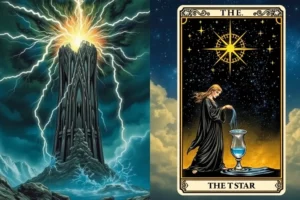
The magic of multiple-card readings lies in the relationships between the cards. Look for patterns, contrasts, and synergies that emerge when the cards are read together. For instance, if you draw the Three of Cups alongside the Five of Pentacles, you might interpret this as a contrast between celebration and hardship, suggesting that while joy is present, there’s also a need to address financial or emotional struggles. Alternatively, if the Sun and The Star appear together, their combined energy could signify hope, clarity, and renewed optimism after a period of darkness.
Pay attention to the elemental dignities (how the elements of the cards interact) and the suits involved. Cards from the same suit often amplify each other’s themes, while cards from opposing suits (e.g., Cups and Swords) may highlight internal conflicts or areas needing balance. Don’t forget to consider the card positions in your spread—whether a card appears in the “past” or “future” position can shift its meaning entirely when read in context with the others.

Common Challenges and How to Overcome Them
Reading multiple tarot cards isn’t without its challenges. One of the most common hurdles is feeling overwhelmed by the sheer volume of information. When faced with several cards, it’s easy to get stuck in overanalysis or second-guess your interpretations. To combat this, start by focusing on the dominant themes or emotions that stand out across the cards. Ask yourself, “What’s the overall mood here?” or “What message feels most urgent?” This helps distill the reading into its core essence.
Another challenge is when the cards seem contradictory or confusing. For example, drawing the Tower and the Ten of Cups together might initially feel jarring—one suggests upheaval, while the other promises joy. In such cases, look for the underlying lesson or the bigger picture. Perhaps the upheaval is necessary to clear the way for the joy, or maybe the Ten of Cups represents the long-term outcome after the chaos of the Tower. Always consider the context of your question and the narrative the cards are weaving together.
Lastly, avoid the temptation to force a story where none exists. If the cards don’t seem to connect, it’s okay to acknowledge that the reading might be pointing to unrelated energies or that the question needs refinement. Trust your intuition—if something doesn’t feel right, take a step back and reassess. Sometimes, the most profound insights come from the cards that don’t immediately make sense.
Pro Tips for Deeper and More Accurate Readings
To elevate your multiple-card readings, incorporate these pro tips into your practice. First, always shuffle your cards with intention. Hold your question in your mind as you shuffle, and trust that the cards will align with the energy of your inquiry. You can also use a clarifying card—a single card drawn after shuffling to refine the focus of your reading.
Another tip is to keep a tarot journal. After each reading, jot down the cards, your interpretations, and any insights that arise. Over time, you’ll notice patterns in how certain cards interact, which will deepen your understanding and confidence in your readings. Don’t forget to revisit old readings to see how the narratives evolved—this is a powerful way to track personal growth and validate your intuitive abilities.
Finally, practice reading cards in pairs or small groups before tackling larger spreads. Start with two cards and explore how their energies merge or clash. This builds your confidence in interpreting relationships between cards and prepares you for more complex readings. The more you play with combinations, the more intuitive and fluid your readings will become.
Conclusion
Reading multiple tarot cards together is a journey of discovery, intuition, and connection. By posing playful questions, choosing the right spreads, and interpreting the relationships between cards, you unlock a deeper level of insight that single-card readings simply can’t provide. Embrace the challenges as opportunities to refine your skills, and remember that every reading is a conversation between you, the cards, and the universe. With practice and an open heart, you’ll find that multiple-card readings become not just a tool for divination, but a gateway to profound self-awareness and clarity. So shuffle your deck, ask your question, and let the cards guide you on this magical journey of exploration and discovery.
FAQ
Why is it beneficial to read multiple tarot cards together?
Reading multiple cards together reveals interactions between energies and themes, offering a richer, more nuanced understanding of the situation than single-card readings.
What types of spreads work best for multiple-card readings?
Spreads like the three-card (past, present, future) and five-card spreads are ideal, allowing cards to interact and build a cohesive narrative.
How can I interpret contradictory cards in a multiple-card reading?
Look for the bigger picture or underlying lessons; contradictions may reflect necessary tensions or transitions in the querent's situation.
How do I avoid feeling overwhelmed when reading many cards?
Focus on dominant themes or emotions and trust your intuition to distill the core message rather than overanalyzing each card individually.
What are some pro tips for improving multiple-card tarot readings?
Shuffle with intention, keep a tarot journal to track insights and patterns, and practice reading cards in pairs or small groups before larger spreads.
Leave a Reply