Short Answer
Welcome to our comprehensive guide on the Death Tarot card, a powerful symbol of transformation and change. Whether you’re a seasoned tarot reader or a curious beginner, this guide will explore the multifaceted meanings of the Death card across different contexts. You’ll discover its traditional interpretations, symbolic imagery, practical applications in readings, and how it relates to personal growth. By the end, you’ll have a deeper understanding of how this card can guide you through life’s inevitable transitions.
The Death Tarot Card: A Symbol of Transformation
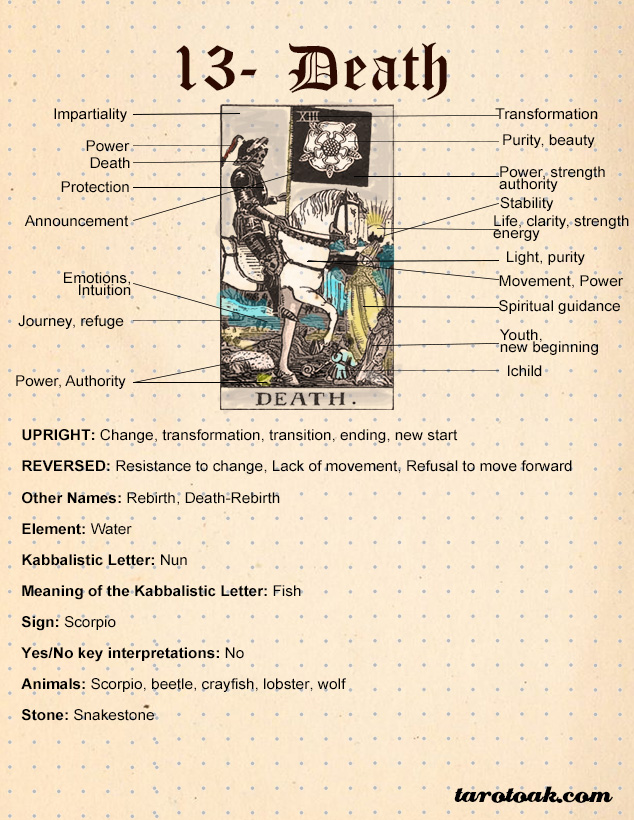
The Death card in the Major Arcana is often one of the most misunderstood cards in tarot. Despite its ominous name, the Death card rarely signifies physical death. Instead, it represents profound transformation, endings that make way for new beginnings, and the natural cycles of life. This card embodies the concept of metamorphosis—where old habits, relationships, or situations dissolve to make room for growth and renewal. Its imagery typically features a skeletal figure on horseback, often holding a black flag adorned with a white rose, symbolizing the purity that emerges from decay. The rising sun in the background hints at the dawn of a new era after a period of darkness.
In readings, the Death card signals that a significant change is on the horizon. This could manifest as the end of a job, the conclusion of a relationship, or a shift in personal beliefs. The key is to embrace these endings as necessary steps toward evolution. The Death card encourages you to release what no longer serves you and trust in the process of renewal. It reminds us that every ending is a precursor to a new beginning, and what appears to be a loss is often a transformation in disguise.
Symbolism and Imagery in the Death Card
The Death card’s symbolism is rich and layered, offering multiple layers of meaning depending on the deck’s artistic interpretation. The skeletal figure, often depicted as a knight or a reaper, represents the inevitability of change and the impermanence of life. The horse, usually black, symbolizes the unconscious mind or the forces of nature that drive transformation. The black flag with a white rose is a powerful contrast, illustrating how purity and enlightenment can emerge from darkness and decay. The rising sun in the background signifies hope, renewal, and the promise of a new day.
Different tarot decks may present the Death card with varying imagery, but the core themes remain consistent. For example, in the Rider-Waite-Smith deck, the card shows a skeletal figure riding a white horse, trampling over a fallen king, bishop, and commoner. This imagery underscores the idea that death levels the playing field, reminding us that all things must eventually end. In contrast, modern decks might depict the Death card with more abstract or surreal imagery, emphasizing the psychological and emotional aspects of transformation. Regardless of the artistic style, the Death card’s symbolism invites you to reflect on the cyclical nature of life and the inevitability of change.
Traditional and Modern Interpretations of the Death Card
Traditionally, the Death card is associated with endings, transitions, and the natural order of life. In older interpretations, it was often seen as a warning of literal death, but contemporary tarot readers have shifted this perspective to focus on metaphorical endings and personal growth. In modern tarot, the Death card is viewed as a catalyst for change, urging you to let go of the past and embrace new opportunities. It can indicate a major life transition, such as a career change, moving to a new location, or ending a toxic relationship.
In a reading, the Death card can also signify the need for radical self-reflection. It may suggest that you are holding onto outdated beliefs, habits, or relationships that are stifling your growth. The card encourages you to confront these aspects of your life and make conscious decisions about what to release. Additionally, the Death card can represent a period of mourning or grief, whether it’s the loss of a loved one, a cherished dream, or a part of your identity. However, it also assures you that healing and renewal are possible, even in the face of profound loss.
How the Death Card Appears in Different Tarot Spreads
The meaning of the Death card can vary significantly depending on its position in a tarot spread. In a past position, it may indicate that a significant change has already occurred, and you are now in a period of adjustment. In the present position, it suggests that a transformative event is unfolding or about to unfold in your life. If it appears in the future position, it can signify an impending change that will shape your path moving forward.
In a relationship spread, the Death card might indicate the end of a relationship or the need for a significant transformation within the relationship. In a career spread, it could signal a job change, a shift in professional goals, or the end of a particular phase in your career. In a spiritual spread, the Death card often represents a profound awakening or a shedding of old beliefs to make way for new spiritual insights. The key to interpreting the Death card in a spread is to consider its surrounding cards and the specific question or situation you are exploring.

Practical Applications: Using the Death Card in Readings
When the Death card appears in a reading, it’s essential to approach it with an open mind and a willingness to embrace change. Start by reflecting on the areas of your life where you feel stagnant or unfulfilled. Are there habits, relationships, or beliefs that no longer serve you? The Death card encourages you to release these aspects and trust in the process of renewal. It may also be helpful to journal about what you are ready to let go of and what you hope to invite into your life in its place.
In a tarot reading, the Death card can serve as a wake-up call, urging you to take action rather than passively accepting your circumstances. If you’re feeling stuck, this card is a reminder that change is not only possible but necessary for growth. It may also indicate that you need to set boundaries, whether in your personal or professional life, to protect your energy and well-being. Additionally, the Death card can be a sign that you need to embrace a more flexible and adaptable mindset, as rigid thinking can hinder your ability to navigate life’s transitions.
Common Misconceptions About the Death Card
One of the most pervasive misconceptions about the Death card is that it always signifies physical death. While this interpretation was more common in older tarot traditions, modern tarot readers emphasize the card’s metaphorical meanings. The Death card is far more likely to represent emotional, psychological, or spiritual transformation rather than literal death. Another common misconception is that the Death card is inherently negative. In reality, it is a neutral card that highlights the natural cycles of life. Without endings, there can be no new beginnings, and the Death card reminds us of this fundamental truth.
Some people also associate the Death card with bad luck or misfortune, but this is a narrow interpretation. While the card does indicate change, it is not inherently negative. Instead, it invites you to view change as an opportunity for growth and renewal. The Death card can be a powerful ally in times of transition, guiding you through the unknown and helping you emerge stronger and wiser. By reframing your perspective on the Death card, you can unlock its transformative potential and use it as a tool for personal evolution.
Conclusion
The Death Tarot card is a profound symbol of transformation, reminding us that endings are a natural and necessary part of life. Whether it appears in a reading as a sign of impending change or a call to release the past, the Death card encourages us to embrace the unknown with courage and trust. By understanding its symbolism, interpretations, and practical applications, you can harness the power of this card to navigate life’s transitions with greater clarity and confidence.
Remember, the Death card is not a harbinger of doom but a herald of renewal. It challenges you to let go of what no longer serves you and step boldly into the future. As you encounter this card in your readings, take it as an invitation to grow, evolve, and embrace the transformative power of change. With an open heart and a willingness to release the old, you can welcome the new with grace and optimism.
FAQ
What is the main meaning of the Death card in tarot?
The Death card mainly represents transformation, endings, and the start of new life cycles rather than physical death.
How should I view the Death card when it appears in a reading?
It should be viewed as a sign to embrace change and let go of what no longer serves you for personal growth.
Can the Death card indicate positive outcomes?
Yes, it often signals renewal, new opportunities, and personal evolution after endings.
Does the Death card have the same meaning in all tarot decks?
While the imagery may vary, the core themes of transformation and endings remain consistent across decks.
Leave a Reply