Short Answer
Welcome to a deep exploration of the Hierophant tarot card—a symbol of tradition, spiritual guidance, and the power of conformity in the cosmic dance of fate. Whether you’re a seasoned tarot reader or a curious beginner, this guide will illuminate the Hierophant’s role in readings, its upright and reversed meanings, and the profound lessons it offers about structure, wisdom, and the search for meaning. By the end, you’ll understand how this card bridges the gap between the divine and the human, offering clarity in moments of uncertainty.
The Hierophant as a Beacon of Tradition and Spiritual Authority
The Hierophant is the fifth card in the Major Arcana, standing as a bridge between the divine and the earthly realms. Often depicted as a religious figure—sometimes a pope or a wise teacher—he represents the established order, spiritual guidance, and the transmission of sacred knowledge. Unlike the Fool’s journey of discovery, the Hierophant embodies the wisdom of tradition, the comfort of ritual, and the importance of learning from those who came before us.
In a tarot reading, the Hierophant’s presence signals a time to seek guidance from mentors, religious institutions, or time-honored practices. It’s a reminder that wisdom isn’t always found in rebellion but in the embrace of structured learning. The card encourages you to ask: Where can I find the wisdom I need? Whether it’s through a spiritual leader, a mentor, or a well-worn book of philosophy, the Hierophant invites you to honor the past while shaping your future.
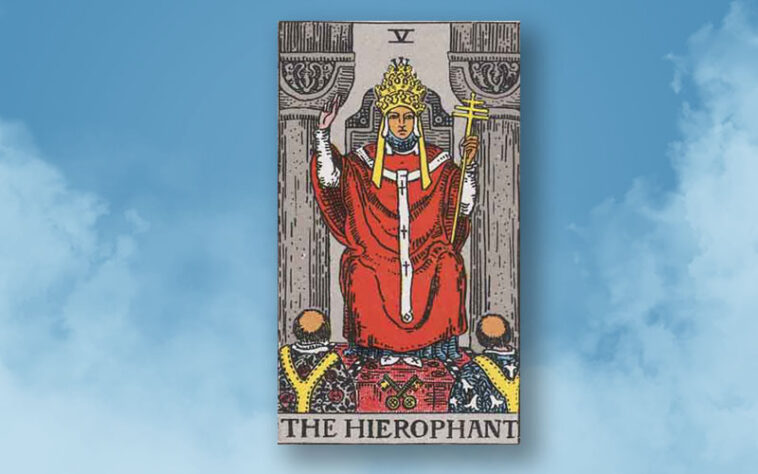
Upright Hierophant: Embracing Structure, Ritual, and Spiritual Growth
When the Hierophant appears upright in a reading, it speaks to the power of structure, conformity, and spiritual alignment. This card often signifies:
- Seeking Wisdom: You may be drawn to formal education, religious teachings, or mentorship. The Hierophant encourages you to embrace these paths as sources of enlightenment.
- Tradition and Ritual: It highlights the importance of rituals—whether in religion, personal habits, or cultural practices—as tools for grounding and meaning.
- Conformity for Growth: While conformity often carries a negative connotation, the Hierophant reframes it as a necessary step toward spiritual and personal evolution. Sometimes, following established paths leads to greater freedom.
- Marriage and Commitment: In matters of the heart, the Hierophant can indicate a traditional union, such as marriage, or a commitment to shared values and beliefs.
The upright Hierophant is a call to honor your roots, whether they’re spiritual, familial, or cultural. It asks you to consider: What traditions or beliefs have shaped me, and how can I use them as a foundation for my future?
Reversed Hierophant: Challenging Dogma and Seeking Personal Truth
A reversed Hierophant flips the script, urging you to question rigid structures and dogmatic beliefs. This card’s appearance suggests:
- Rebellion Against Tradition: You may feel stifled by outdated rules, religious constraints, or societal expectations. The reversed Hierophant encourages you to break free and define your own path.
- Lack of Guidance: You might be searching for meaning but struggling to find a mentor or system that resonates with you. This is a sign to trust your intuition over external authorities.
- Spiritual Crisis: The card can signal a disconnect from your faith or a crisis of belief. It’s an invitation to explore spirituality on your own terms, free from dogma.
- Misalignment with Values: You may be conforming to expectations that no longer serve you. The reversed Hierophant prompts you to realign with your true beliefs, even if it means going against the grain.

In love and relationships, the reversed Hierophant might indicate a partnership that feels restrictive or a need to redefine what commitment means to you. It’s a powerful reminder that while tradition has its place, your personal truth is equally valid.
The Hierophant in Love, Career, and Personal Growth
In Love: The Hierophant in a love reading often points to a traditional relationship, such as marriage or a long-term commitment built on shared values. If reversed, it may suggest a need to break free from a relationship that feels confining or to explore non-traditional forms of love.
In Career: This card can indicate a job that aligns with your spiritual or ethical beliefs, or a role that involves teaching, mentoring, or preserving tradition. Reversed, it might signal a career that feels unfulfilling due to rigid corporate structures or a lack of alignment with your personal values.
In Personal Growth: The Hierophant is a guide on your journey toward self-discovery. It encourages you to seek wisdom from trusted sources while also questioning what no longer serves your highest good. Whether upright or reversed, it’s a card of introspection and evolution.
Metaphors and Symbolism: Decoding the Hierophant’s Hidden Messages
The Hierophant is rich with symbolism, each element offering a layer of meaning:
- The Triple Crown: Often seen in depictions of the Hierophant, the triple crown represents the union of the spiritual, mental, and physical realms. It’s a reminder that true wisdom encompasses all aspects of life.
- The Keys: In some tarot decks, the Hierophant holds two keys—one silver, one gold—symbolizing the balance between the conscious and subconscious, or the material and spiritual worlds.
- The Crossed Keys: This motif, found in the Rider-Waite-Smith deck, signifies the unlocking of hidden knowledge and the duality of tradition and innovation.
- The Disciples: The two figures at the Hierophant’s feet often represent students or seekers, emphasizing the card’s role as a teacher and guide.
These symbols invite you to look beyond the surface and explore the deeper truths the Hierophant holds. They remind you that wisdom is not just about following rules but about understanding the why behind them.
Common Misconceptions About the Hierophant
Despite its rich symbolism, the Hierophant is often misunderstood. Here are a few misconceptions to dispel:
- “The Hierophant is all about blind conformity.” While the card values tradition, it’s not about mindless obedience. It’s about discerning which traditions serve your growth and which no longer align with your path.
- “The Hierophant is only for religious people.” While the card has strong ties to spirituality, it’s also about any system of belief—whether religious, philosophical, or personal—that provides structure and meaning.
- “The reversed Hierophant is always negative.” Reversed, the card can be a catalyst for positive change, urging you to break free from limiting beliefs and forge your own path.
How to Work with the Hierophant’s Energy in Your Life
Whether you’re drawing the Hierophant in a reading or simply resonating with its energy, here are ways to harness its wisdom:
- Seek Mentorship: If the Hierophant appears, consider finding a teacher, coach, or spiritual guide who can offer insights tailored to your journey.
- Explore Rituals: Incorporate rituals into your daily life—whether it’s meditation, journaling, or a morning routine—to create structure and meaning.
- Question Dogma: Use the reversed Hierophant’s energy to examine beliefs that no longer serve you. Ask yourself: What traditions or rules am I holding onto out of habit rather than truth?
- Balance Tradition and Innovation: The Hierophant teaches that both structure and creativity are essential. Find ways to honor your roots while embracing new ideas.
Conclusion: The Hierophant as Your Guide to Meaningful Living
The Hierophant is more than just a tarot card; it’s a mirror reflecting your relationship with tradition, authority, and personal growth. Whether it appears upright or reversed, it invites you to explore the balance between conformity and individuality, structure and freedom. In a world that often glorifies rebellion, the Hierophant reminds us that wisdom can also be found in the wisdom of the past.
As you navigate your tarot journey, let the Hierophant be your guide—a teacher, a challenger, and a reminder that true enlightenment comes from both honoring tradition and forging your own path. Whether you’re seeking spiritual guidance, questioning dogma, or simply exploring the depths of the Major Arcana, the Hierophant offers a profound lesson: Meaning is found not just in breaking the rules, but in understanding why they exist—and when to transcend them.
FAQ
What does the Hierophant card represent in tarot?
The Hierophant represents tradition, spiritual guidance, conformity, and the pursuit of wisdom through established structures and rituals.
What is the meaning of the Hierophant card when it appears reversed?
When reversed, the Hierophant suggests questioning rigid beliefs, breaking free from dogma, and seeking personal truth beyond tradition.
How does the Hierophant card apply to love readings?
In love readings, the Hierophant indicates traditional relationships or marriage when upright, and a need to redefine commitment or break free from restrictive partnerships when reversed.
What symbolism is associated with the Hierophant tarot card?
Key symbols include the triple crown (spiritual, mental, physical realms), crossed keys (unlocking hidden knowledge), and disciples representing guidance and teaching.
How can I work with the energy of the Hierophant card?
You can seek mentorship, incorporate rituals into daily life, question outdated beliefs, and balance honoring tradition with embracing innovation.
Leave a Reply