Short Answer
In this guide, you’ll uncover the profound layers of the Four of Swords tarot card—a symbol of rest, recovery, and silent warnings. Often misunderstood as mere inactivity, this card carries a deeper message about the power of pause, the necessity of healing, and the wisdom of listening to the unspoken. You’ll explore its symbolic meanings, its role in personal growth, and how it contrasts with the frenetic pace of modern life. By the end, you’ll see this card not as a sign of weakness, but as a strategic retreat that fuels resilience and clarity.
The Four of Swords: A Pause in the Storm
The Four of Swords depicts a knight lying still in a cathedral, hands folded in prayer or meditation, with three swords hanging above and one beneath him. This imagery is far from passive—it’s a deliberate act of stillness. The knight’s posture suggests surrender, not defeat; a moment of respite where the mind and body regroup. The swords, symbols of conflict and intellect, are temporarily set aside, allowing space for reflection. This card is a reminder that even the most battle-hardened warriors need rest to recharge.
In a world that glorifies constant productivity, the Four of Swords challenges this narrative. It asks: What if your greatest strength lies not in relentless action, but in the ability to pause? The card’s message is clear—rest is not laziness; it’s a strategic necessity. Whether you’re recovering from burnout, processing emotional turmoil, or simply needing clarity, this card validates the importance of stepping back. It’s a call to honor your limits and trust that silence can be as powerful as speech.
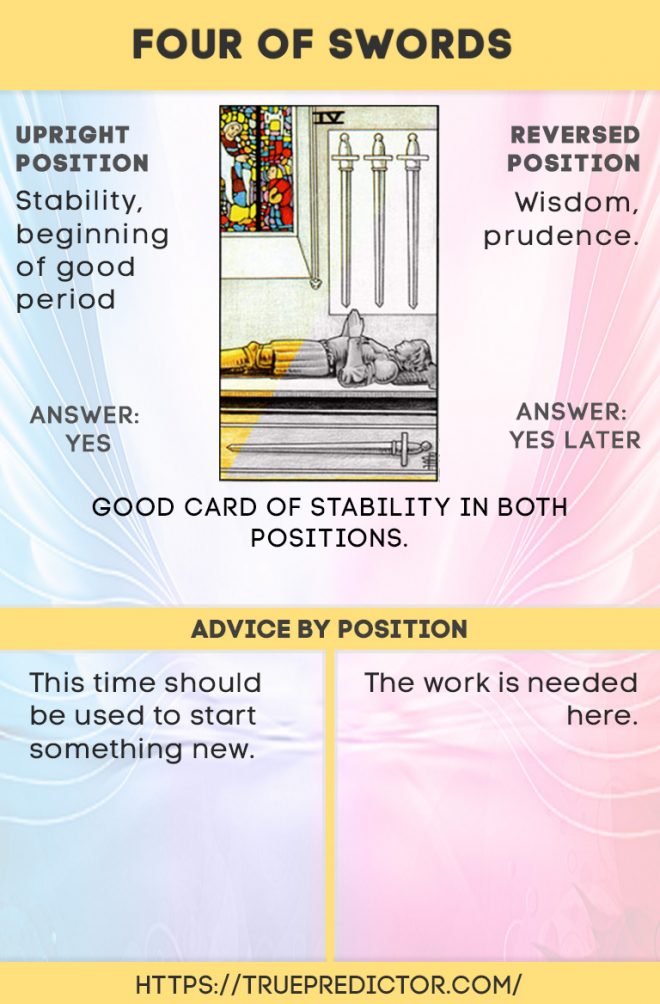
The cathedral setting is no coincidence. It represents a sacred space—a place where the noise of the external world fades, and inner wisdom emerges. Here, the Four of Swords becomes a metaphor for spiritual retreat, a sanctuary where the soul is nourished. This card doesn’t demand you abandon your responsibilities; it asks you to create boundaries, to carve out moments of stillness even in chaos. The swords above the knight may seem like a looming threat, but they’re also a reminder that the tools of conflict can be hung up—temporarily—when healing is the priority.
Rest as a Form of Rebellion
In a culture that equates self-worth with busyness, the Four of Swords is a radical act of defiance. It whispers that rest is not a luxury but a rebellion—a way to reclaim agency over your time and energy. This card often appears when you’re on the brink of exhaustion, urging you to listen to your body’s signals before they become screams. It’s a gentle nudge to prioritize recovery over relentless striving, to choose depth over superficial productivity.
Consider the metaphor of a forest after a storm. The trees that bend and rest are the ones that survive the tempest. Similarly, the Four of Swords teaches that resilience isn’t about enduring without pause; it’s about knowing when to retreat so you can return stronger. This card can also highlight the importance of mental health, encouraging you to seek therapy, meditation, or simply a day of solitude. Rest, in this context, becomes an act of self-preservation and empowerment.
For those in high-pressure roles—whether in careers, caregiving, or creative pursuits—the Four of Swords is a lifeline. It validates the need for boundaries and self-care, reminding you that you’re not a machine. The card’s energy is about reclaiming your humanity, acknowledging that even the most driven individuals need moments of stillness to process, heal, and realign with their true purpose.
Silent Warnings: The Unspoken Messages of the Four of Swords
While the Four of Swords is often associated with rest, it also carries subtle warnings—messages that are easy to overlook in the noise of daily life. One of its key lessons is the danger of ignoring your body’s need for pause. When this card appears, it may signal that you’re pushing yourself too hard, ignoring signs of burnout, or suppressing emotions that demand attention. The swords in the card aren’t just physical tools; they represent the mental and emotional burdens you carry. Ignoring them can lead to breakdowns, resentment, or a sense of being overwhelmed.
Another warning lies in the card’s association with isolation. While rest is necessary, prolonged withdrawal can become a trap. The Four of Swords might be urging you to find balance—not just in solitude, but in reconnecting with yourself and others when the time is right. It’s a reminder that healing isn’t a solo journey; sometimes, it requires reaching out for support or sharing your burdens. The card’s energy is about discernment: knowing when to step back and when to re-engage with the world.
Additionally, the Four of Swords can highlight the risk of stagnation. Rest is vital, but it’s not the same as avoidance. If you’re using this card as an excuse to procrastinate or evade responsibilities, the message may shift from “pause” to “confront.” The card challenges you to ask: Am I resting to heal, or am I hiding to escape? The difference lies in intention—the former is an act of self-care, while the latter is a form of self-sabotage.
Practical Ways to Embrace the Four of Swords Energy
Incorporating the Four of Swords into your life isn’t about doing more; it’s about doing less, but with intention. Start by creating rituals that honor stillness. This could be a daily meditation practice, a weekly “digital detox” where you unplug from screens, or even a monthly solo retreat to a quiet space. The goal isn’t to eliminate all activity but to cultivate moments where you’re fully present with yourself, free from distractions.
Another way to work with this card is through journaling. Write about what’s draining your energy and what truly nourishes your soul. Ask yourself: Where am I forcing effort where I should be allowing rest? What boundaries do I need to set to protect my well-being? The act of writing can help you identify patterns of overcommitment and clarify what changes are necessary.
For those who struggle with guilt around rest, reframe your mindset. Instead of seeing pauses as wasted time, view them as investments in your future self. The Four of Swords teaches that the most productive people aren’t those who work the longest hours, but those who know when to stop and recharge. This card can also inspire you to create a “rest plan”—a schedule that includes regular breaks, even if they’re just 10 minutes of silence in a busy day.

If you’re in a leadership role, the Four of Swords can remind you to model healthy boundaries for your team or family. Encourage others to prioritize rest, and lead by example. In relationships, this card might prompt you to give your partner or loved ones the space they need to process their emotions, trusting that their silence isn’t rejection but a form of healing.
Conclusion
The Four of Swords is a card of paradox—a symbol of stillness in a world that demands constant motion. It teaches that rest is not a sign of weakness but a strategic retreat that fuels resilience, clarity, and renewal. Whether you’re recovering from burnout, seeking mental clarity, or simply needing a break from the noise, this card validates the power of pause. It’s a reminder that the most profound transformations often happen in silence, not in the clamor of endless doing.
Embrace the Four of Swords as your ally. Let it guide you to create spaces of stillness, to honor your limits, and to trust that healing is not a detour but a destination. In a culture that glorifies hustle, this card is a quiet revolution—one that says your worth isn’t measured by how much you produce, but by how deeply you can rest, reflect, and return. The swords may hang above you, but they don’t have to define you. Instead, let them be a backdrop to your moments of peace, a reminder that even in stillness, you are strong.
FAQ
What does the Four of Swords card mean?
The Four of Swords represents rest, recovery, and the need for a break to regain clarity and resilience.
How can the Four of Swords card help with mental health?
This card emphasizes the importance of acknowledging your limits and taking necessary breaks to avoid burnout.
Leave a Reply