Short Answer
Dive into the mystical world of Tarot with this comprehensive guide, where ancient symbols meet modern curiosity. Whether you’re a seasoned reader or a curious beginner, this article will illuminate the meanings behind each Tarot card—from the enigmatic Major Arcana to the nuanced Minor Arcana suits. Discover how these cards serve as mirrors to your soul, offering insights, warnings, and revelations. By the end, you’ll not only understand the traditional interpretations but also appreciate the poetic language and symbolic depth that make Tarot a timeless tool for self-discovery and guidance.
The Major Arcana: The Soul’s Journey Unveiled
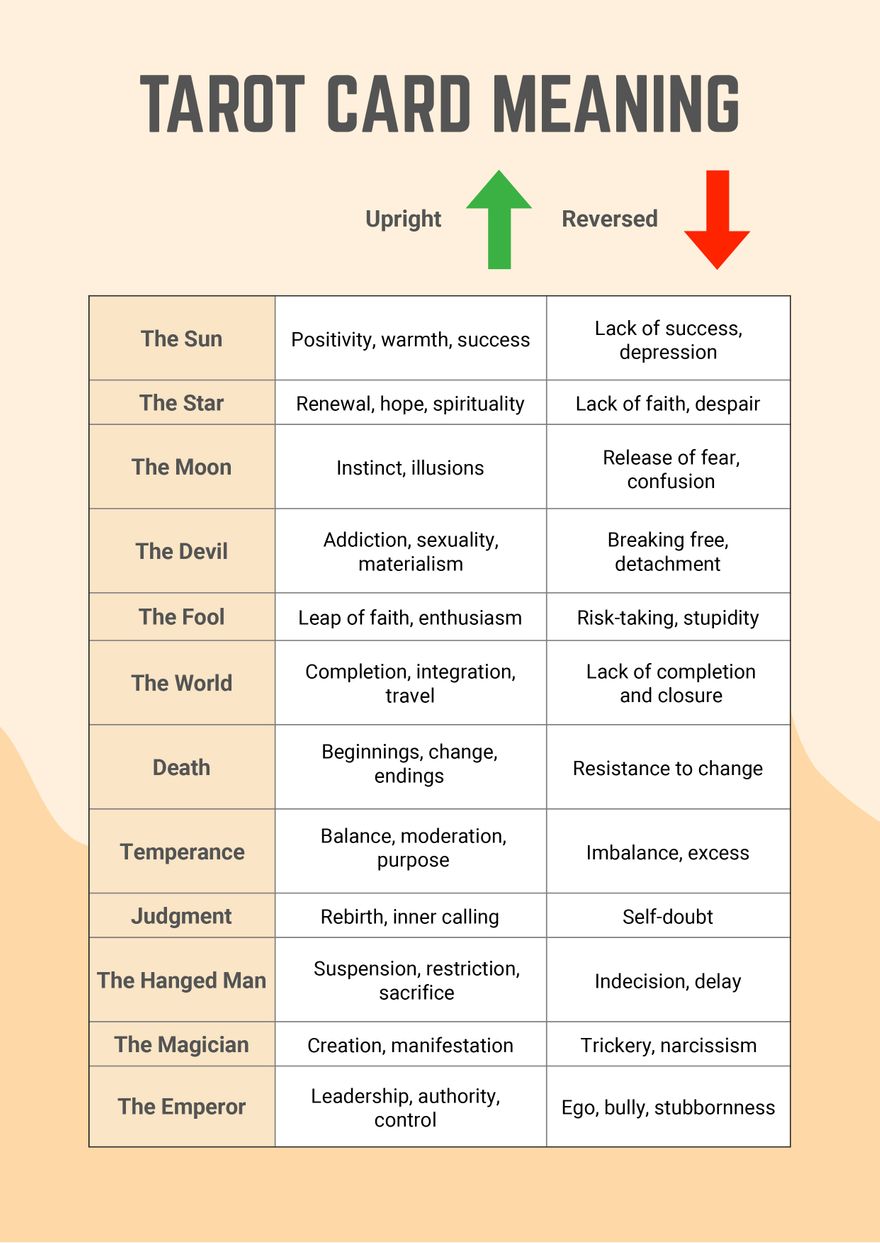
The Major Arcana consists of 22 cards, each representing a pivotal moment or lesson in the Fool’s journey—a metaphorical path that mirrors the human experience. These cards are the heart of the Tarot, embodying universal themes like love, transformation, and destiny. For instance, The Fool symbolizes new beginnings and spontaneity, while The Lovers speaks to choices, relationships, and harmony. The Death card, often misunderstood, signifies rebirth and change rather than literal demise. These cards act as cosmic storytellers, guiding you through life’s most profound questions.
The Minor Arcana: The Tapestry of Daily Life
Unlike the Major Arcana’s grand themes, the Minor Arcana—comprising 56 cards—focuses on the everyday aspects of life. Divided into four suits—Cups, Pentacles, Swords, and Wands—each suit corresponds to an element and a facet of human experience. Cups (Water) govern emotions and relationships, Pentacles (Earth) represent material wealth and stability, Swords (Air) deal with intellect and conflict, and Wands (Fire) embody creativity and passion. Cards like the Three of Cups celebrate joy and friendship, while the Ten of Swords warns of betrayal or rock-bottom moments before renewal.

Court Cards: The Personalities Within the Deck
The 16 Court Cards—Page, Knight, Queen, and King of each suit—are among the most dynamic and personalized cards in the Tarot. They often represent people in your life or aspects of your own personality. For example, the Queen of Pentacles embodies nurturing abundance and practicality, while the Knight of Swords may signal impulsive action or a fast-moving situation. These cards challenge you to reflect: Are you embodying the disciplined energy of the King of Wands, or do you need to channel the curiosity of the Page of Cups? Their interpretations are fluid, adapting to the context of your reading.
Reversed Cards: Shadows and Hidden Truths
When a Tarot card appears upside-down, it’s not a sign of failure but an invitation to explore its shadow side. Reversed cards often highlight internal struggles, blocked energy, or untapped potential. For instance, the Five of Cups reversed suggests moving past grief, while the Chariot reversed may indicate a lack of direction. However, reversals aren’t always negative; they can also signal a need for introspection or a hidden opportunity. The key is to read them with an open mind, allowing the cards to reveal deeper layers of meaning.

Elemental Dignities: The Alchemy of Card Interactions
Elemental dignities refer to how the elements (Fire, Water, Air, Earth) interact when cards appear together in a spread. For example, Fire (Wands) and Water (Cups) may create a passionate yet emotional dynamic, while Air (Swords) and Earth (Pentacles) could indicate a need for logical planning in practical matters. Understanding these interactions adds a layer of sophistication to your readings, helping you interpret the synergy between cards. It’s like decoding a secret language where each element plays a role in the story the Tarot is telling.
Tarot Spreads: Crafting Your Narrative
The way you lay out the cards—known as a spread—shapes the story the Tarot reveals. A simple Three-Card Spread (Past, Present, Future) offers clarity, while a Celtic Cross delves into complex life questions. For deeper self-exploration, try a Self-Love Spread or a Career Path Spread. Each position in a spread acts as a chapter, and the cards’ interactions create a narrative unique to you. Experiment with different layouts to find the one that resonates with your intuition and questions.
The Language of Symbols: Decoding the Imagery
Tarot cards are rich with symbolism, from the colors and objects to the characters’ poses and expressions. For instance, the Hermit’s lantern represents inner wisdom, while the Hanged Man’s suspended figure suggests surrender and new perspectives. Animals, too, carry meaning—the fox in the Page of Wands hints at cleverness, while the lion in Strength embodies courage and mastery. Learning to “read” these symbols is like learning a visual language that speaks directly to your subconscious.
Tarot as a Tool for Growth
Beyond divination, Tarot is a powerful tool for personal development. It encourages self-reflection, helps you confront fears, and fosters creativity. Whether you use it for daily draws, meditation, or deep introspective sessions, the Tarot acts as a mirror, reflecting your inner world back to you. It doesn’t predict the future but empowers you to shape it. By engaging with the cards, you cultivate intuition, clarity, and a deeper connection to your inner voice.
Conclusion
The Tarot is far more than a deck of cards—it’s a gateway to understanding the human experience in all its complexity. From the archetypal journeys of the Major Arcana to the intricate details of the Minor Arcana, each card offers a piece of the puzzle. Whether you’re drawn to the Tarot for guidance, inspiration, or sheer fascination, its language of symbols and metaphors provides endless opportunities for exploration. Embrace the mystery, trust your intuition, and let the cards guide you on your path to self-discovery.
FAQ
What do the Major Arcana cards represent?
The Major Arcana consists of 22 cards representing pivotal moments or lessons in the Fool’s journey, embodying universal themes like love, transformation, and destiny.
How should reversed Tarot cards be interpreted?
Reversed Tarot cards invite exploration of their shadow side, highlighting internal struggles, blocked energy, or untapped potential, but can also signal introspection or hidden opportunities.
What is the significance of Tarot spreads?
Tarot spreads determine how cards are laid out in a reading, shaping the narrative and providing clarity on the questions being explored.
Can Tarot be used for personal development?
Yes, Tarot serves as a powerful tool for self-reflection, helping individuals confront fears and fostering creativity.
Leave a Reply