Short Answer
Welcome to your ultimate Tarot cheat sheet—a concise yet powerful guide designed to transform your understanding of Tarot and spark a deeper curiosity about its wisdom. Whether you’re a beginner or looking to refine your skills, this one-page resource will help you grasp the essentials of Tarot readings, symbolism, and interpretation. By the end, you’ll feel more confident in your ability to read cards intuitively and uncover meaningful insights.
What Is Tarot and Why Use a Cheat Sheet?
Tarot is a divination tool that uses a deck of 78 cards to offer guidance, reflection, and clarity. Each card carries rich symbolism, archetypes, and meanings that can be interpreted in various contexts—from love and career to personal growth. A cheat sheet acts as a quick reference, helping you decode card meanings, spreads, and intuitive cues without overwhelming memorization. Think of it as a bridge between raw intuition and structured knowledge, making your readings more fluid and insightful.
The Structure of a Tarot Deck
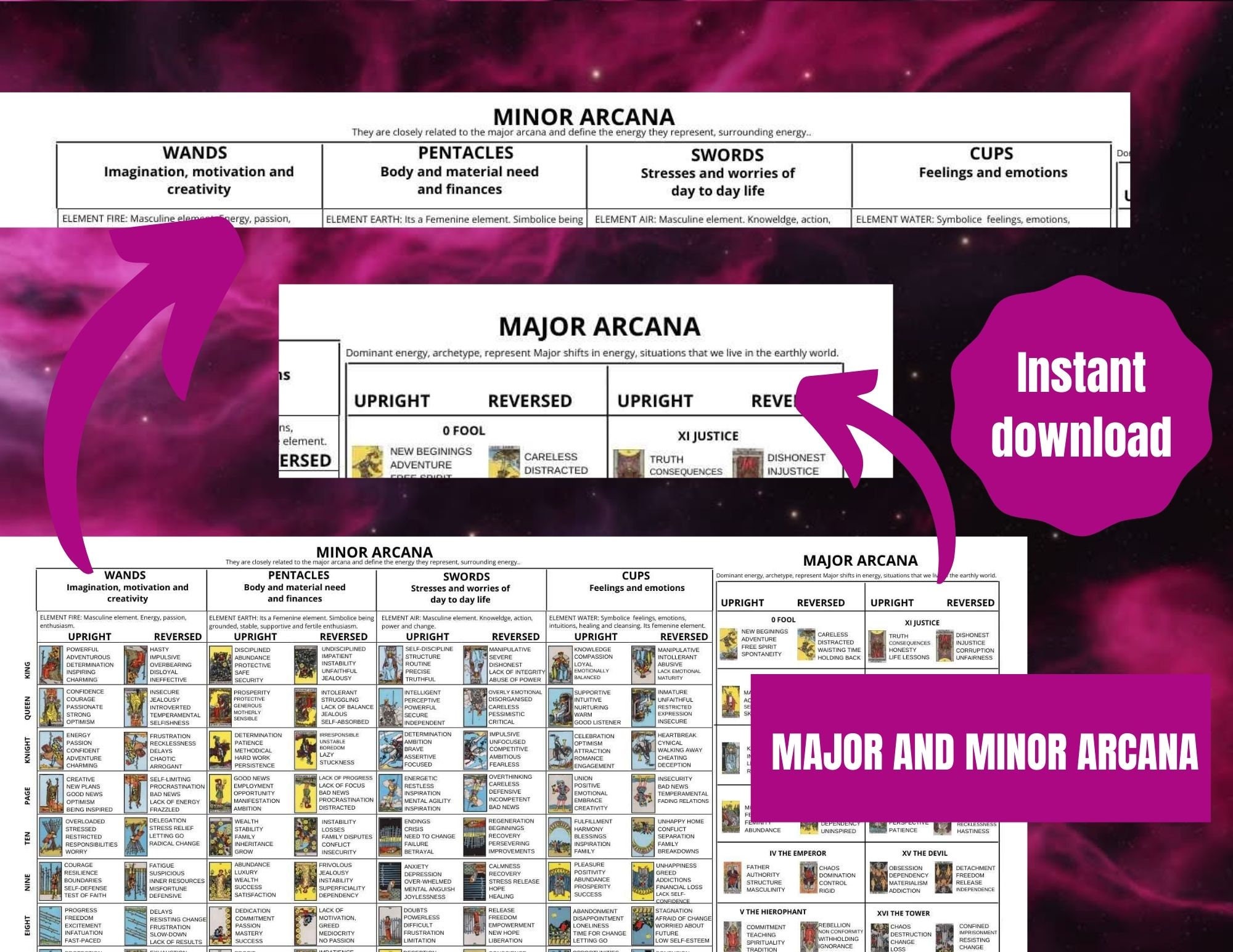
A standard Tarot deck is divided into two main sections: the Major Arcana and the Minor Arcana. The Major Arcana consists of 22 cards, each representing significant life themes or spiritual lessons (e.g., The Fool, The Lovers, Death). These cards often signify major turning points or karmic influences. The Minor Arcana has 56 cards split into four suits—Cups, Pentacles, Swords, and Wands—each reflecting everyday experiences. Cups relate to emotions, Pentacles to material matters, Swords to intellect, and Wands to creativity and passion. Understanding this structure is key to interpreting readings accurately.
How to Read Tarot Cards Intuitively
While memorizing card meanings is helpful, intuition plays a crucial role in Tarot. Start by shuffling the deck and focusing on your question or intention. Draw a card and observe your immediate reactions—colors, symbols, or emotions that stand out. Trust your gut feeling; sometimes, the card’s message resonates more through intuition than traditional definitions. For example, if The Tower appears and you feel a sense of release or clarity, lean into that interpretation rather than defaulting to its “disaster” label. Over time, your intuitive connection with the cards will deepen.
Essential Tarot Spreads for Beginners
Tarot spreads are layouts that determine how cards are drawn and interpreted. For beginners, start with simple spreads like the Single-Card Pull for daily guidance or the Three-Card Spread (Past, Present, Future) to explore a situation’s timeline. The Celtic Cross, a classic 10-card spread, offers a comprehensive view of challenges, influences, and potential outcomes. Experiment with different spreads to see what resonates with you. Remember, there’s no “wrong” way—your approach should feel natural and aligned with your question.
Decoding Card Meanings: Major Arcana Highlights
Familiarize yourself with the Major Arcana’s core themes to recognize their significance in readings. The Fool symbolizes new beginnings and spontaneity, while The Magician represents manifestation and resourcefulness. Justice embodies balance and truth, and The Star offers hope and inspiration. Pay attention to reversed cards (upside-down), which often indicate blocked energy or internal struggles. For instance, The Lovers reversed might suggest disharmony in relationships, while upright, it signifies alignment and choices. Use these cards as anchors for deeper exploration.
Working with the Minor Arcana Suits
Each suit in the Minor Arcana carries distinct energy. Cups (emotions) often reflect relationships, creativity, and intuition. Ace of Cups, for example, heralds new emotional beginnings, while Three of Cups celebrates friendship and joy. Pentacles (material world) focus on finances, work, and stability. The Ten of Pentacles could indicate legacy or abundance, while Five of Pentacles might highlight financial stress. Swords (intellect) deal with thoughts, conflicts, and communication. The Ace of Swords signals clarity, while Eight of Swords suggests feeling trapped by overthinking. Wands (passion) ignite motivation, ambition, and inspiration. The Page of Wands embodies enthusiasm, while The Chariot reflects determination and control.
Common Tarot Pitfalls and How to Avoid Them
One of the biggest mistakes is over-relying on guidebooks or rigid interpretations. Tarot is subjective—context matters. Avoid jumping to conclusions based on a single card; consider its position in the spread and surrounding cards. For example, The Death card often frightens people, but it rarely signifies literal death. Instead, it heralds transformation. Another pitfall is reading for others without their consent or ethical boundaries. Always approach readings with respect and clarity about their purpose.
Enhancing Your Tarot Practice
To grow your Tarot skills, keep a journal of your readings, noting card combinations, intuitive hits, and outcomes. Study card reversals (their traditional and personal meanings) to add nuance. Practice regularly, even if it’s just pulling a daily card. Engage with Tarot communities or decks that resonate with you—like the Rider-Waite-Smith or modern decks such as the Modern Witch Tarot. The more you interact with the cards, the more their language will unfold naturally.

Conclusion
Tarot is a profound tool for self-discovery, offering a mirror to your subconscious and a compass for life’s journey. This cheat sheet is your starting point—a foundation to build upon as you explore the cards’ depths. Remember, Tarot is not about predicting the future but about uncovering hidden truths and embracing new perspectives. Let curiosity guide you, trust your intuition, and allow the cards to illuminate paths you may not have considered. With practice and an open heart, your Tarot practice will evolve into a transformative and enlightening experience.
Leave a Reply