Short Answer
Welcome to your ultimate beginner’s cheat sheet for understanding tarot card meanings! Whether you’re just starting your journey into the mystical world of tarot or looking to deepen your knowledge, this guide will help you decode the symbolism, significance, and interpretations of the cards. You’ll learn how to approach tarot with confidence, pose meaningful questions, and navigate potential challenges along the way. By the end, you’ll have a solid foundation to begin your own readings and connect with the wisdom of the cards.
Why Tarot Cards Matter: A Playful Question to Start
Before diving into the meanings, let’s ask a playful question: What if the tarot isn’t just about predicting the future but about uncovering hidden truths and sparking self-reflection? Tarot cards serve as mirrors, reflecting your inner world and offering guidance when you’re stuck in life’s maze. They encourage you to pause, think critically, and explore possibilities you might otherwise overlook. Think of them as a conversation starter with your subconscious—one that’s both fun and profound. By framing tarot as a tool for insight rather than a crystal ball, you’ll approach it with curiosity rather than fear.
The Major Arcana: The Big Picture of Your Journey
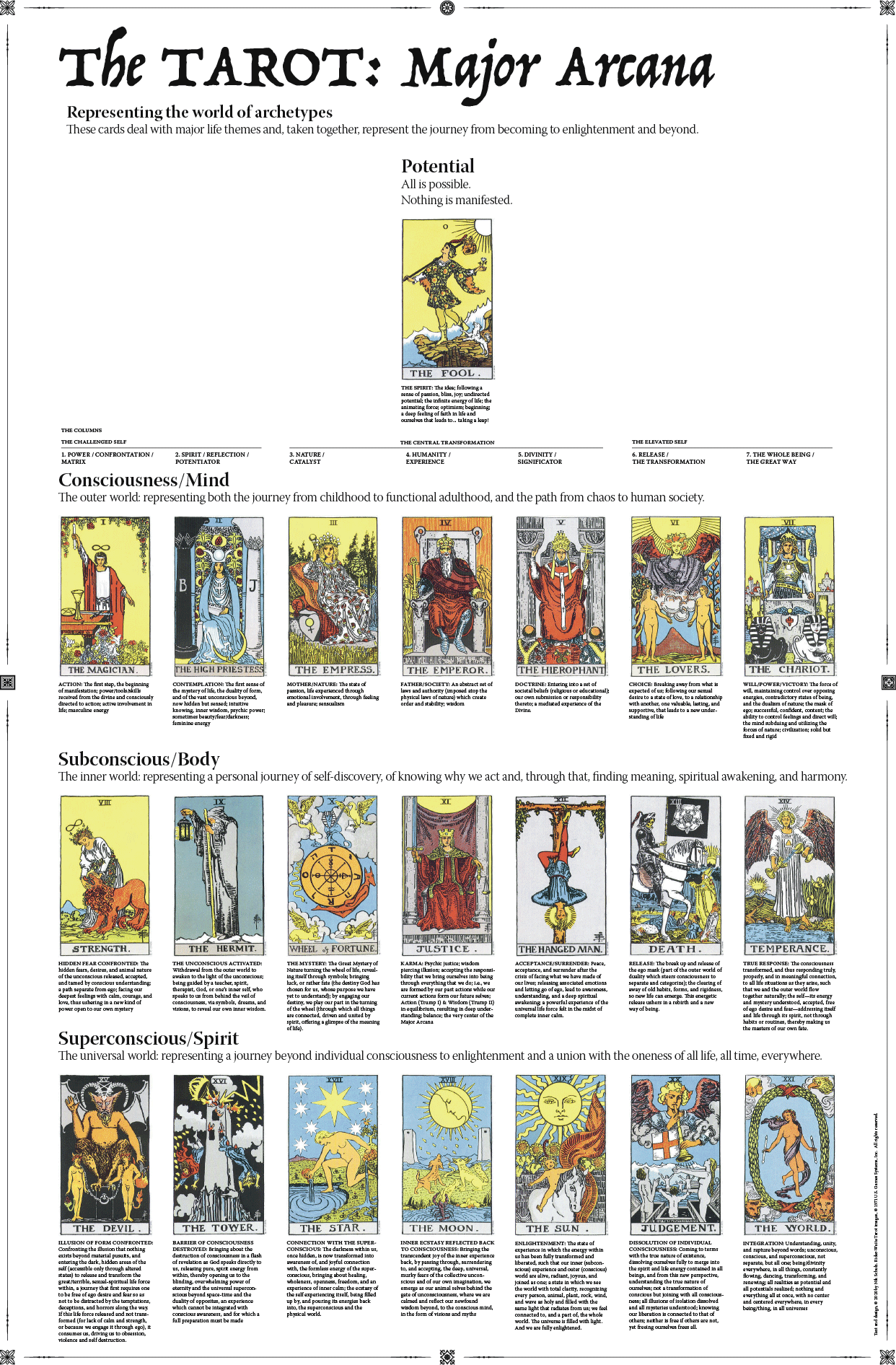
The Major Arcana consists of 22 cards, each representing a significant life lesson or spiritual milestone. These cards often appear in readings to highlight major themes or influences in your life. For example, The Fool symbolizes new beginnings, spontaneity, and taking a leap of faith, while The Lovers may indicate relationships, choices, or harmony. The Major Arcana acts as a roadmap, guiding you through the stages of personal growth. When these cards appear, pay attention—they’re usually pointing to something transformative.
Minor Arcana: The Everyday Details of Life
Unlike the Major Arcana, the Minor Arcana (56 cards) focuses on the day-to-day aspects of life. Divided into four suits—Wands, Cups, Swords, and Pentacles—each suit corresponds to a different element and area of experience. Wands relate to creativity and passion, Cups to emotions and relationships, Swords to intellect and conflict, and Pentacles to material wealth and practicality. For instance, the Three of Cups might suggest celebration and friendship, while the Five of Pentacles could indicate financial struggle or feeling left out. Mastering the Minor Arcana helps you interpret the nuances of your daily life with clarity.
Court Cards: The Personalities in Your Reading
Court cards—Page, Knight, Queen, and King—represent people, energies, or aspects of yourself. They can be tricky to interpret because their meaning depends heavily on the context of the reading. For example, a Queen of Swords might symbolize a sharp-witted, independent woman in your life or an aspect of yourself that values logic over emotion. Pay attention to the card’s position and surrounding cards to determine whether it’s referring to a person or a personal trait. Court cards add depth to your readings by highlighting the roles people play in your story.

Posing the Right Questions: Avoiding the Pitfalls
A common challenge for beginners is asking vague or overly complex questions that lead to unclear answers. To get the most out of your tarot readings, frame your questions with precision and openness. Instead of asking, “Will I get the job?” try, “What do I need to know about my job search right now?” This shifts the focus from a yes/no answer to a more insightful exploration. Avoid questions that rely on fortune-telling, like “When will I meet my soulmate?” Instead, ask, “What energy should I cultivate to attract love?” The key is to pose questions that encourage reflection rather than prediction.
Reversed Cards: Embracing the Shadow Side
Reversed cards (when a card appears upside down) can feel intimidating, but they’re simply highlighting blocked energy or internal struggles. For example, the Ten of Swords reversed might indicate recovery from a painful ending, while the Chariot reversed could suggest a lack of direction or control. Don’t panic if you see reversed cards—view them as opportunities to address what’s holding you back. They’re not “bad” cards; they’re invitations to dig deeper and uncover hidden layers of your situation.
Practical Tips for Beginners: Building Confidence
Start by familiarizing yourself with the cards through daily draws. Pull one card each morning and reflect on its message for your day. Keep a tarot journal to track your interpretations and notice patterns over time. Don’t rush to memorize every card—focus on the ones that resonate with you first. Use guidebooks or apps as references, but trust your intuition. The more you practice, the more natural the process will become. Remember, tarot is a tool for self-discovery, so there’s no “wrong” way to use it.
Common Challenges and How to Overcome Them
One challenge beginners face is over-reliance on guidebooks, which can stifle intuitive connections. While guidebooks are helpful, try to interpret cards based on your first impression before checking their meanings. Another hurdle is fear of “getting it wrong.” Tarot is subjective, and your interpretation is valid as long as it resonates with you. If a reading feels off, revisit the cards later or try a different spread. Lastly, avoid reading for others until you’re comfortable with your own practice—tarot is deeply personal, and projecting your energy onto someone else’s reading can cloud the message.
Conclusion: Your Tarot Journey Awaits
Tarot is a powerful tool for self-awareness, guidance, and creativity. By understanding the Major and Minor Arcana, court cards, and reversed meanings, you’ll unlock a deeper connection to the cards. Remember to pose thoughtful questions, embrace the challenges, and trust your intuition. Whether you’re seeking clarity, inspiration, or a playful nudge in a new direction, tarot can be your trusted companion. Keep practicing, stay curious, and let the cards illuminate your path—one spread at a time.
FAQ
What are the Major Arcana cards?
The Major Arcana consists of 22 cards that represent significant life lessons or spiritual milestones.
How do I ask questions while reading tarot?
Frame your questions with precision and openness, focusing on insight rather than predictions.
Leave a Reply