Short Answer
Welcome to your visual journey into the world of tarot. This guide is designed to help you understand tarot meanings through engaging slideshows, making complex symbolism accessible and memorable. Whether you’re a beginner or looking to deepen your knowledge, you’ll discover how visual learning can transform your tarot practice. By the end, you’ll see why tarot captivates millions—it’s not just about cards, but about connecting with intuition, archetypes, and universal truths.
Why Use Slideshows for Learning Tarot Meanings?
Traditional tarot guides rely heavily on text, which can feel overwhelming or abstract. Slideshows, on the other hand, combine imagery, concise text, and structured flow to enhance comprehension. Visual learners absorb information faster when it’s paired with relevant images, colors, and symbols. A well-designed slideshow can break down the 78-card deck into digestible themes, such as Major Arcana’s life lessons or Minor Arcana’s everyday situations. This method also allows for interactive learning—pause, replay, or focus on specific cards without losing context. The result? A deeper, more intuitive grasp of tarot meanings that sticks with you long after the slideshow ends.
The Power of Visual Symbolism in Tarot
Tarot cards are rich with symbolism, from the Fool’s leap of faith to the Ten of Cups’ family harmony. Slideshows excel at unpacking these symbols by presenting them in context. For example, a slide might pair the Death card with historical art depicting transformation, highlighting how its imagery transcends literal death. Visual cues like color palettes (e.g., red for passion in the Three of Wands) or recurring motifs (e.g., animals in the Empress card) become easier to recognize and interpret. This approach bridges the gap between intellectual understanding and emotional resonance, which is crucial for accurate readings. By seeing how symbols interact across cards, you’ll start to notice patterns that reveal the deck’s deeper narratives.
Structuring Your Tarot Slideshow for Maximum Impact
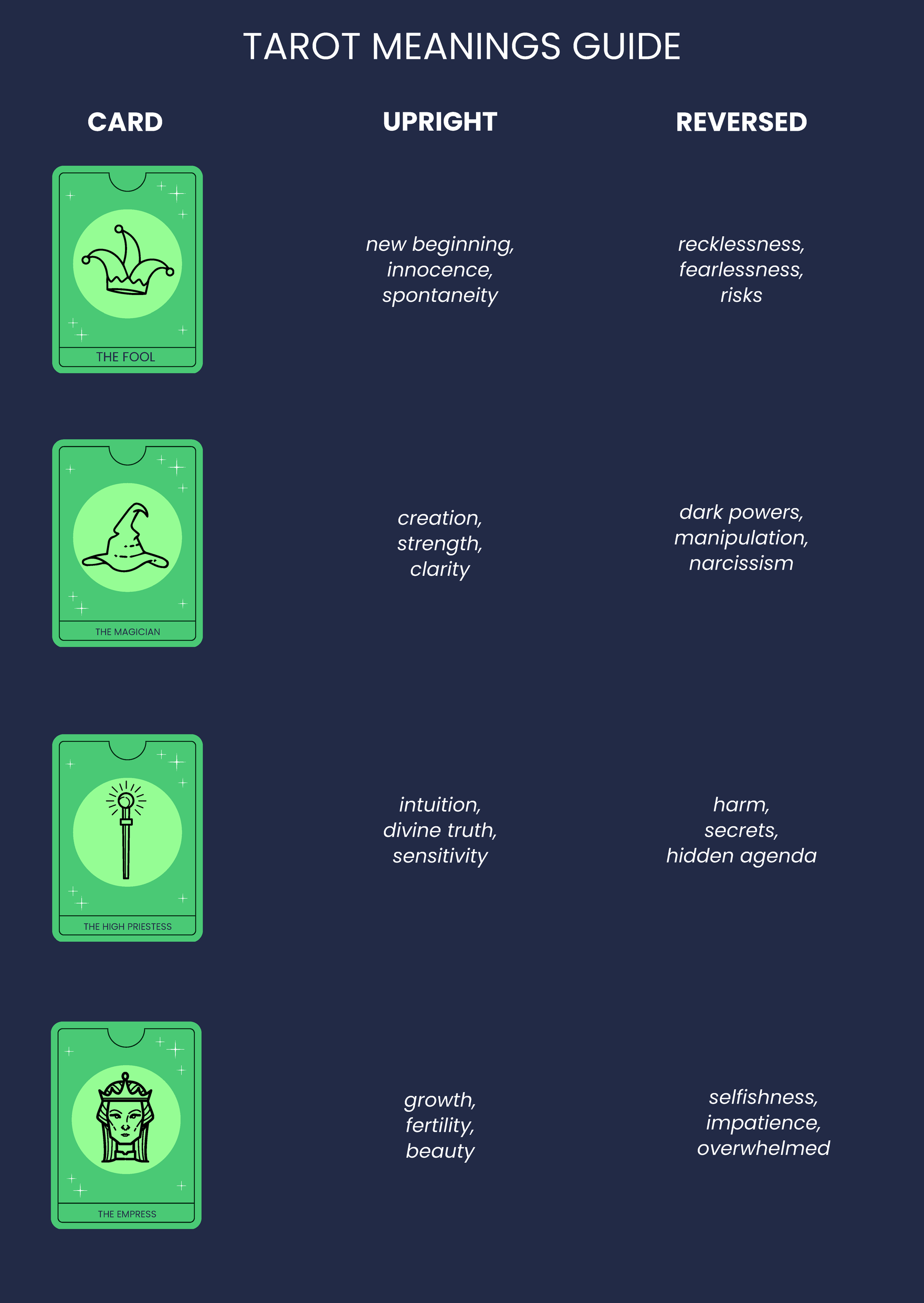
Not all slideshows are created equal. To maximize learning, structure your slideshow around clear themes and progression. Start with an introduction to the deck’s structure (Major vs. Minor Arcana, suits, court cards) before diving into individual cards. Group related cards—like the Lovers, Hierophant, and Justice—to show how they explore relationships, tradition, and balance. Use consistent formatting: one slide per card with its name, imagery, key meanings, and a brief example reading. Include interactive elements like quizzes (e.g., “Which card represents sudden change?”) or comparison slides (e.g., Ace of Cups vs. Ace of Swords). For advanced learners, add slides on card combinations or reversed meanings. The goal is to create a resource you can revisit, whether to refresh your memory or explore new interpretations.
Common Pitfalls to Avoid in Tarot Slideshows
While slideshows are powerful, they can also mislead if not designed carefully. One common mistake is oversimplifying card meanings. For instance, the Tower card isn’t just about “sudden disaster”—it’s about breaking down illusions to rebuild stronger foundations. Avoid reducing cards to single keywords; instead, provide nuanced explanations that account for context (e.g., the querent’s question, surrounding cards). Another pitfall is ignoring the deck’s artwork. A slideshow using generic tarot imagery may miss the unique symbolism of your specific deck (e.g., a modern Rider-Waite vs. a gothic Marseille). Always tailor slides to your deck’s style to maintain authenticity. Finally, don’t let slideshows replace practice. Use them as a supplement to actual readings, not a substitute.
How to Create Your Own Tarot Slideshow
Ready to build your slideshow? Start by selecting a platform like PowerPoint, Canva, or Google Slides. Choose a template with clean, readable fonts and a color scheme that complements your deck (e.g., warm tones for fire suits, cool blues for water). For each card, gather high-quality images—either photographs of your physical deck or digital scans. Write concise, actionable meanings (e.g., “The Chariot: Determination meets control—align your will with purpose”). Add layers of depth with optional slides: historical context (e.g., how the Hermit reflects medieval monasticism), astrological correspondences, or even pop culture references (e.g., how the Magician resembles a stage magician). Test your slideshow by sharing it with others or using it in your own readings. Refine based on feedback to ensure clarity and engagement.
Beyond the Basics: Advanced Visual Tarot Techniques
Once you’re comfortable with individual cards, explore advanced techniques using slideshows. Create “spread guides” where each slide visualizes a tarot spread (e.g., Celtic Cross) with placeholders for card meanings. Animate transitions between cards to mimic the flow of a reading, reinforcing how cards interact. Use color-coding to highlight themes across the deck (e.g., green for growth in the Empress, red for conflict in the Five of Wands). For group learning, design slideshows that encourage participation, like “guess the card” games or collaborative interpretations. You can even integrate multimedia, such as embedding short videos of tarot readers discussing specific cards. These techniques transform slideshows from static guides into dynamic tools for exploration.
Why Tarot Continues to Fascinate Us
Tarot’s enduring appeal lies in its dual nature: it’s both a mirror and a map. Slideshows amplify this by making the abstract tangible. They cater to our innate love of stories, turning a random draw of cards into a narrative about life’s challenges and triumphs. The fascination also stems from tarot’s adaptability—it evolves with the reader, offering new insights with each passing year. Whether you’re drawn to its historical roots, psychological depth, or artistic beauty, tarot becomes a lifelong companion. Slideshows, with their blend of education and artistry, are the perfect vehicle for this journey. They remind us that tarot isn’t just about predicting the future; it’s about understanding the present and shaping the path forward.
Conclusion
Tarot slideshows offer a bridge between confusion and clarity, between theory and practice. By leveraging visual learning, you’ll decode the deck’s symbols with confidence, spot connections between cards, and deepen your intuitive connection to the tarot. Whether you use pre-made slideshows or craft your own, the key is to engage actively—ask questions, test interpretations, and let the imagery guide your intuition. Remember, tarot is a tool for exploration, not a rigid rulebook. Let your slideshow be a companion on this journey, one that grows with you as you uncover the layers of meaning within each card. Start with the basics, embrace the visuals, and watch as the tarot reveals its stories in vibrant, unforgettable detail.
FAQ
What is the purpose of using slideshows for tarot learning?
Slideshows enhance comprehension by combining imagery and concise text, making complex symbolism accessible.
How should a tarot slideshow be structured?
Start with an introduction to the deck's structure, group related cards, and include interactive elements like quizzes.
Leave a Reply