Short Answer
Ever wondered if you could unlock the secrets of the tarot without a deck of mystical cards? What if I told you that a standard deck of playing cards could serve as your divination tool? This guide will show you how tarot and playing cards intersect, offering a playful yet insightful way to explore the unknown. You’ll learn how to interpret symbols, assign meanings to suits, and even answer yes/no questions—all with a deck you likely already own. Prepare to challenge your perceptions and discover a fresh perspective on divination.
Why Use Playing Cards for Tarot-Like Readings?
Playing cards have been used for divination long before tarot decks became popular. Their structured suits and numerical values provide a surprisingly effective framework for intuitive readings. Unlike tarot, which relies on archetypal imagery, playing cards focus on numbers and elemental associations, making them more accessible for beginners. The challenge lies in translating these familiar symbols into deeper meanings—something this guide will help you master. Whether you’re seeking clarity on a decision or just exploring, playing cards offer a low-pressure entry point into the world of divination.

Understanding the Suit System: A Tarot Parallel
In tarot, the Major and Minor Arcana represent different aspects of life. Playing cards mirror this structure through their suits, each corresponding to an element or life area:
- Hearts (Cups) – Emotions, relationships, intuition
- Diamonds (Pentacles) – Money, work, material world
- Clubs (Wands) – Creativity, action, passion
- Spades (Swords) – Challenges, intellect, conflict
Each suit’s court cards (Jack, Queen, King) can represent people or personality traits, while numbered cards reflect stages of a situation. For example, the Ace of Hearts might signal new emotional beginnings, while the 10 of Spades could hint at an impending challenge. The key is to see these cards as mirrors of your subconscious, revealing patterns you might otherwise overlook.
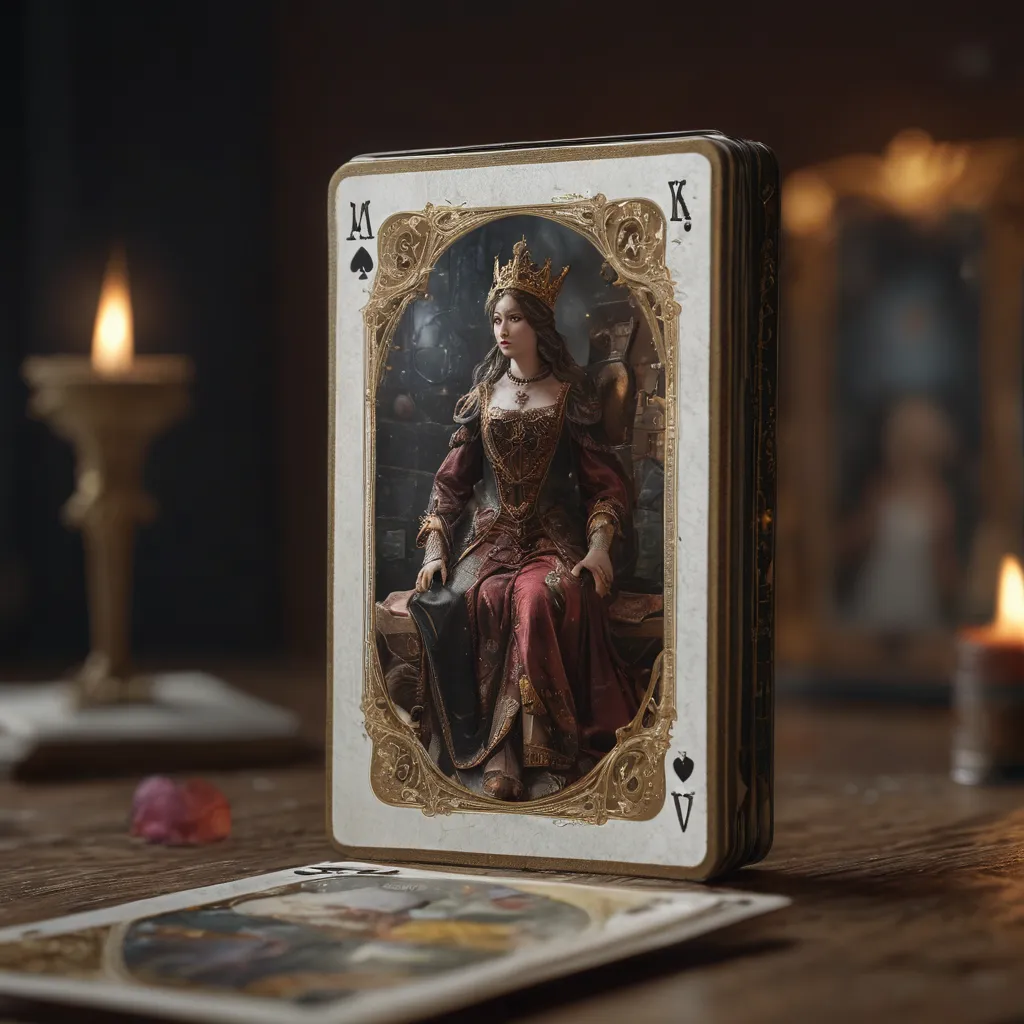
Assigning Tarot-Like Meanings to Playing Cards
To bridge the gap between playing cards and tarot, assign each card a meaning based on its suit and number. Here’s a simple breakdown:
- Aces – New beginnings, potential
- Numbered Cards (2-10) – Progression, stages of a situation
- Face Cards (Jack, Queen, King) – People, traits, or roles
For instance, the 3 of Diamonds might suggest a period of financial growth, while the Queen of Clubs could represent a charismatic leader in your life. To deepen your readings, consider the card’s position in a spread (past, present, future) and its surrounding cards. The challenge? Avoiding over-reliance on literal interpretations—playing cards thrive on symbolism, so let your intuition guide you.
Yes/No Questions: A Playful Divination Challenge
One of the most engaging ways to use playing cards for divination is answering yes/no questions. Here’s how:
- Shuffle the deck while focusing on your question.
- Draw one card—its meaning will determine your answer.
- Interpret the result:
- Hearts or Diamonds – Yes
- Clubs or Spades – No
- Face cards – Maybe (seek clarification)
This method is playful yet surprisingly effective. The challenge lies in trusting your first impression—don’t overthink it! For more nuanced answers, try a three-card spread (past, present, future) or a simple “situation-cause-outcome” layout. The beauty of playing cards is their adaptability; you can tailor spreads to fit any question.

Common Pitfalls and How to Avoid Them
While playing cards offer a fun alternative to tarot, they come with unique challenges. One common mistake is treating them too literally—remember, their power lies in symbolism, not rigid rules. Another pitfall is ignoring the card’s orientation; reversed meanings (upside-down cards) can add depth to your readings. To refine your skills:
- Journal your readings to track patterns and progress.
- Practice daily draws to build confidence.
- Experiment with spreads to find what resonates with you.
The challenge is part of the fun—embrace the ambiguity and let your intuition lead the way.
Conclusion
Playing cards and tarot may seem worlds apart, but their shared language of symbols and intuition bridges the gap. Whether you’re answering a simple yes/no question or diving into a multi-card spread, this method offers a playful yet profound way to explore the unknown. The key is to approach it with an open mind and a willingness to interpret beyond the surface. So next time you’re curious about what the future holds, grab a deck of playing cards—you might be surprised by the wisdom they reveal.
FAQ
Can you really use playing cards for tarot readings?
Yes, playing cards can be used for tarot-like readings by interpreting their suits and numbers similarly to tarot cards.
What do the suits in playing cards represent in tarot?
Hearts correspond to Cups, Diamonds to Pentacles, Clubs to Wands, and Spades to Swords, each reflecting different aspects of life.
How do I interpret yes/no questions using playing cards?
Hearts and Diamonds indicate ‘Yes’, Clubs and Spades mean ‘No’, and Face cards suggest ‘Maybe’.
Leave a Reply