Short Answer
In this comprehensive guide, you’ll explore the profound symbolism, esoteric connections, and cultural significance of The Aeon in the Thoth Tarot deck. Often seen as the cosmic twin of Judgement, The Aeon represents transformation, renewal, and the cyclical nature of time. You’ll uncover why this card captivates tarot enthusiasts, its deeper metaphysical layers, and how it contrasts with its counterpart, Judgement. By the end, you’ll gain a nuanced understanding of this Major Arcana card and its role in spiritual and divinatory practices.
The Aeon in the Thoth Tarot: A Card of Cosmic Rebirth
The Aeon, numbered XX in the Thoth Tarot deck, stands as a powerful symbol of transition and rebirth. Unlike the traditional Judgement card in other decks, The Aeon in the Thoth system is imbued with Crowley’s unique blend of Qabalah, astrology, and alchemy. The card depicts a radiant figure—often interpreted as the goddess Babalon—surrounded by a serpent, symbolizing the Kundalini energy rising through the spine. This imagery underscores the card’s theme of spiritual awakening and the dissolution of old patterns to make way for new beginnings.
The number XX itself holds significance, representing the completion of a cycle (20) and the initiation of a new one (0). This duality reflects The Aeon’s role as a bridge between the past and the future, emphasizing that endings are merely preludes to fresh starts. The card’s association with the astrological sign of Capricorn further ties it to ambition, structure, and the manifestation of long-term goals through disciplined effort.

The Aeon’s imagery is rich with esoteric symbolism. The serpent coiled around the figure represents the eternal cycle of life, death, and rebirth, while the radiant aura signifies enlightenment. The Hebrew letter Shin (ש), often associated with fire and divine energy, appears prominently, reinforcing the card’s connection to transformative power. For those drawn to The Aeon, its allure lies in its promise of profound change—an invitation to shed the old self and embrace a higher state of being.
Judgement vs. The Aeon: Unraveling the Differences
A common observation among tarot readers is the apparent similarity between The Aeon and Judgement in other decks, such as the Rider-Waite-Smith. While both cards deal with themes of awakening and renewal, their interpretations diverge significantly in the Thoth system. Judgement in the Thoth deck is often seen as a more personal call to action, urging the querent to confront their past mistakes and seek redemption. It is a card of accountability, where the individual is summoned to rise from their ashes and answer for their actions.
The Aeon, on the other hand, transcends the personal realm to embrace the cosmic. It is not merely about individual redemption but about the collective evolution of consciousness. The card’s focus on Babalon—a figure representing the divine feminine and the union of opposites—highlights its broader, more universal message. Where Judgement may feel like a stern teacher, The Aeon is the cosmic mother, nurturing and guiding souls toward their highest potential. This distinction is why The Aeon resonates deeply with those seeking spiritual growth beyond the confines of personal guilt or shame.
Another key difference lies in the cards’ astrological associations. Judgement is linked to Pluto, the planet of transformation and rebirth, while The Aeon is tied to Capricorn, the sign of structure and long-term manifestation. This contrast underscores The Aeon’s role as a card of not just spiritual awakening but also the disciplined pursuit of one’s destiny. For those who feel stuck in their journey, The Aeon offers a reminder that true transformation requires both inner work and outer action.
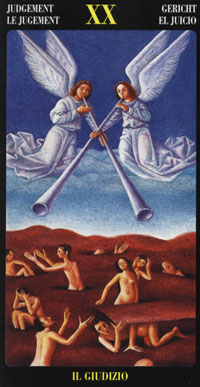
The Aeon’s deeper fascination may stem from its ability to bridge the personal and the universal. While Judgement feels like a wake-up call from within, The Aeon is the cosmic embrace that follows, offering hope and renewal on a grand scale. This duality makes The Aeon a particularly compelling card for those navigating major life transitions or seeking to align with their higher purpose.
The Esoteric Layers of The Aeon: Beyond the Surface
To fully grasp The Aeon’s significance, one must delve into its esoteric layers, where Crowley’s syncretic approach shines. The card is deeply rooted in the Qabalah, particularly the path of Samekh (ס), which connects Tiphareth (beauty) and Malkuth (the material world). This path represents the serpent’s journey through the Tree of Life, symbolizing the ascent of consciousness from the mundane to the divine. The Aeon, therefore, is not just a card of rebirth but a map of spiritual evolution, guiding the seeker through the trials and triumphs of the path.
In alchemical terms, The Aeon embodies the process of solve et coagula—dissolution and coagulation—the fundamental principle of transformation. The serpent, a recurring motif in alchemy, represents the prima materia being refined into the philosopher’s stone. Similarly, The Aeon depicts the dissolution of the old self (the ego, attachments, and limiting beliefs) to coagulate into a higher, more enlightened state. This alchemical process is mirrored in the card’s imagery, where the radiant figure emerges from the darkness, bathed in divine light.
The Aeon’s connection to the element of fire further deepens its esoteric resonance. Fire is the element of passion, will, and spiritual purification. In the Thoth Tarot, fire governs the suit of Wands, representing creativity and ambition. The Aeon’s fiery energy is not destructive but transformative, burning away the dross to reveal the pure gold beneath. For those drawn to this card, its fascination may lie in its promise of inner alchemy—a process that, while challenging, leads to profound personal and spiritual growth.

The Aeon’s esoteric layers also extend to its role in ceremonial magic. Crowley, a practitioner of ritual magic, saw The Aeon as a key to unlocking the mysteries of the Abyss—the great divide between the finite and the infinite. The card’s imagery of Babalon and the serpent is a visual representation of the Great Work, the alchemical journey toward self-realization. For those engaged in magical practices, The Aeon serves as a talisman of transformation, a reminder that the path to enlightenment is both a spiritual and a practical endeavor.
Why The Aeon Fascinates: The Call of the Cosmic Mother
The Aeon’s enduring fascination lies in its archetypal power as the cosmic mother—a figure who nurtures, transforms, and ultimately liberates. Unlike Judgement, which can feel like a stern reckoning, The Aeon is the embrace that follows, offering solace and hope. This archetype resonates deeply in a world where many feel lost or disconnected from their higher purpose. The Aeon speaks to the universal longing for renewal, for the chance to start anew without the weight of past failures.
Culturally, The Aeon taps into the human fascination with cyclical time and rebirth. From ancient myths of the Phoenix rising from its ashes to modern stories of redemption and transformation, the theme of renewal is a timeless one. The Aeon encapsulates this theme in a single, potent image, making it a powerful symbol for those undergoing significant life changes. Whether it’s the end of a relationship, a career shift, or a spiritual awakening, The Aeon offers the promise that every ending is a new beginning.
The card’s association with Babalon, the divine feminine, also adds to its allure. In a world where feminine energy is often undervalued, Babalon stands as a symbol of empowerment, creativity, and the union of opposites. Her presence in The Aeon reminds us that transformation is not just a masculine endeavor of struggle and conquest but a feminine process of nurturing and growth. This balance makes The Aeon a card that speaks to all seekers, regardless of gender, offering a holistic path to enlightenment.
The Aeon’s fascination may also stem from its role as a bridge between the mundane and the divine. In a society that often prioritizes material success over spiritual growth, The Aeon serves as a reminder that true fulfillment comes from aligning with one’s higher purpose. The card’s imagery of a radiant figure emerging from darkness is a visual metaphor for this alignment—a call to rise above the noise of everyday life and connect with the cosmic flow of existence.
Conclusion
The Aeon in the Thoth Tarot is far more than a card of judgment or rebirth; it is a profound symbol of cosmic transformation, spiritual evolution, and the cyclical nature of time. Its imagery, steeped in Qabalah, alchemy, and astrology, offers a roadmap for those seeking to transcend their limitations and embrace their highest potential. Unlike Judgement, which focuses on personal accountability, The Aeon speaks to the universal journey of renewal, where endings are merely the prelude to new beginnings.
For tarot enthusiasts and spiritual seekers alike, The Aeon is a card of hope and possibility. It reminds us that change is not something to fear but a natural part of existence—a process of dissolution and coagulation that leads to greater wisdom and enlightenment. Whether drawn in a reading or meditated upon in solitude, The Aeon invites us to trust in the cosmic order, to embrace the serpent’s wisdom, and to rise, renewed, into the light.
In a world where transformation is often met with resistance, The Aeon stands as a beacon of renewal, a testament to the power of rebirth and the eternal dance of creation and destruction. Its fascination lies not just in its beauty but in its promise—a promise that, no matter how dark the night, the dawn will always follow.
FAQ
What is The Aeon card in the Thoth Tarot?
The Aeon is a Major Arcana card symbolizing transformation, renewal, and the cyclical nature of time, often associated with spiritual awakening.
How does The Aeon differ from the Judgement card?
While both cards deal with themes of awakening, The Aeon emphasizes cosmic transformation and collective evolution, whereas Judgement focuses on personal accountability and redemption.
What does the imagery of The Aeon represent?
The imagery includes a radiant figure and a serpent, symbolizing spiritual awakening and the eternal cycle of life, death, and rebirth.
Leave a Reply