Short Answer
Have you ever felt like you’re running on empty, yet the moment you finally pause, guilt creeps in? The Four of Swords in tarot isn’t just about rest—it’s a card that asks you to confront the tension between self-care and self-sabotage. In this guide, you’ll explore the dual nature of this card: Is it a gentle invitation to recharge, or a harsh reminder of the resentment that builds when you ignore your own needs? You’ll uncover the deeper meanings behind the imagery, learn how this card appears in different tarot decks, and discover practical ways to navigate its challenges. By the end, you’ll have the clarity to decide whether rest is a necessity or a luxury—and how to make peace with that choice.
The Four of Swords: A Card of Contradictions
The Four of Swords is often depicted as a figure lying still, sometimes with hands in prayer or a sword resting above them. This imagery alone sets the stage for a card that’s as much about stillness as it is about inner conflict. On the surface, it’s a call to rest, but the presence of the sword—often a symbol of conflict or defense—hints that this rest isn’t as peaceful as it seems. The card challenges you to ask: Are you truly taking a break, or are you avoiding something? The answer lies in the energy you bring to the moment. If you’re using rest as a way to escape unresolved issues, resentment may fester beneath the surface. But if you’re honoring your need for recuperation, the Four of Swords becomes a sacred pause, not a punishment.
Rest or Resentment? The Core Question
The Four of Swords forces you to confront a playful yet profound question: Is your rest a gift to yourself, or a prison of your own making? This card doesn’t just ask you to slow down—it asks you to examine why you’re slowing down. If you’re resting out of fear, obligation, or avoidance, resentment will inevitably follow. You might feel trapped in a cycle of doing too much, then collapsing under the weight of unmet expectations. On the other hand, if you’re resting because you recognize your limits and honor them, the card becomes a tool for renewal. The key is awareness: Are you resting to heal, or are you resting to delay the inevitable? The Four of Swords doesn’t judge—it simply reflects the truth back to you.
Symbolism in the Four of Swords
The imagery of the Four of Swords is rich with symbolism that deepens its meaning. The figure lying down often represents the body’s need for recovery, but the sword above them can symbolize a mind that won’t quiet down. Some decks show the figure in a tomb-like structure, suggesting a metaphorical death of old patterns or a surrender to stillness. The stained-glass windows or gothic architecture in many versions hint at a sacred space—one where you’re meant to reflect, not just escape. The number four itself grounds the card in stability, but it’s a stability that requires balance. Too much rest and you become stagnant; too little and you burn out. The Four of Swords asks you to find that middle ground where rest serves a purpose, rather than becoming a crutch.
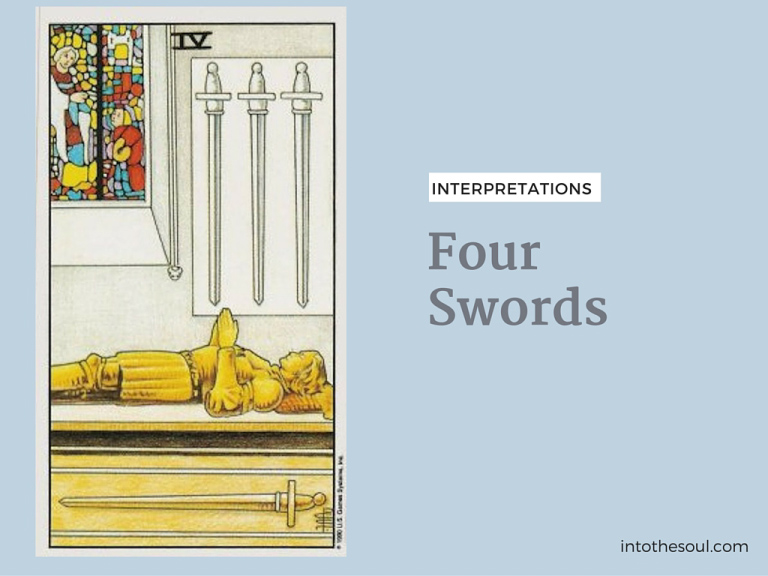
Image: The Four of Swords from the Into the Soul tarot deck.
How the Four of Swords Appears in Different Decks
While the core meaning of the Four of Swords remains consistent, different tarot decks add their own flavor to the card. In the Rider-Waite-Smith tradition, the figure is often depicted in a cathedral, emphasizing the spiritual aspect of rest. The Anima Tarot version, with its dreamy, ethereal style, leans into the emotional weight of the card—suggesting that rest isn’t just physical but deeply psychological. Meanwhile, the Mystic Doorway infographic simplifies the card into a clear visual metaphor: a sword suspended over a resting figure, reinforcing the idea that rest and conflict are intertwined. These variations remind you that the Four of Swords isn’t one-size-fits-all—it adapts to your perspective, whether you see it as a warning or a welcome relief.
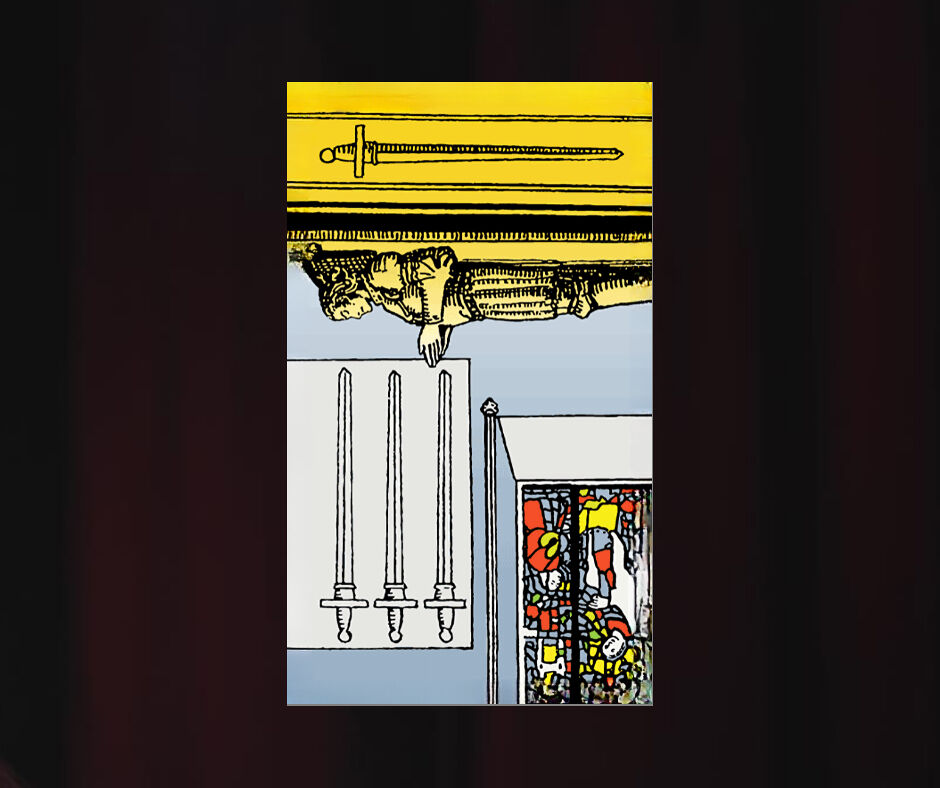
Image: The Four of Swords from the Anima Tarot deck.
The Challenge of the Four of Swords: When Rest Feels Like Avoidance
The real challenge of the Four of Swords lies in its ability to expose avoidance. Rest is healthy, but only when it’s intentional. If you’re using it to dodge responsibilities, emotions, or hard truths, the card becomes a mirror showing you the resentment that’s building up. You might feel like you’re doing the right thing by stepping back, but if it’s coming from a place of fear or guilt, the relief is temporary. The Four of Swords asks you to dig deeper: Are you resting to recharge, or are you resting to numb out? The difference is subtle but crucial. True rest leaves you feeling lighter; avoidance leaves you feeling hollow. This card doesn’t shame you for needing a break—it challenges you to make sure your break is serving you, not sabotaging you.
Practical Ways to Work with the Four of Swords
If the Four of Swords appears in your reading, it’s an invitation to pause—but not necessarily to stop. Here are some ways to work with its energy:
- Set Boundaries: If you’re resting out of obligation, practice saying no. Your needs matter as much as anyone else’s.
- Reflect, Don’t Escape: Use your rest time to journal, meditate, or simply observe your thoughts. Avoidance keeps you stuck; reflection helps you grow.
- Create a Sacred Space: Whether it’s a cozy corner of your home or a quiet walk in nature, make your rest intentional. Light a candle, play soft music, or simply sit in silence.
- Address the Resentment: If you’re feeling bitter about having to rest, ask yourself why. Is it because you feel guilty? Overwhelmed? Trapped? Acknowledge the emotion without judgment.
- Reassess Your Priorities: The Four of Swords often appears when you’re spreading yourself too thin. Use this moment to realign with what truly matters to you.

Image: The Four of Swords infographic from Mystic Doorway.
Conclusion: Rest as an Act of Rebellion or Renewal
The Four of Swords is a card that refuses to be boxed in. It can be a gentle nudge toward self-care or a harsh wake-up call about the resentment that builds when you ignore your needs. The choice is yours: Will you use this card as an excuse to avoid, or as a tool to reclaim your energy? Rest isn’t laziness—it’s a necessity, but it’s also a privilege. Not everyone has the luxury of pausing without consequences, and the Four of Swords asks you to honor that reality while also recognizing your own capacity for renewal. Whether you see this card as a warning or a welcome relief, the message is clear: Rest is not the enemy. Resentment is. So take a breath, lay down the sword, and ask yourself—what kind of rest do you truly need?
FAQ
What does the Four of Swords represent in tarot?
The Four of Swords represents rest, recuperation, and the need to confront inner conflicts. It highlights the duality between self-care and the potential for resentment when one avoids necessary issues.
How can I work with the energy of the Four of Swords?
To work with the Four of Swords, set boundaries, reflect intentionally during rest, create a sacred space for renewal, and reassess your priorities to avoid feelings of resentment.
Leave a Reply