Short Answer
Welcome to a deep exploration of The Hierophant, one of the most enigmatic and spiritually charged cards in the Tarot deck. In this guide, you’ll uncover the rich symbolism, historical roots, and transformative power of this archetype. Whether you’re a seasoned Tarot reader or a curious seeker, you’ll gain insights into how The Hierophant serves as a bridge between the divine and the human, tradition and innovation, and the sacred and the mundane. Prepare to see this card not just as a static image, but as a living metaphor that speaks to the soul’s journey toward wisdom and enlightenment.
The Hierophant as the Cosmic Teacher
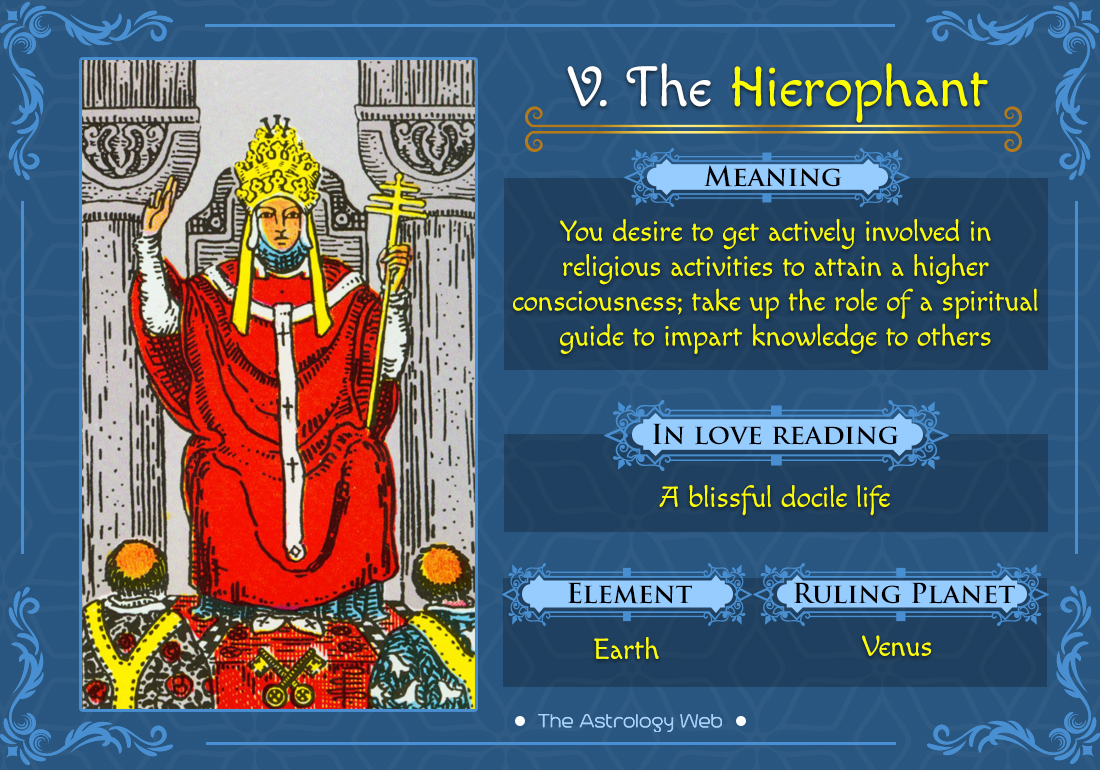
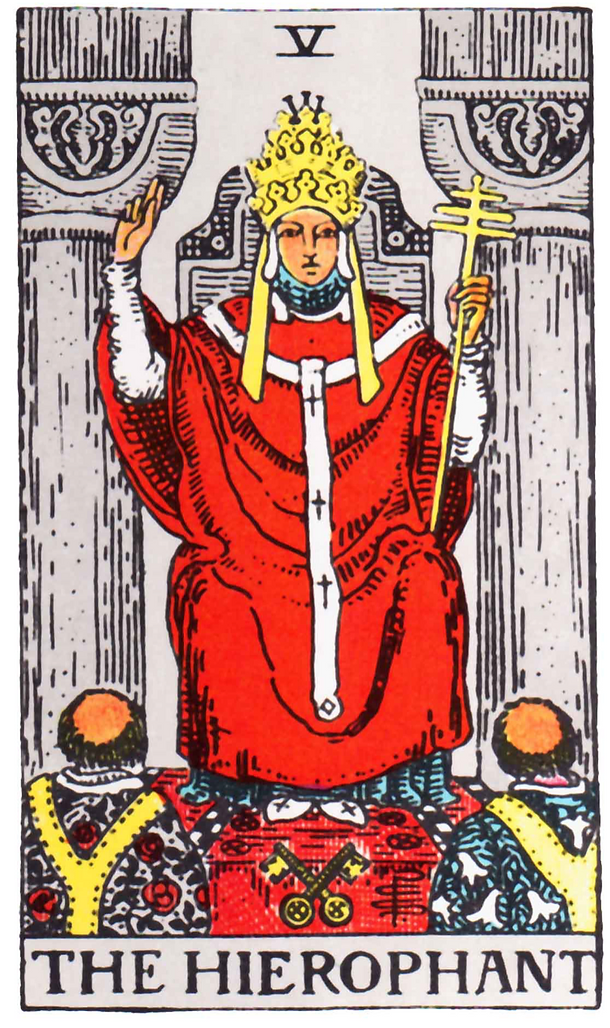
The Hierophant is often depicted as a wise, robed figure seated between two pillars, often in a temple or cathedral-like setting. This imagery is no accident—it reflects the card’s role as a spiritual guide, a keeper of sacred knowledge, and a mediator between the earthly and the divine. Unlike the Fool’s unstructured journey or the Magician’s dynamic action, The Hierophant embodies the slow, deliberate process of learning through tradition, ritual, and mentorship. The two pillars behind him represent the duality of existence—light and dark, masculine and feminine, conscious and unconscious—while his raised right hand in a blessing gesture and his left hand holding a triple cross or staff symbolize his authority to transmit divine wisdom.
Metaphorically, The Hierophant is the voice of the collective unconscious, the accumulated wisdom of generations passed down through symbols, myths, and sacred texts. He is not just a teacher but a living library, a living tradition. When this card appears in a reading, it may signal a time to seek guidance, to study under a mentor, or to reconnect with the spiritual or philosophical traditions that resonate with your soul. It invites you to ask: What ancient truths are waiting to be rediscovered in my life?
The Symbolism of Tradition and Dogma
While The Hierophant is a symbol of wisdom, it also carries a shadow side: the rigidity of dogma and the potential for blind adherence to tradition. The triple cross he often holds can represent the Holy Trinity in Christian iconography, but it can also symbolize the three realms—spiritual, mental, and physical—that must be balanced. However, when taken too literally, The Hierophant’s teachings can become oppressive, stifling personal growth or suppressing individual truth in favor of institutionalized beliefs.
This duality makes The Hierophant one of the most psychologically complex cards in the deck. It challenges you to discern between reverence and blind faith. Are you following a path out of genuine conviction, or because it’s what you’ve been taught? The Hierophant doesn’t just ask for obedience—he asks for discernment. When this card appears, it may be a call to question whether your beliefs are truly yours or inherited without reflection. It’s a reminder that wisdom is not found in unquestioning acceptance but in the courage to seek truth, even if it challenges the status quo.
The Hierophant in Relationships and Community
Beyond its spiritual connotations, The Hierophant plays a crucial role in the realm of human connection. It represents the structures that hold communities together—religions, families, educational systems, and cultural norms. When this card appears in a relationship reading, it may indicate a partnership built on shared values, mutual respect, and a commitment to growth through tradition. It could also suggest the influence of a third party, such as a spiritual leader, family member, or mentor, shaping the dynamic between two people.
However, The Hierophant’s presence can also highlight the challenges of conformity. Are you and your partner truly aligned, or are you staying together out of obligation? Does your relationship thrive on shared beliefs, or does it suffer from rigid expectations? This card encourages you to examine the foundations of your connections. It asks: Are these bonds nurturing your soul, or are they chains disguised as tradition? The Hierophant reminds you that while community is vital, it should never come at the cost of your individual truth.
The Hierophant’s Call to Inner Authority
One of the most profound lessons of The Hierophant is the journey from external authority to inner wisdom. While he represents the external structures of knowledge—churches, schools, gurus—his ultimate message is that true enlightenment comes from within. The card invites you to become your own Hierophant, to trust your intuition, and to find the sacred in your personal experiences rather than relying solely on external dogma.
This is where The Hierophant intersects with the archetype of the Self in Jungian psychology. Carl Jung saw the process of individuation—the journey toward wholeness—as a spiritual quest that transcends institutionalized religion. The Hierophant, in this light, is not just a teacher but a mirror. He reflects back to you the parts of yourself that are ready to step into your own power. When this card appears, it may be a sign that you’re being called to integrate the wisdom of the past with your unique path forward. It’s a reminder that you don’t need to abandon tradition to find your truth—you just need to make it your own.
The Hierophant in Modern Spirituality
In today’s world, where dogma is often questioned and spirituality is increasingly personalized, The Hierophant takes on new relevance. He represents the tension between tradition and innovation, between the comfort of the known and the call of the unknown. For those exploring eclectic spiritual paths, The Hierophant can be a guide to discerning which traditions to honor and which to leave behind. He encourages you to build your own spiritual framework, one that honors the past while allowing for personal evolution.
This card also resonates with the modern hunger for meaning in a fragmented world. In an era of information overload, The Hierophant reminds us that not all knowledge is equal. Some truths are worth preserving, while others are distractions. He challenges you to curate your spiritual diet, to seek out teachings that nourish your soul rather than overwhelm it. Whether through meditation, study, or mentorship, The Hierophant invites you to engage with wisdom in a way that feels authentic to you.
Conclusion
The Hierophant is far more than a static image in a deck of cards—he is a living metaphor for the eternal dance between tradition and transformation. He represents the wisdom of the ages, the structures that hold society together, and the inner voice that guides you toward your highest self. Yet he also warns against the dangers of blind conformity and the stifling of personal truth in the name of dogma.
When The Hierophant appears in your life, whether in a reading or as a recurring symbol, pause to reflect on the traditions you honor, the mentors you trust, and the wisdom you carry within. Ask yourself: Am I following this path out of love or out of fear? Am I seeking guidance, or am I hiding behind it? The Hierophant’s greatest gift is not the answers he provides, but the questions he inspires. He invites you to become not just a student of life, but a master of your own soul’s journey.
Embrace his lessons, challenge his limits, and let his wisdom guide you—not as a follower, but as a seeker of your own truth.
FAQ
What does The Hierophant card represent?
The Hierophant represents wisdom, tradition, and the search for spiritual guidance, emphasizing the importance of mentorship and community.
How can The Hierophant influence relationships?
The Hierophant can indicate partnerships built on shared values and mutual respect, but also challenges conformity and rigid expectations.
Leave a Reply