Short Answer
In this guide, you’ll discover the fascinating world of the Mayan Tarot – Ancient Calendar Deck. You’ll explore its deep-rooted symbolism, the fusion of ancient wisdom with modern divination, and why this deck stands out as a unique tool for introspection and guidance. Whether you’re a seasoned tarot reader or a curious beginner, this exploration will illuminate the deck’s rich heritage and its powerful metaphors that resonate across time and cultures.
The Mayan Tarot: A Bridge Between Ancient Wisdom and Modern Divination
The Mayan Tarot deck is more than just a set of cards; it is a living testament to the profound connection between the Mayan civilization’s spiritual insights and contemporary tarot practices. Rooted in the sacred calendar systems of the Maya, this deck weaves together the 260-day Tzolk’in and the 365-day Haab’ cycles, creating a dynamic framework that mirrors the cyclical nature of life. Each card in the deck is infused with Mayan cosmology, astrology, and mythology, offering a fresh perspective on archetypal energies. Unlike traditional tarot decks, the Mayan Tarot invites users to step into a world where time is not linear but a spiral of recurring patterns, where each moment is a reflection of cosmic harmony. This fusion of ancient tradition with modern divination tools creates a deck that feels both timeless and deeply personal.
Symbolism and Iconography: Decoding the Mayan Cosmic Language
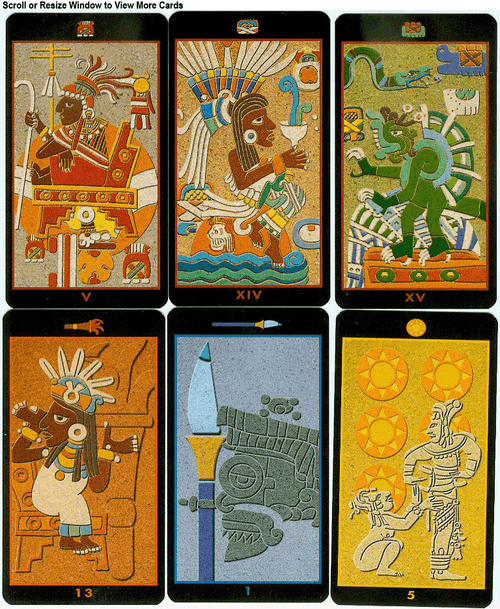
The visual language of the Mayan Tarot is a feast for the eyes and the soul. Every card is adorned with intricate glyphs, vibrant colors, and symbolic imagery drawn from Mayan art and architecture. The deck often features deities like Kukulkan, the feathered serpent god, and Itzamná, the supreme creator deity, alongside animals such as jaguars, eagles, and serpents—each representing specific energies and life lessons. The use of sacred geometry, such as the Mayan cross and the flower of life, further enhances the deck’s spiritual depth. These symbols are not merely decorative; they serve as gateways to deeper understanding, allowing users to connect with the archetypal forces that shape their lives. For instance, the High Priestess card might depict a Mayan priestess adorned in traditional regalia, her wisdom echoing the mysteries of the universe, while the Tower card could feature a lightning-struck pyramid, symbolizing sudden transformation and the collapse of old structures to make way for renewal.

The Structure of the Deck: A Unique Blend of Tradition and Innovation
The Mayan Tarot deck typically consists of 78 cards, divided into the Major Arcana and Minor Arcana, much like the Rider-Waite-Smith tradition. However, its structure incorporates Mayan numerology and cosmology, adding layers of meaning to each card. The Major Arcana often includes 20 cards, reflecting the days of the Tzolk’in sacred calendar, while the Minor Arcana is divided into four suits—Bacabs (representing the four directions and elements), each with 13 cards. This structure mirrors the Mayan belief in the interconnectedness of all things, where every action and event is part of a larger cosmic tapestry. The court cards, too, are reimagined with Mayan titles and roles, such as the King of Bacabs or the Queen of Ixchel (the moon goddess), infusing the deck with a distinct cultural flavor. This innovative approach not only honors Mayan heritage but also offers a fresh lens through which to interpret life’s challenges and opportunities.
Interpreting the Mayan Tarot: A Journey Through Time and Archetypes
Reading the Mayan Tarot is an immersive experience that transcends conventional tarot interpretations. The deck encourages users to view their questions and situations through the lens of Mayan philosophy, where time is cyclical, and every moment holds the potential for rebirth. For example, the Death card in the Mayan Tarot might not signify literal demise but rather a metaphorical transformation, akin to the setting sun or the shedding of a snake’s skin. Similarly, the Wheel of Fortune could be represented by the Mayan Sun God, Kinich Ahau, whose daily journey across the sky symbolizes the ebb and flow of fate. To read with this deck, one must attune to its rhythm, allowing the symbols to resonate on a personal level. Journaling your interpretations or meditating on the cards can deepen your connection to their messages, revealing insights that are both profound and uniquely your own.
The Mayan Tarot in Practice: Rituals and Spreads for Deep Insight
Incorporating the Mayan Tarot into your spiritual practice can be a transformative experience. Begin by cleansing the deck with sage or palo santo to clear any residual energies, then consecrate it with an intention that aligns with your goals. When selecting a spread, consider using a Mayan-inspired layout, such as the Tzolk’in spread, which uses 20 cards to represent the days of the sacred calendar. Each position in the spread corresponds to a specific energy or life area, offering a nuanced reading that reflects the cyclical nature of time. Alternatively, a simple three-card spread—Past, Present, Future—can be adapted to the Mayan worldview, where the “future” is not a fixed destination but a potential path shaped by your actions and the cosmic forces at play. Pairing your readings with rituals, such as lighting candles or offering prayers to Mayan deities, can further amplify the deck’s power, creating a sacred space for reflection and growth.
Why the Mayan Tarot Stands Out: A Deck for the Modern Seeker
What makes the Mayan Tarot truly unique is its ability to bridge ancient wisdom with contemporary spirituality. In a world where many seek deeper meaning and connection to the past, this deck offers a tangible link to a civilization that viewed time, nature, and the divine as inseparable. Its rich symbolism and innovative structure make it a versatile tool for both divination and meditation, appealing to those who crave a tarot experience that feels both exotic and deeply personal. Whether you’re drawn to its aesthetic beauty, its philosophical depth, or its potential for transformative readings, the Mayan Tarot is more than a deck—it’s an invitation to explore the mysteries of existence through the eyes of an ancient culture. For those willing to delve into its layers, the rewards are boundless, offering not just answers, but a renewed sense of wonder and connection to the universe.
Conclusion
The Mayan Tarot – Ancient Calendar Deck is a remarkable fusion of art, spirituality, and ancient wisdom. It challenges conventional tarot interpretations by inviting users to see life as a cyclical journey, where every moment is an opportunity for growth and renewal. Its intricate symbolism, innovative structure, and deep cultural roots make it a powerful tool for introspection, guidance, and spiritual exploration. Whether you’re using it for daily draws, deep meditative readings, or ritual work, the Mayan Tarot offers a unique perspective that transcends time. As you engage with this deck, you’re not just drawing cards—you’re stepping into a living tradition that has endured for millennia, one that continues to speak to the human soul in profound and mysterious ways.
FAQ
What is the Mayan Tarot?
The Mayan Tarot is a tarot deck that integrates ancient Mayan cosmology and spiritual insights with modern tarot practices, consisting of 78 cards that reflect the cyclical nature of time.
How do you read the Mayan Tarot?
Reading the Mayan Tarot involves interpreting the cards through the lens of Mayan philosophy, which emphasizes cyclical time and personal transformation.
What makes the Mayan Tarot unique?
Its combination of ancient Mayan symbols, mythology, and structure offers a distinctive perspective that differs from traditional tarot decks.
Leave a Reply