Short Answer
The concept of “The World Upside Down” or a “Reversed World” has fascinated humanity for centuries, appearing in mythology, art, literature, and modern media. This guide explores the multifaceted interpretations of this idea, offering insights into its cultural significance, psychological implications, and creative expressions. Whether you’re a student of history, an artist seeking inspiration, or simply curious about the symbolism behind this intriguing notion, this article will provide a comprehensive overview of what to expect when the world is viewed from a reversed perspective.
Understanding the Concept of a Reversed World
A reversed world refers to a scenario where norms, values, or physical laws are inverted from their conventional state. This inversion can manifest in various forms—social hierarchies flipped, natural laws defied, or moral compasses reversed. Historically, such ideas have been used to critique societal structures, explore philosophical dilemmas, or simply entertain through fantastical narratives. For instance, in literature, a reversed world might depict a society where the oppressed rule over their former oppressors, challenging readers to question the status quo. In physics, a reversed world could imply a universe where gravity pulls objects upward or time flows backward, pushing the boundaries of scientific imagination.
Culturally, the idea of a reversed world often serves as a metaphor for chaos, transformation, or enlightenment. It invites us to consider what happens when the familiar becomes unfamiliar, prompting introspection about our own world and the systems we take for granted. Whether through allegory, satire, or pure fantasy, the reversed world challenges our perceptions and encourages us to think beyond the ordinary.
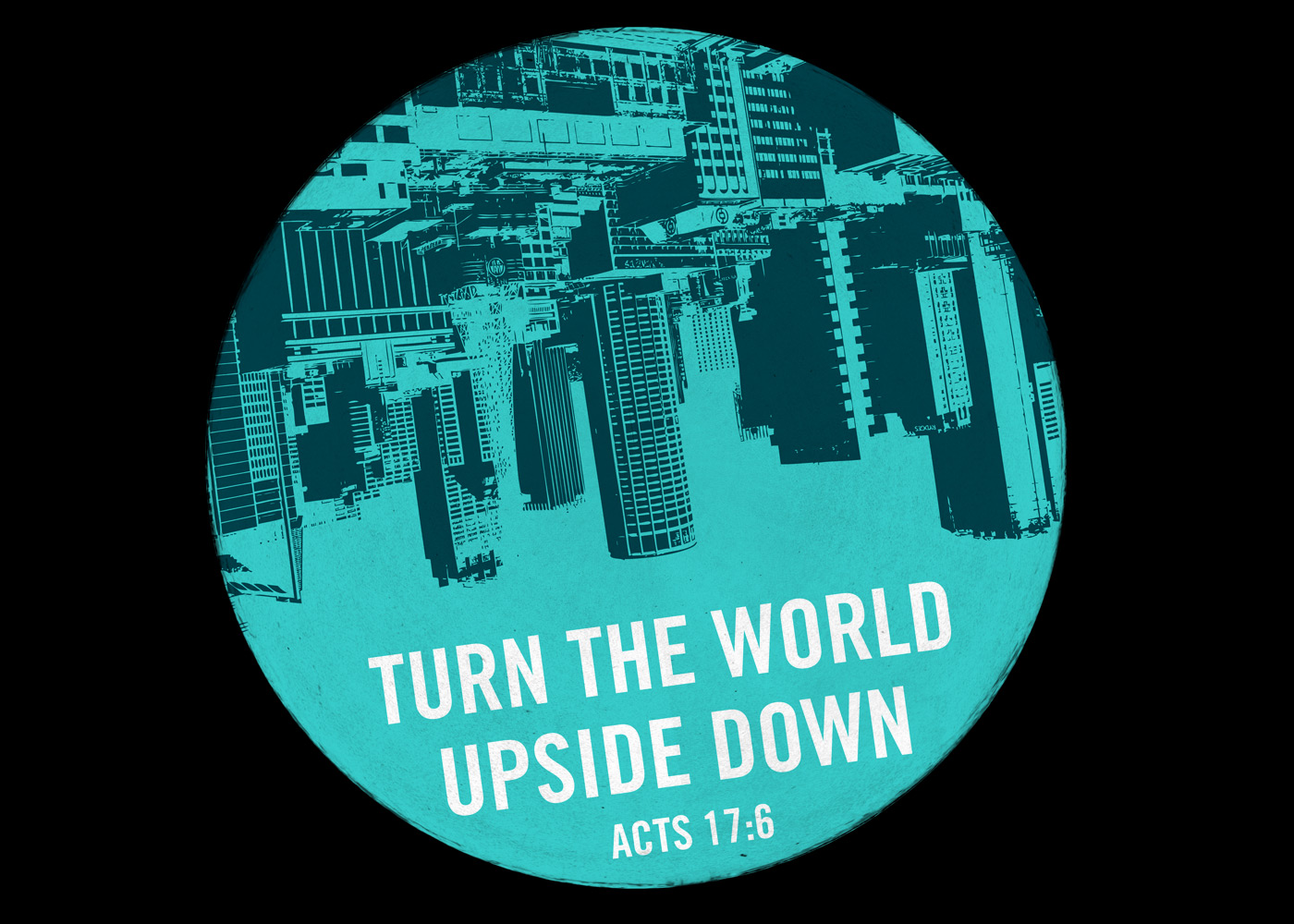
Historical and Mythological Depictions
The notion of a reversed world is deeply rooted in ancient mythology and folklore. Many cultures have myths that describe worlds where natural laws are inverted or where the divine order is disrupted. For example, in Norse mythology, the concept of Ragnarök—the apocalyptic battle that leads to the destruction and rebirth of the world—can be seen as a form of reversed world, where chaos temporarily triumphs over order. Similarly, in Hindu cosmology, the Kali Yuga is a period of moral decline and reversed values, marking the end of a cosmic cycle.
In medieval Europe, the idea of a “world upside down” was often used in art and literature to satirize social hierarchies. The popular motif of peasants riding horses while nobles walk behind them, or children commanding adults, served as a humorous yet pointed critique of feudal systems. These depictions were not just whimsical; they reflected the frustrations of the lower classes and the desire for a more just society. Even in ancient Greece, the philosopher Plato toyed with the idea of a reversed world in his allegory of the cave, where prisoners mistake shadows for reality, highlighting the illusionary nature of perceived norms.
These historical and mythological examples illustrate how the reversed world has long been a tool for storytelling, social commentary, and philosophical exploration. By inverting reality, these narratives challenge us to question our own world and the structures that govern it.
Psychological and Philosophical Perspectives
From a psychological standpoint, the idea of a reversed world taps into the human fascination with the unknown and the subconscious. Carl Jung’s concept of the “shadow self” resonates here, as the reversed world can symbolize the exploration of repressed desires, fears, or aspects of identity that society deems unacceptable. When the world is turned upside down, the boundaries between the familiar and the forbidden blur, allowing for deeper self-examination.
Philosophically, the reversed world challenges our understanding of reality and morality. Immanuel Kant’s moral philosophy, for instance, relies on the idea of universal laws—what if these laws were reversed? Would actions deemed immoral become virtuous, or vice versa? The reversed world forces us to confront the relativity of our ethical frameworks and consider whether morality is an absolute or a construct shaped by context. Existentialist thinkers like Jean-Paul Sartre have also explored this theme, suggesting that in a reversed world, individuals must create their own meaning in the absence of predefined norms.
Moreover, the reversed world can be seen as a metaphor for personal transformation. Just as a caterpillar undergoes metamorphosis to become a butterfly, individuals may experience periods where their worldview is completely inverted. This could be due to trauma, enlightenment, or a shift in priorities. The reversed world, in this sense, becomes a symbol of growth and renewal, where old identities are shed to make way for new ones.
Artistic and Literary Expressions
The reversed world has been a rich source of inspiration for artists and writers across genres and mediums. In literature, works like Lewis Carroll’s Alice’s Adventures in Wonderland and Through the Looking-Glass play with the idea of a world where logic is inverted, and nothing is as it seems. The Cheshire Cat’s grin, the Queen of Hearts’ arbitrary justice, and the Mad Hatter’s nonsensical tea party all contribute to a sense of a reality turned on its head. Similarly, in Franz Kafka’s The Trial, the protagonist’s world is reversed when he is arrested without cause, highlighting the absurdity and arbitrariness of bureaucratic systems.
In visual arts, the reversed world often appears as a surreal or dystopian motif. Artists like M.C. Escher have famously played with perspective and inversion, creating impossible structures that challenge the viewer’s perception of space. Salvador Dalí’s melting clocks in The Persistence of Memory can be interpreted as a reversed world where time itself is fluid and unreliable. Contemporary artists continue to explore this theme, using digital media to create immersive experiences where gravity, scale, and reality are distorted.
Music and film also embrace the reversed world concept. Films like Inception and The Matrix explore the idea of layered realities where the rules of one world are inverted in another. In music, artists like Björk and Radiohead have used surreal and reversed imagery in their lyrics and visuals to evoke a sense of disorientation and introspection. These artistic expressions not only entertain but also provoke thought about the nature of reality and our place within it.

Reversed Worlds in Science and Technology
The concept of a reversed world isn’t confined to art and mythology; it also appears in scientific and technological contexts. In physics, the idea of a “mirror world” or an antimatter universe suggests a reality where fundamental particles have opposite properties to our own. This theoretical framework, explored in quantum mechanics and cosmology, posits that for every particle in our universe, there could exist a corresponding antiparticle in a mirrored world. While this remains speculative, it opens fascinating possibilities for understanding the fabric of reality.
In technology, the reversed world is often leveraged in user interface design and virtual reality. Augmented reality (AR) and virtual reality (VR) experiences frequently invert or distort reality to create immersive environments. For example, VR games might simulate a world where gravity is reversed, or where the player’s perspective is flipped upside down. These innovations not only entertain but also push the boundaries of how we interact with digital spaces. Additionally, the rise of deepfake technology and AI-generated content has led to a reversed world of sorts, where reality and fabrication become indistinguishable, raising ethical questions about truth and authenticity.
Even in everyday technology, the idea of inversion plays a role. Algorithms that reverse images, mirrors that invert left and right, and even the simple act of flipping a photograph upside down can create a sense of a reversed world. These technological applications demonstrate how deeply ingrained the concept is in our modern lives, often in ways we don’t consciously notice.
Reversed Worlds in Modern Media and Pop Culture
Modern pop culture is rife with examples of reversed worlds, reflecting society’s ongoing fascination with the theme. Television shows like Stranger Things and The Upside Down (from Stranger Things) present alternate dimensions where the laws of physics and morality are inverted. In these narratives, the “Upside Down” is a dark, chaotic counterpart to the familiar world, serving as a metaphor for the unknown and the repressed. Similarly, the Alice in Wonderland adaptations continue to thrive, with each generation reinterpreting the story to reflect contemporary anxieties about identity, authority, and reality.
Video games have also embraced the reversed world concept, often using it as a central gameplay mechanic. Titles like Portal and Antichamber
Video games have also embraced the reversed world concept, often using it as a central gameplay mechanic. Titles like Portal and Antichamber challenge players to navigate environments where gravity, perspective, and logic are inverted. These games not only provide entertainment but also stimulate cognitive flexibility, as players must adapt to constantly shifting rules. In narrative-driven games like The Stanley Parable, the reversed world serves as a commentary on free will and determinism, where the player’s choices lead to increasingly absurd and inverted outcomes.
Social media and internet culture have further amplified the reversed world theme. Memes, viral challenges, and digital art often play with inversion, from upside-down text to filters that flip users’ faces. These digital expressions reflect a broader cultural trend of questioning reality, especially in an era where misinformation and deepfakes blur the line between truth and fiction. The reversed world, in this context, becomes a tool for satire, critique, and even resistance against dominant narratives.
Conclusion
The idea of a reversed world is far more than a whimsical fantasy—it is a powerful lens through which we can examine reality, challenge norms, and explore the boundaries of human perception. From ancient myths to cutting-edge science, from literature to digital art, the reversed world serves as a mirror that reflects our fears, hopes, and curiosities. It invites us to question the structures we take for granted, whether they are social, moral, or physical, and to consider what might lie beyond the familiar.
Whether you encounter the reversed world in a philosophical treatise, a surreal painting, or a blockbuster film, its appeal lies in its ability to disrupt and delight. It reminds us that reality is not fixed but fluid, and that by turning the world upside down—even if only in our minds—we can gain new insights into ourselves and the world around us. So the next time you see an image of a world turned on its head, take a moment to ponder: what does this inversion reveal about our own reality?
FAQ
What is the meaning of 'The World Upside Down'?
'The World Upside Down' refers to the concept of a reversed world where norms and values are inverted.
How is this concept represented in mythology?
Many cultures have myths depicting worlds where natural laws are inverted, such as Norse Ragnarök and Hindu Kali Yuga.
What are some psychological implications of a reversed world?
It symbolizes the exploration of repressed desires and challenges our understanding of reality and morality.
Leave a Reply