Short Answer
Delve into the enigmatic world of the Hierophant tarot card, where tradition meets transformation. This guide explores the card’s layered meanings, its role as a bridge between the spiritual and the mundane, and whether it serves as a guiding light or a restrictive force. By examining its symbolism, historical roots, and modern interpretations, you’ll uncover how the Hierophant challenges us to question conformity while honoring wisdom. Discover the card’s unique appeal—its ability to evoke curiosity, provoke thought, and inspire deeper reflection on the balance between structure and rebellion.
The Hierophant: Guardian of Tradition and Spiritual Authority
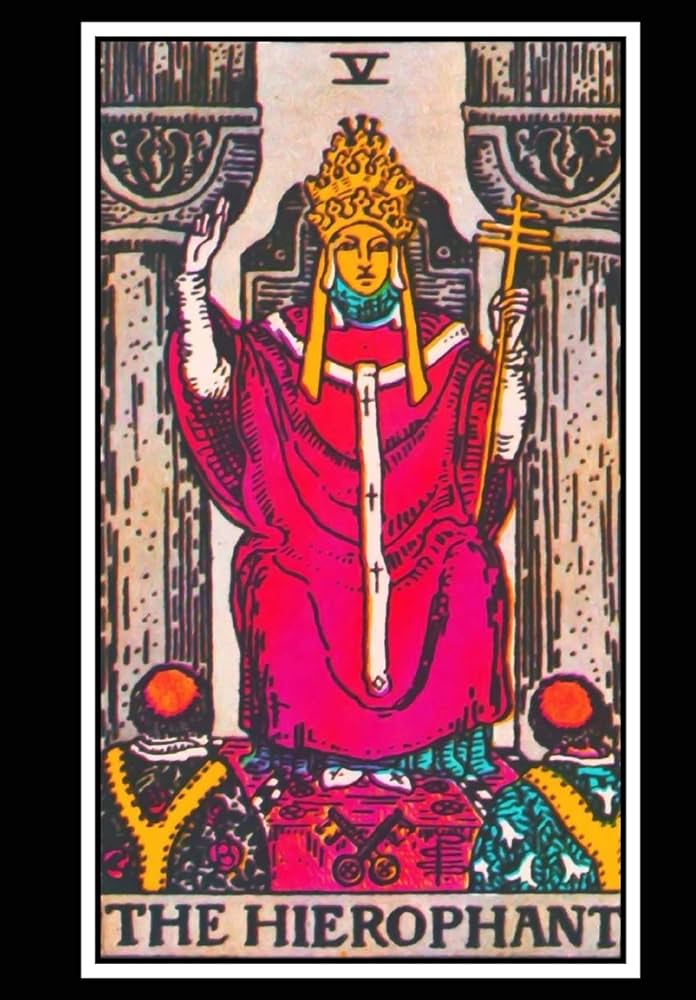
The Hierophant stands as the archetype of tradition, wisdom, and institutional knowledge. Often depicted as a religious figure seated between two pillars, he represents the bridge between the divine and the human, the sacred and the profane. Unlike the Magician, who wields personal power, the Hierophant embodies collective wisdom passed down through generations. His presence in a reading signals a call to look beyond the surface—whether that means exploring established belief systems, seeking mentorship, or questioning the dogmas that shape our lives.
At its core, the Hierophant is a teacher, but not one who imposes answers. Instead, he invites inquiry. His raised hand in blessing or teaching gestures suggests that true understanding comes from both receiving and questioning. This duality makes him a fascinating figure: a symbol of stability in a world that often demands rigid adherence to rules, yet also a reminder that blind conformity can stifle growth. The Hierophant doesn’t just represent tradition—he embodies the tension between preserving the past and evolving beyond it.
Symbolism and Imagery: Decoding the Hierophant’s Visual Language
The Hierophant’s imagery is rich with metaphor, each element offering clues to its deeper meaning. The two pillars flanking him often represent duality—light and dark, masculine and feminine, conscious and subconscious. These pillars can also symbolize the balance between opposing forces, such as tradition and innovation. His throne, adorned with religious symbols, underscores his role as a custodian of sacred knowledge, while the crossed keys at his feet hint at the dual nature of truth: it can unlock liberation or confinement, depending on how it’s wielded.
In many decks, the Hierophant’s hands form a blessing gesture, with one hand pointing upward to the divine and the other downward to the earthly realm. This dual blessing suggests that spirituality is not separate from everyday life but intertwined with it. The three-tiered crown he often wears may represent the three realms of existence—physical, mental, and spiritual—or the Holy Trinity in Christian symbolism. Even the presence of disciples or followers at his feet can be interpreted in two ways: as a sign of reverence for inherited wisdom or as a warning against unquestioning obedience.
The Hierophant’s cross, a prominent symbol in many depictions, is particularly intriguing. It’s not just a religious emblem; it’s a metaphor for the crossroads where paths diverge. Will you follow the beaten trail of tradition, or will you forge your own? The Hierophant doesn’t provide the answer—he simply holds up the mirror, asking you to decide.
Tradition vs. Rebellion: Is the Hierophant a Trap or a Guide?
One of the most compelling debates surrounding the Hierophant is whether he represents a comforting guide or a restrictive force. On one hand, he embodies the stability of tradition, offering structure in a chaotic world. He reminds us that wisdom often lies in the tried-and-true paths of the past. On the other hand, his rigid adherence to rules can feel stifling, especially in a modern context where individualism and self-expression are highly valued. The Hierophant challenges us to ask: Are we following traditions because they serve us, or because we fear the unknown?
In love readings, the Hierophant might appear as a call to honor commitments or seek a partner who aligns with your values. In career readings, he could suggest the importance of mentorship or the need to align with an organization’s core principles. Yet, he also warns against staying in situations out of fear of change. The Hierophant’s message is nuanced: tradition is not inherently bad, but blind adherence without reflection can lead to stagnation. The key lies in discernment—knowing when to honor the past and when to break free from it.
Consider the Hierophant as a wise elder who doesn’t give answers but teaches you how to ask the right questions. His presence in a spread might indicate that you’re at a crossroads, weighing the comfort of familiarity against the allure of the unknown. The trap isn’t tradition itself, but the refusal to engage with it critically. The Hierophant invites you to walk the path of the seeker—not the follower.

The Hierophant in Modern Context: Relevance in a Changing World
In an era where individualism often trumps collective wisdom, the Hierophant’s role feels more relevant than ever. He challenges the modern obsession with personal freedom at the expense of shared values. Yet, he also serves as a reminder that progress doesn’t mean discarding the past entirely. The Hierophant’s teachings can be applied to contemporary issues like spirituality, education, and even politics. For instance, in a world where information is abundant but wisdom is scarce, the Hierophant asks us to seek knowledge that is rooted in depth, not just surface-level trends.
In relationships, the Hierophant might appear when you’re navigating the balance between personal desires and shared expectations. He doesn’t advocate for blind conformity but encourages you to find harmony between your needs and those of your partner or community. In career contexts, he could symbolize the importance of aligning with a company’s values or seeking guidance from mentors who have walked the path before you. The Hierophant’s message is timeless: wisdom is not about rejecting tradition but about understanding its roots and adapting it to your present circumstances.
Moreover, the Hierophant resonates with the current cultural shift toward re-examining institutions. From religion to education, there’s a growing movement to question long-held beliefs and systems. The Hierophant doesn’t shy away from this tension; he embraces it. He represents the eternal dance between preservation and evolution, showing that true growth comes from engaging with the past, not erasing it.
Practical Insights: How to Work with the Hierophant’s Energy
If the Hierophant appears in your readings, consider it an invitation to explore the following questions: What traditions or beliefs have shaped your life, and which ones serve you? Are you following a path out of genuine conviction or fear of change? The Hierophant encourages you to seek mentors, study sacred texts, or engage in practices that connect you to something greater than yourself. However, he also warns against becoming a prisoner of dogma. The goal is not to reject tradition outright but to discern what is worth preserving and what needs to be released.
For those feeling stuck in rigid patterns, the Hierophant offers a gentle nudge to question the status quo. Ask yourself: What rules or expectations am I blindly following? Where can I introduce more flexibility or personal agency? Conversely, if you’re someone who resists all structure, the Hierophant might remind you that wisdom often lies in the balance. Even rebels need a foundation to push against.
Journaling or meditation can be powerful tools for working with the Hierophant’s energy. Reflect on the traditions in your life—whether cultural, familial, or spiritual—and write about how they’ve influenced you. Consider creating an altar with symbols that represent both tradition and personal growth, such as a book (for knowledge), a key (for unlocking potential), and an open path (for new beginnings). The Hierophant teaches that growth is not about rejecting the past but about building upon it.
Conclusion: The Hierophant’s Paradox—Wisdom in the Balance
The Hierophant tarot card is a paradox wrapped in symbolism—a figure who embodies both the comfort of tradition and the discomfort of blind adherence. He is neither a trap nor a savior but a mirror, reflecting our relationship with the past, the present, and the future. His presence in a reading is an invitation to engage with wisdom, not as a passive recipient but as an active participant. Whether you see him as a guide, a challenger, or a symbol of the tension between stability and change, the Hierophant reminds you that true understanding comes from questioning, not just accepting.
In a world that often glorifies rebellion and rejects structure, the Hierophant offers a counterpoint: wisdom is not found in extremes but in the balance between honoring the past and forging your own path. He teaches that tradition can be a foundation, not a cage, and that growth comes from engaging with what came before—not rejecting it outright. So the next time the Hierophant appears in your cards, ask yourself: Are you following tradition out of fear or faith? And more importantly, what will you do with the wisdom you uncover?
FAQ
What does the Hierophant tarot card represent?
The Hierophant represents tradition, spiritual authority, and the quest for deeper understanding, serving as a guide to navigate established beliefs.
Is the Hierophant a positive or negative influence in a tarot reading?
The Hierophant can be both a positive guide for stability and wisdom or a restrictive force if adhered to blindly; it encourages critical engagement with tradition.
Leave a Reply