Short Answer
Welcome to a deep dive into the enigmatic world of tarot! In this guide, we’ll explore the profound symbolism and meaning behind Tarot Card VII – The Chariot. Whether you’re a seasoned tarot reader or a curious beginner, this exploration will illuminate the card’s significance, its metaphorical layers, and how it can guide you on your personal journey. Discover the unique appeal of The Chariot as we unravel its mysteries, offering insights into determination, control, and the triumph of willpower.
The Essence of The Chariot: A Symbol of Triumph and Willpower
The Chariot is a powerful card that embodies victory, determination, and the mastery of opposing forces. Represented by a warrior riding a chariot pulled by two sphinxes—one black and one white—the card symbolizes the balance between opposing energies, such as light and dark, conscious and subconscious, or action and restraint. The warrior’s armor, adorned with crescent moons, signifies intuition and the harnessing of inner strength. This card is a reminder that success comes from aligning your will with your higher purpose, steering your life with purpose and clarity.
The imagery of The Chariot is rich with metaphor. The charioteer does not pull the reins of the sphinxes but instead guides them with an invisible force, representing the power of subtle influence over raw instinct. This suggests that true control comes not from force but from understanding and directing opposing forces within yourself and your environment. The card encourages you to take charge of your destiny, using your intellect and intuition to navigate life’s challenges.
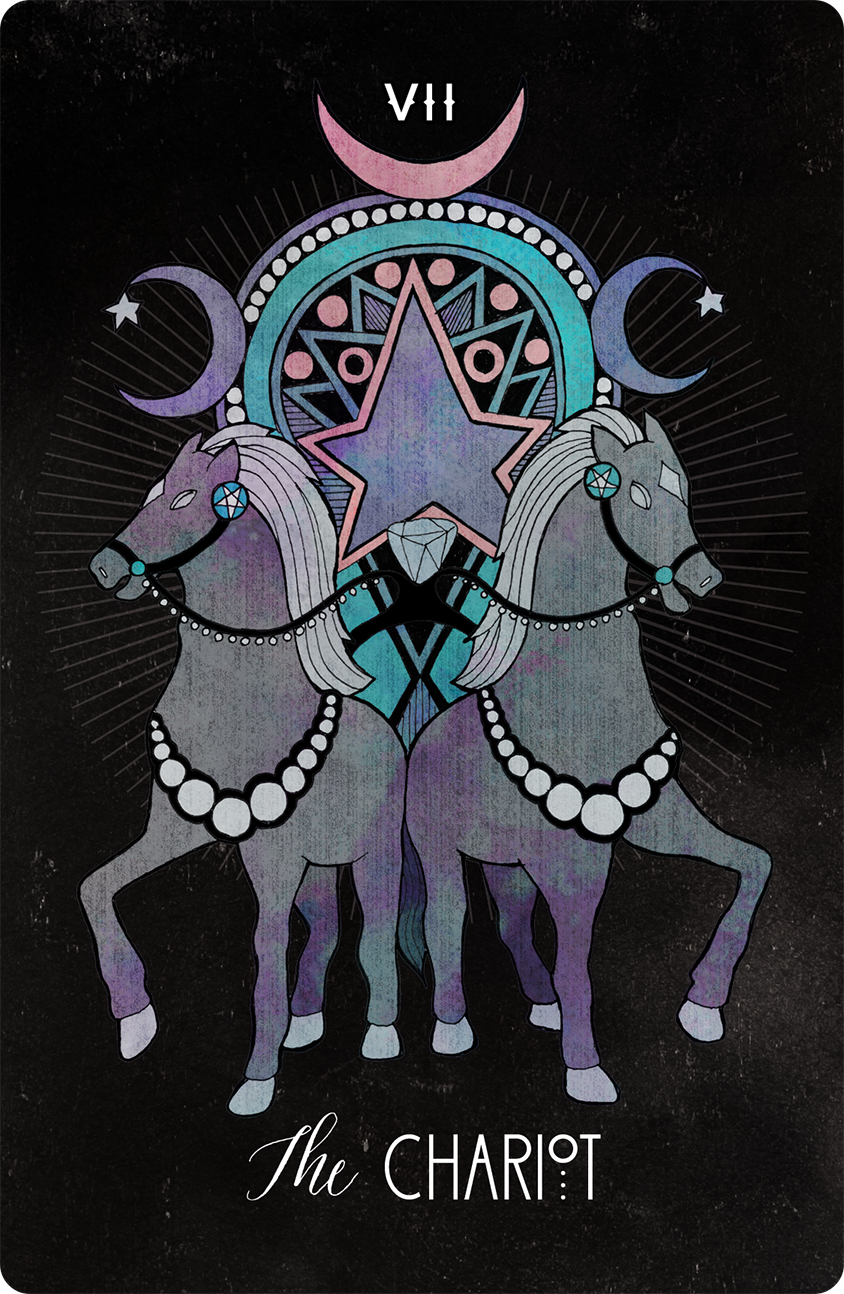
The Duality Within The Chariot: Black and White Sphinxes
A defining feature of The Chariot is the presence of two sphinxes, one black and one white, pulling the chariot in opposite directions. This duality is not a conflict but a harmonious balance, illustrating the need to integrate opposing aspects of your personality or circumstances. The black sphinx may represent the unknown, the subconscious, or raw emotions, while the white sphinx symbolizes clarity, logic, and conscious awareness. Together, they propel you forward, teaching that progress comes from embracing both sides of your nature rather than suppressing them.
This duality also extends to external forces in your life. The Chariot suggests that you may be facing conflicting demands or desires, but with focused intention, you can channel these energies toward a common goal. The card’s message is clear: do not shy away from challenges or contradictions. Instead, acknowledge them, understand their origins, and use them as fuel for your journey. The sphinxes remind you that even seemingly opposing forces can work in unison when guided by a strong, unified will.
The Warrior’s Armor and Crescent Moons: Intuition Meets Discipline
The warrior depicted in The Chariot is often shown wearing armor adorned with crescent moons, a symbol of intuition and the cyclical nature of life. This imagery underscores the importance of blending intuition with discipline. While the armor represents protection and structure, the crescent moons signify receptivity to inner wisdom and the ebb and flow of life’s rhythms. Together, they illustrate that success is not achieved through rigid control alone but by remaining open to guidance from your higher self.
The crescent moons also hint at new beginnings and the potential for growth. They suggest that The Chariot is not just about achieving a goal but about embarking on a transformative journey. The armor, meanwhile, serves as a reminder to protect your energy and stay grounded as you pursue your ambitions. This balance between intuition and action is what makes The Chariot a card of both power and wisdom. It teaches that true mastery comes from aligning your outer actions with your inner knowing.

The Chariot in Action: Control Without Force
Unlike other cards that depict struggle or conflict, The Chariot is a card of forward motion and decisive action. The warrior does not fight the sphinxes; instead, he guides them with an unseen force, symbolizing the power of influence over brute strength. This teaches a valuable lesson: control does not always mean domination. Sometimes, the most effective way to achieve your goals is by working with the natural flow of energy rather than against it. The Chariot encourages you to find creative solutions that align with your values and circumstances.
In practical terms, The Chariot may appear in a reading when you are at a crossroads, faced with a decision that requires both determination and adaptability. It could indicate a need to take charge of a situation, whether in your career, relationships, or personal growth. The card’s energy is dynamic and assertive, urging you to move forward with confidence. However, it also reminds you to stay mindful of the methods you use to achieve your goals. Are you pushing too hard, or are you allowing space for intuition to guide you? The Chariot asks you to reflect on your approach and ensure it aligns with your true intentions.
Reversed Meaning: When The Chariot Loses Its Way
When The Chariot appears reversed in a tarot reading, it may signal a loss of direction, internal conflict, or a struggle for control. You might feel like you’re being pulled in different directions, unable to find a clear path forward. This could manifest as indecision, procrastination, or a sense of being overwhelmed by opposing forces in your life. The reversed Chariot warns against forcing outcomes or ignoring your intuition in favor of rigid control.
Alternatively, this position may indicate that you are exerting too much control in areas where flexibility is needed. Perhaps you’re micromanaging a situation or refusing to adapt to changing circumstances. The reversed Chariot encourages you to pause, reassess your approach, and find a balance between determination and surrender. It’s a call to realign with your inner wisdom and trust the journey, even when the path isn’t clear.
Conclusion: Harnessing The Chariot’s Energy for Your Journey
The Chariot is more than just a tarot card; it’s a powerful metaphor for the journey of life itself. It teaches that success is not about avoiding challenges but about mastering the art of navigating them with intention, balance, and willpower. Whether you’re facing a major decision, pursuing a goal, or simply seeking clarity, The Chariot reminds you that you have the strength to steer your life in the direction you desire.
Embrace the duality within you, trust your intuition, and move forward with confidence. The Chariot’s energy is one of empowerment, urging you to take control of your destiny while remaining open to the wisdom of your inner voice. As you integrate its lessons into your life, you’ll find that even the most opposing forces can become allies on your path to growth and fulfillment.
FAQ
What does The Chariot tarot card symbolize?
The Chariot symbolizes victory, determination, balance of opposing forces, willpower, and mastery over challenges by aligning inner strength with external action.
What is the meaning of The Chariot when reversed?
When reversed, The Chariot indicates loss of direction, internal conflict, struggle for control, indecision, or the need to balance determination with flexibility.
How can The Chariot guide me in a tarot reading?
The Chariot advises taking charge of situations with confidence and balance, using both intuition and discipline to navigate challenges and move forward decisively.
What do the black and white sphinxes represent on The Chariot card?
The black and white sphinxes represent duality and balance between opposing forces such as subconscious and conscious, emotion and logic, which must be harmonized for progress.
Leave a Reply