Short Answer
In the realm of Tarot, the Moon card, typically denoted as XVIII, presents a rich tapestry of meanings that simultaneously intrigue and mystify. For those who approach the Tarot from a Christian perspective, the interpretation can be particularly nuanced and layered, as one seeks to harmonize the esoteric teachings of Tarot with the principles of faith. This article endeavors to elucidate the multifaceted significance of The Moon card within this theological framework.
At its core, The Moon card embodies the themes of intuition, the subconscious mind, and the ethereal realms of dreams. Christians may find themselves drawn to the interplay of light and darkness inherent in this card, as it invites its beholder to navigate through life’s uncertainties—much like the faithful navigate their spiritual journeys. The Moon illuminates the path, albeit in a subdued and uncertain manner, paralleling the Christian experience where faith operates often in the realm of the unseen.
One of the primary interpretations of The Moon in a Christian context lies in its association with dreams and visions. In Scriptures, God frequently communicates through dreams, providing guidance and warnings to His people. For instance, the dreams of Joseph in the Old Testament serve as pivotal narratives revealing divine truth. Thus, the emergence of The Moon card might prompt Christians to pay attention to their own dreams and spiritual insights. It serves as a reminder that God may still be speaking in the quiet hours of the night, urging an exploration of the subconscious for deeper revelations and understanding.
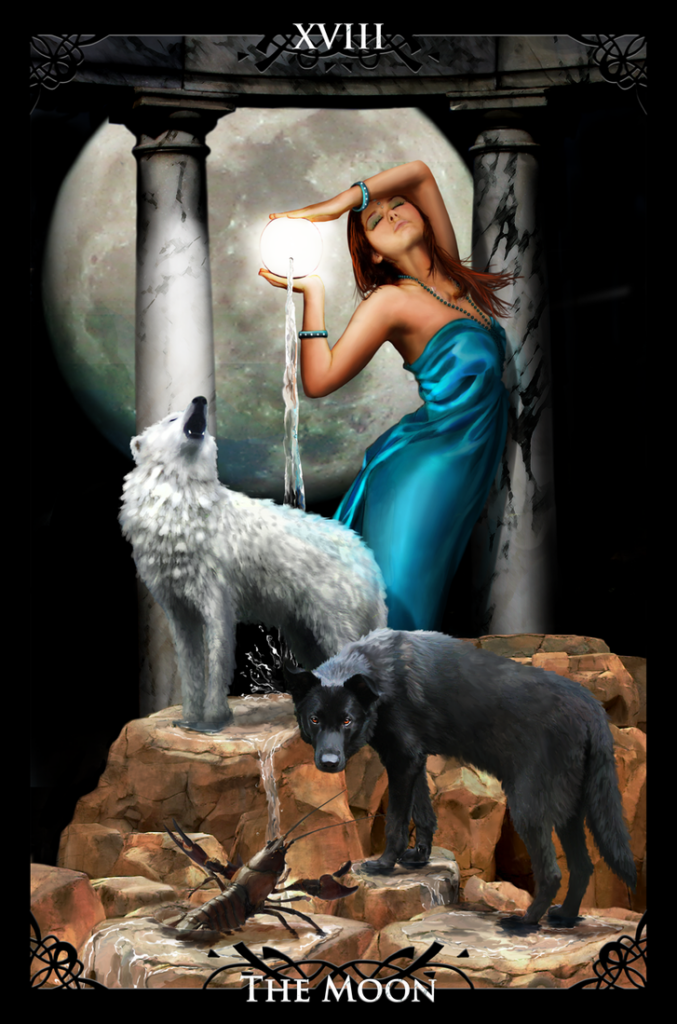
The card’s imagery—depicting a moonlit landscape often accompanied by symbolic creatures—can evoke the idea of mystery and the unknown elements of one’s faith journey. This mirrors the notion that believers are called to trust God even when clouded by uncertainty. The two towers typically seen in the illustration might represent the dichotomy of faith and doubt. They stand as a metaphorical reminder that these two aspects coexist in the believer’s life, challenging individuals to uphold their faith despite the shadows of confusion and doubt that the world may cast.
Another essential component to consider is the relationship between The Moon and illusions. The notion that not all is as it seems reverberates loudly within Christian theology. Just as The Moon card suggests that things may be obscured by darkness, Christians are reminded of the ultimate truth of Christ, who proclaims, “I am the light of the world.” In this way, the perceived deceptions and facades represented in the card beckon believers to seek the light of Christ as the ultimate discerning force in their lives, guiding them through tumultuous times.
Moreover, The Moon also encourages the exploration of one’s inner fears and anxieties. Christian doctrine does not shy away from addressing the deeply entrenched emotions that plague humanity. Instead, it provides avenues for healing through prayer, confession, and community support. Understanding fears and confronting them can lead one to a renewed sense of purpose and peace. In the light of The Moon, Christians may find solace in the realization that they are not alone in their struggles; God walks with them through the shadows.
The Moon card can also be connected to the feminine divine. Many Christians see an integral aspect of God’s nature as nurturing and deeply intuitive, often likened to maternal qualities. The Moon’s soft glow, often associated with feminine energy, can serve as a reminder of the grace and compassion that God extends towards His creations. This perspective aligns harmoniously with the Biblical archetype of Wisdom, personified in Proverbs as a feminine figure calling out to humankind. Therefore, The Moon card can inspire believers to embrace their own intuition and voice, fostering greater wisdom in their decisions.
As we delve deeper into The Moon’s symbolism, one cannot overlook the significance of the water often depicted in the background. Water in a Biblical context frequently signifies cleansing and rebirth. In the same vein, The Moon card may symbolize baptism—a shedding of the old self to embrace new beginnings. This thematic congruence demonstrates that the path illuminated by the Moon may also lead to regeneration, echoing the Christian tenet of being born anew in Christ. Hence, it encourages believers to remain open to transformation and the spiritual renewal that faith provides.
Yet, it is vital for readers to grasp that Tarot, including The Moon card, must be approached with discernment, especially from a Christian perspective. While the card evokes profound symbolism, it should not supersede or contradict the foundational beliefs of Christianity. Instead, it can serve as a companion tool, prompting deeper introspection, reflection, and dialogue with God. It becomes a catalyst for understanding one’s faith more profoundly, fostering a blend of tradition and modern spirituality.
In conclusion, The Moon card, when contextualized within a Christian framework, unfolds a narrative rich with themes of intuition, dreams, fear, light, and transformation. It invites believers to ponder the complexities of their faith journey, encouraging them to delve into the depths of their spiritual life. By embracing the mystery and illumination offered by The Moon, Christians can emerge not only with greater understanding but also a renewed commitment to the light of Christ guiding them through both the seen and unseen aspects of their lives. As such, The Moon stands not merely as a card in a deck but as an emblematic guide for those seeking spiritual depth amidst the shadows of uncertainty.
FAQ
What does The Moon tarot card represent?
The Moon card represents intuition, subconscious mind, dreams, fears, illusions, and spiritual transformation.
How is The Moon tarot card interpreted from a Christian perspective?
From a Christian perspective, The Moon card symbolizes navigating faith through uncertainty, divine communication through dreams, confronting fears with God’s support, and spiritual renewal.
What is the significance of the imagery on The Moon card?
The Moon card's imagery includes moonlight, towers, water, and symbolic creatures, representing mystery, faith and doubt, cleansing, and the feminine divine.
Can Tarot cards be used in Christian spirituality?
While Tarot is not traditionally Christian, some use it as a tool for introspection and spiritual reflection, ensuring it aligns with their faith principles.
Leave a Reply