Short Answer
In this comprehensive guide, you’ll explore the Waite-Smith Tarot, a deck that has captivated millions with its rich symbolism and timeless imagery. You’ll learn about its origins, the visionary artist behind it, and why this deck remains a cornerstone of modern tarot practice. Whether you’re a seasoned reader or a curious beginner, this guide will illuminate the deeper layers of Pamela Colman Smith’s work and its enduring appeal.
The Origins of the Waite-Smith Tarot
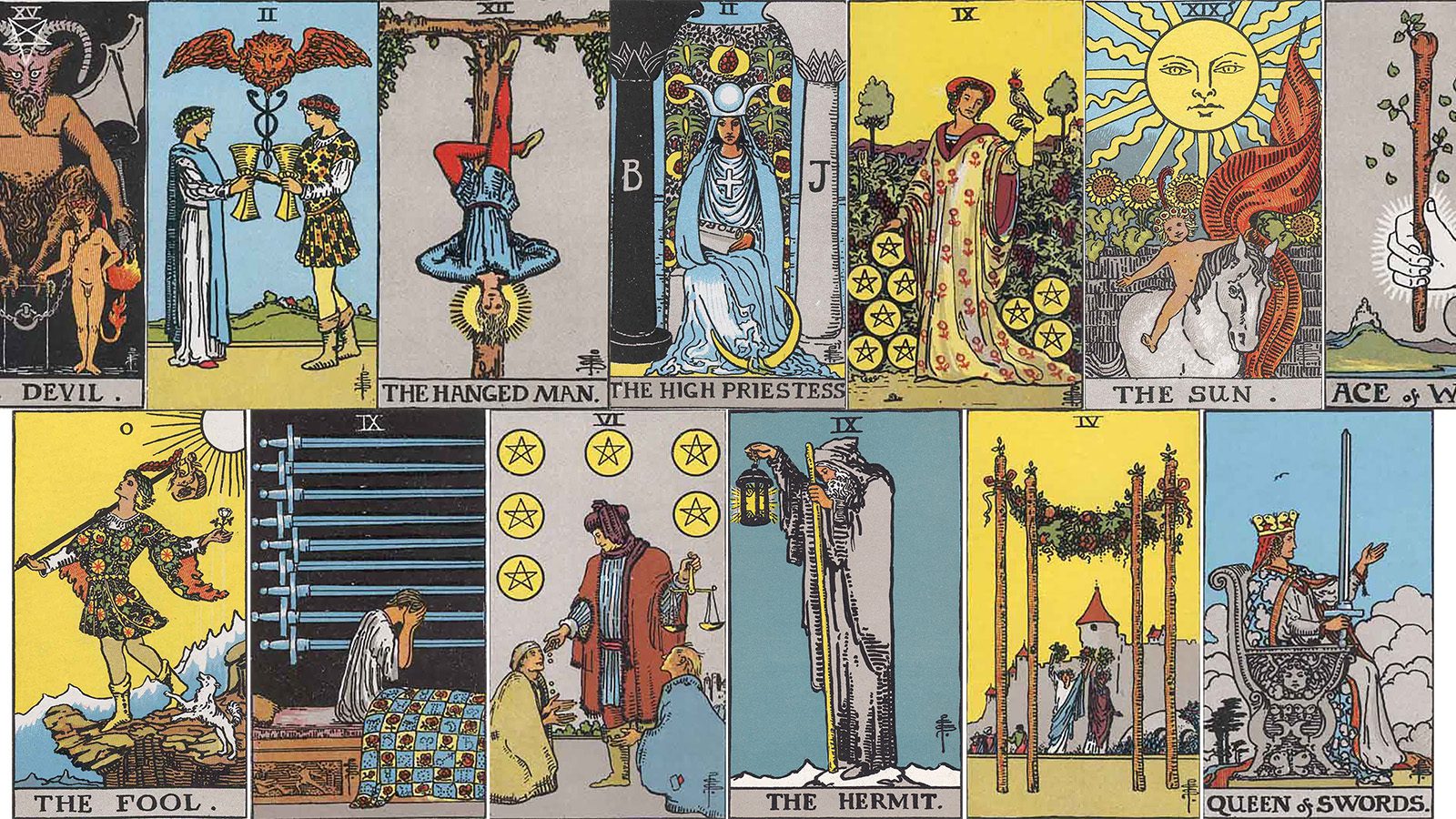
The Waite-Smith Tarot, also known as the Rider-Waite Tarot, emerged in 1909 as a groundbreaking collaboration between artist Pamela Colman Smith and mystic A.E. Waite. Published by the Rider Company, this deck was the first to depict full scenes on all 78 cards, a departure from the traditional pip and court cards of earlier decks. Waite, a member of the Hermetic Order of the Golden Dawn, sought to create a tarot that reflected esoteric symbolism while remaining accessible. Smith, a talented illustrator and member of the Golden Dawn, brought Waite’s vision to life with her evocative artwork. Together, they produced a deck that bridged the gap between occult tradition and popular culture, making tarot more relatable to the masses.
Pamela Colman Smith: The Artist Behind the Vision
Pamela Colman Smith (1878–1951) was a pioneering artist whose work on the Waite-Smith Tarot cemented her legacy in tarot history. Born in London to American parents, Smith spent part of her childhood in Jamaica, which deeply influenced her artistic style and use of vibrant colors. Her background in theater and her involvement in the Golden Dawn exposed her to esoteric symbolism, which she wove into the tarot’s imagery. Smith’s illustrations are notable for their emotional depth and intricate details, from the sorrowful gaze of the Three of Cups to the mystical allure of the High Priestess. Despite her significant contributions, Smith’s role in creating the deck was largely uncredited during her lifetime, a reflection of the gender biases of her era. Today, her work is celebrated as a masterpiece of symbolic art.
Why the Waite-Smith Tarot Fascinates People
A common observation about the Waite-Smith Tarot is its ability to resonate with people across cultures and spiritual backgrounds. One reason for this fascination is its blend of universal archetypes and personal symbolism. The deck’s imagery taps into collective unconscious themes, such as the journey of the Fool or the duality of the Lovers, which evoke deep emotional responses. Additionally, the Waite-Smith Tarot’s accessibility makes it a gateway for beginners, while its layers of meaning continue to intrigue advanced practitioners. The deck’s illustrations are rich with alchemical symbols, astrological references, and Christian iconography, offering multiple pathways for interpretation. This versatility ensures that the deck remains relevant, whether used for divination, meditation, or artistic inspiration.
Key Features of the Waite-Smith Tarot Deck
The Waite-Smith Tarot stands out for several distinctive features that set it apart from other decks. First, its full-scene illustrations on all cards provide a narrative depth that pip cards lack, allowing for richer storytelling in readings. The deck consists of 78 cards divided into the Major Arcana (22 cards) and Minor Arcana (56 cards), each with its own symbolic language. The Minor Arcana is further divided into four suits—Wands, Cups, Swords, and Pentacles—each associated with an element (Fire, Water, Air, Earth) and astrological correspondences. The Major Arcana follows the Fool’s journey, a metaphorical path that mirrors the human experience of growth and transformation. Another notable feature is the deck’s use of color psychology, with warm tones (reds, oranges) often signifying passion or action, and cool tones (blues, greens) representing intuition or stability.
The Symbolism and Esoteric Layers
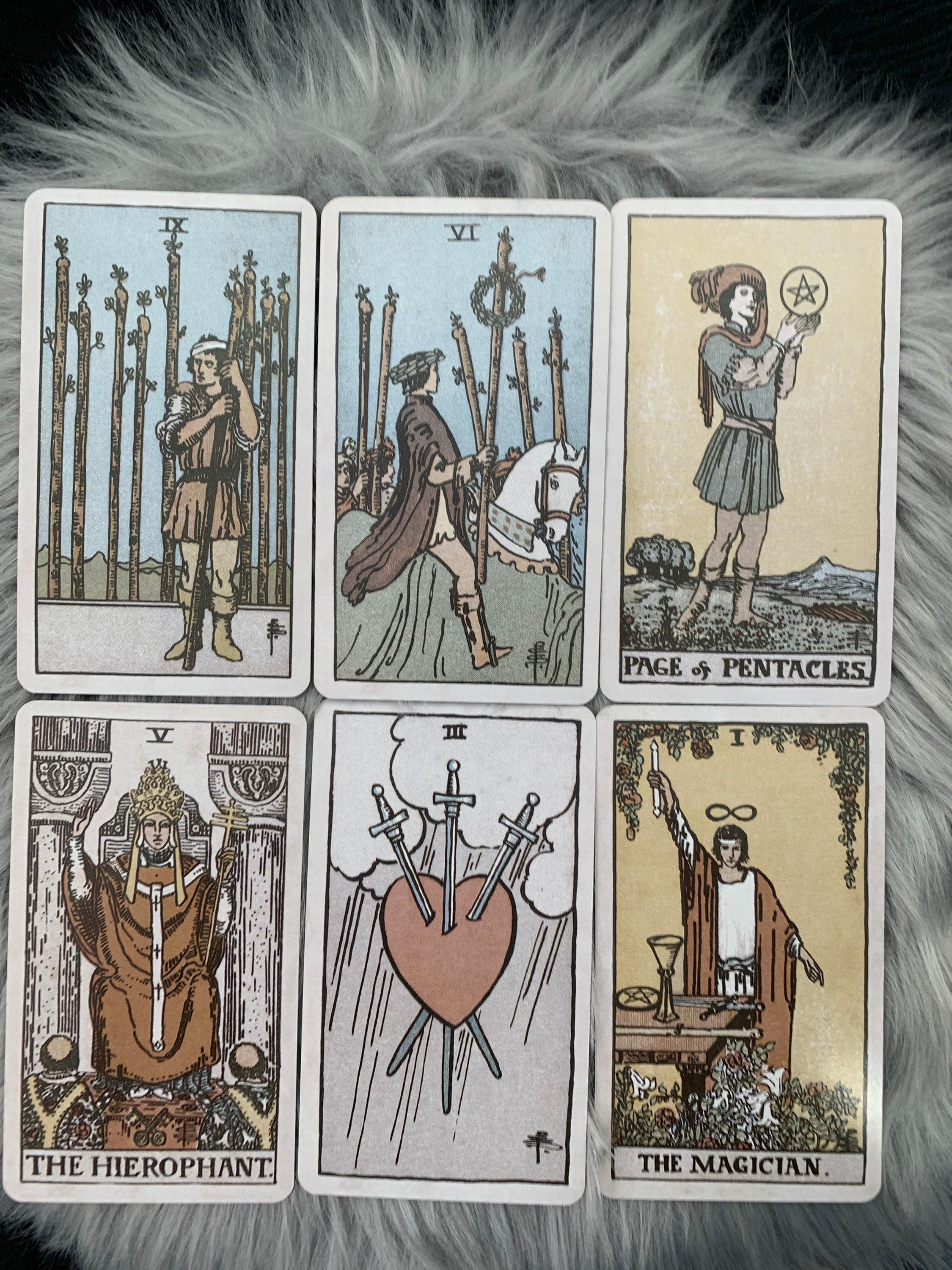
At the heart of the Waite-Smith Tarot’s enduring appeal is its dense symbolism, which invites deeper exploration. Each card is a microcosm of esoteric wisdom, drawing from sources like the Kabbalah, astrology, and alchemy. For example, the High Priestess (II) is often linked to the Hebrew letter Gimel and the moon, representing intuition and hidden knowledge. The Tower (XVI) symbolizes sudden upheaval, a theme resonant with alchemical transformation. The deck also incorporates Christian imagery, such as the crucifix in the Ten of Swords or the lamb in the Hierophant, reflecting Waite’s Catholic background. These layers of meaning allow the deck to function as a visual grimoire, where each card holds clues to spiritual and psychological truths. For those willing to delve deeper, the Waite-Smith Tarot becomes a tool for self-discovery and enlightenment.
Common Misconceptions About the Waite-Smith Tarot
Despite its popularity, the Waite-Smith Tarot is often misunderstood. One common misconception is that it is solely a divinatory tool, when in reality, it serves many purposes, from meditation to artistic inspiration. Another myth is that the deck is inherently “dark” or “scary” due to cards like Death (XIII) or the Tower (XVI). In truth, these cards are about transformation and rebirth, not literal doom. Additionally, some assume that the Waite-Smith Tarot is the only “authentic” deck, which overlooks the rich diversity of tarot traditions. While it is a foundational deck, countless other decks offer unique perspectives, each with its own strengths. Understanding these nuances helps readers approach the Waite-Smith Tarot with a balanced and open mind.
How to Use the Waite-Smith Tarot Effectively
To harness the full potential of the Waite-Smith Tarot, it’s essential to approach it with intention and respect. Beginners should start by familiarizing themselves with the Major Arcana, as these cards represent life’s major themes. Studying the Minor Arcana’s suits and their elemental associations can also deepen one’s understanding. When conducting readings, it’s helpful to keep a journal to track interpretations and patterns over time. Meditating on individual cards, such as pulling a daily card, can foster a personal connection to the deck’s symbolism. For advanced practitioners, exploring the deck’s esoteric correspondences—such as linking cards to astrological houses or Kabbalistic paths—can unlock new layers of insight. Ultimately, the Waite-Smith Tarot is a mirror; the more you engage with it, the more it reveals about your inner world.
Conclusion
The Waite-Smith Tarot is more than just a deck of cards; it is a gateway to the subconscious, a tool for spiritual growth, and a work of art that transcends time. Pamela Colman Smith’s visionary illustrations, combined with A.E. Waite’s esoteric knowledge, created a deck that speaks to the human experience in profound ways. Its enduring popularity is a testament to its ability to adapt and resonate with each generation. Whether you’re drawn to its artistry, its symbolism, or its practical use in readings, the Waite-Smith Tarot offers something for everyone. By approaching the deck with curiosity and an open heart, you’ll uncover the layers of wisdom it holds, making it a lifelong companion on your journey of self-discovery.
FAQ
What is the significance of the Waite-Smith Tarot?
It was the first deck to depict full scenes on every card, making tarot more accessible and symbolically rich.
Who was Pamela Colman Smith and why is she important?
She was the artist who illustrated the Waite-Smith Tarot deck, contributing deeply emotional and symbolic artwork that defines the deck.
Can beginners use the Waite-Smith Tarot?
Yes, its clear imagery and symbolism make it one of the best decks for beginners.
What themes are explored in the Waite-Smith Tarot?
The deck explores archetypes, spiritual growth, transformation, and psychological insights through its cards.
Is the Waite-Smith Tarot only for divination?
No, it can also be used for meditation, self-reflection, and artistic inspiration.
Leave a Reply