Short Answer
The Justice tarot card, when drawn upright, presents a potent emblem of fairness, truth, and moral rectitude. But how does this archetype resonate within a Christian perspective? As believers navigate their spiritual journeys, can they reconcile the concept of justice portrayed in tarot with their faith? Perhaps it invites us to ponder: Are we truly living righteously, or do we find ourselves tangled in the web of human fallibility?
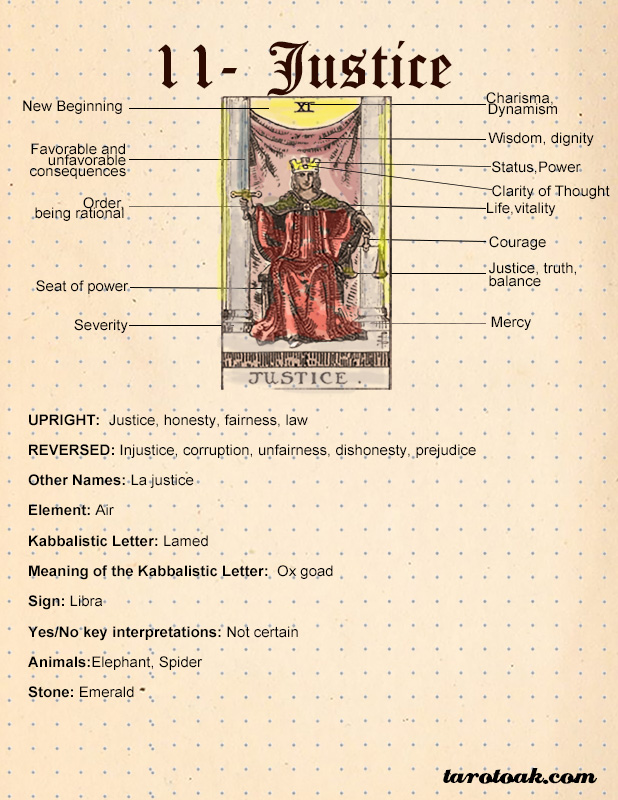
The Justice card, adorned with imagery of scales and a sword, embodies the very essence of balance and impartiality. In Christian theology, God is often depicted as a divine arbiter, ensuring justice prevails. Romans 12:19 states, “Vengeance is mine; I will repay, says the Lord.” This aligns seamlessly with the message of the Justice card—although it may not be our place to mete out justice, we are called to seek it fervently. The mutual existence of divine justice and human accountability beckons contemplation.
At first glance, one may question: Is the practice of tarot compatible with Christianity? Many argue that tarot serves as a tool for introspection rather than divination. If we examine Justice card’s upright position, we recognize its potential as a means of self-examination. This does not necessarily undermine one’s faith; rather, it can enhance our understanding of the moral compass we are called to follow.
In grappling with the significance of fairness, Christians may recognize that Justice encourages steadfast adherence to ethical standards. The Apostle Paul writes extensively about righteousness in the New Testament. Galatians 6:7 reminds us: “Do not be deceived: God cannot be mocked. A man reaps what he sows.” Such a principle echoes through the Justice card, prompting believers to consider the ramifications of their actions. What are we sowing in our lives, and how might we cultivate justice in our interactions with others?
The scales that grace the Justice card remind us that life is a delicate balance of right and wrong, of what we believe to be just and what is unjust. From a Christian viewpoint, this resonates deeply with the notion of sin. Christians believe that everyone sins, yet we are called to repent and seek reconciliation with God. As we strive for justice, how do we confront our own shortcomings? This introspective question poses a challenge, one that urges believers to embrace humility while advocating for fairness in their lives.
Moreover, the sword held aloft stands as a metaphor for clarity and decisiveness. In Christianity, the sword often symbolizes the word of God—the ultimate truth. Ephesians 6:17 refers to the “sword of the Spirit, which is the word of God.” In this light, the Justice card can serve as a reminder of the importance of grounding our moral judgments in Scripture. Are our perceptions of justice aligned with biblical teachings? How can we discern wisely between earthly laws and divine commandments?
Justice also heralds accountability, not merely for our actions but for our judgments of others. In Matthew 7:1-2, Jesus cautions against judging others, indicating that the measure we use will be the measure we receive. This admonition perfectly mirrors the principles encapsulated in the Justice card; it beckons believers to aspire towards equity and unbiased evaluation. Are we at risk of projecting our own biases onto those we encounter? This question invites a deeper exploration into the heart of Christian ethics.
For Christians, embodying the ideals of the Justice card necessitates an awareness of socio-economic disparities and injustices in contemporary society. It challenges believers to advocate for those who are oppressed. Micah 6:8 succinctly encapsulates this calling: “He has shown you, O mortal, what is good. And what does the Lord require of you? To act justly and to love mercy and to walk humbly with your God.” Justice, therefore, is not merely a personal endeavor; it is a communal responsibility urging Christians to stand against injustices, serving as hands and feet of Christ in a fractured world.
Another layer to the Justice card pertains to the idea of reconciliation. Justice extends beyond punishment; it encompasses restoration. In Christian theology, reconciliation is at the heart of God’s redemptive plan. When individuals seek forgiveness and make amends, they pave a way for restoring relationships and rebuilding trust. How do we approach our own relationships with a spirit of justice, compassion, and healing? The upright Justice card serves as a guide in fostering these reconciliatory endeavors.
As we contemplate the upright Justice tarot card within a Christian context, we find it calls for introspection, accountability, and a commitment to equity. It inherently poses a dual challenge: to judge fairly ourselves while advocating for just treatment of others. The visages of scales and sword prompt believers to reconcile their earthly pursuits with the divine call to justice. Thus, may we be ever vigilant, aspiring not only to a personal sense of fairness but to a broader, more encompassing quest for justice in the world around us.
In conclusion, the upright Justice card invites Christians to engage with its themes purposefully, seeking truth and fairness in their lives and communities. It not only spurs inward reflection but also compels outward action. Therefore, as we navigate our faith journeys, may we embrace these timeless lessons with intentionality, ensuring that justice remains imprinted upon our hearts and actions.
FAQ
What does the Justice tarot card mean when upright?
The upright Justice card represents fairness, truth, and moral integrity, urging individuals to seek equity and accountability.
Is tarot compatible with Christianity?
Many view tarot as a tool for introspection rather than divination, allowing believers to enhance their understanding of justice and morality.
Leave a Reply