Short Answer
The Four of Swords is a card steeped in tranquil introspection and profound contemplation. This tarot card embodies the essence of rest, reflection, and mental recuperation. To grasp its significance, one must delve deeper into both its imagery and its broader implications, creating a tapestry of meaning that encompasses healing, respite, and the complex human experience of solitude.
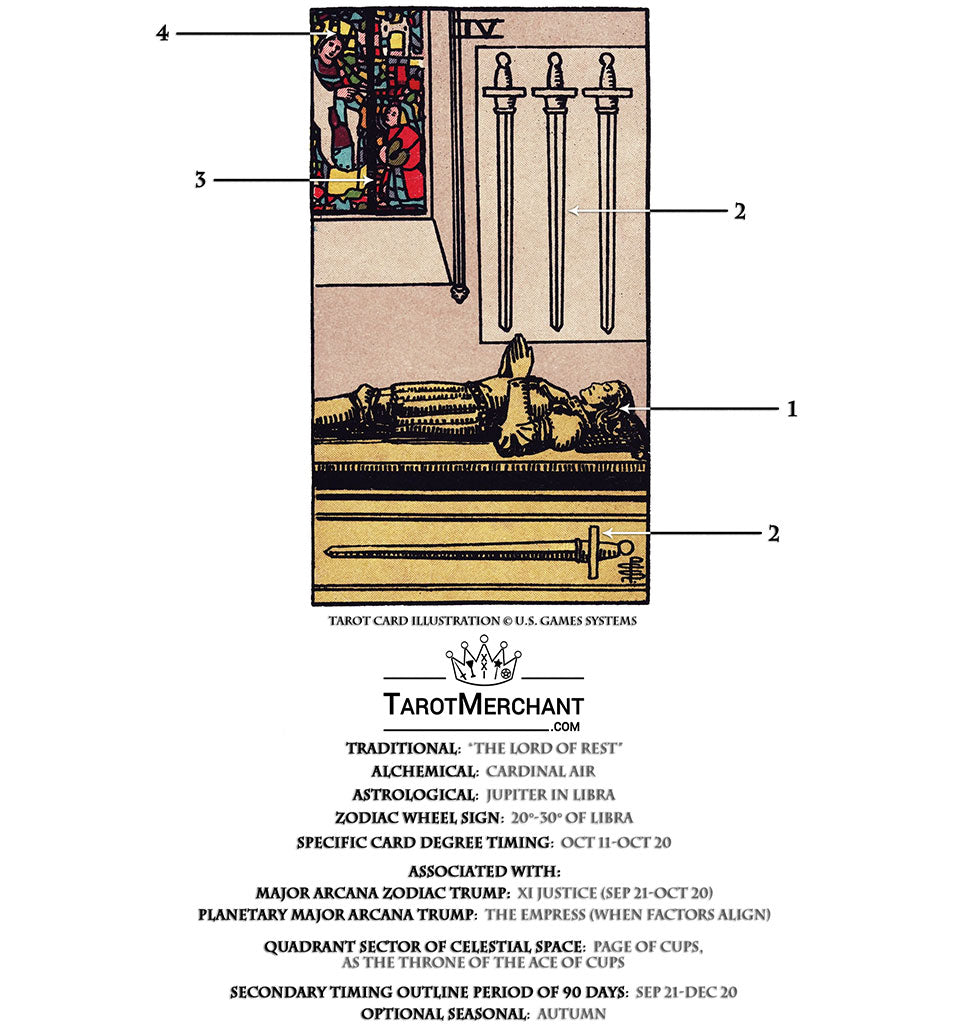
Imagine a serene battlefield, where chaos once reigned; the Four of Swords occupies this moment—a pause before the next engagement. The imagery typically depicts a figure, often recumbent, shrouded in repose. This position elicits a sense of surrender to the subconscious, inviting the viewer to consider the benefits of retreat and the power of stillness. The four swords, arranged neatly, create an emblematic protective barrier around the individual, symbolizing a refuge from external pressures and emotional turmoil.
At its core, the Four of Swords suggests a critical juncture in life—a point where action must yield to contemplation. It serves as an invitation to withdraw from the rigors of the outside world. Much like an athlete needing rest after an intense competition, this card indicates that the pursuit of mental clarity requires an equal measure of rest. Here lies the paradox: in surrendering to stillness, one often discovers the path to recovery and insight.
In the context of personal growth and emotional well-being, the Four of Swords implores individuals to embrace silence. In our modern era, filled with incessant notifications and relentless demands, the act of stepping back may seem audacious. Yet, therein lies the card’s unique allure—its invitation to find solace away from the cacophony of daily life. By sequestering oneself, a person can gain invaluable perspective, allowing the mind to clear away its clutter and revealing deeper truths.
This tarot card resonates deeply with themes of mental health. It acknowledges the myriad challenges that can plague the psyche, from anxiety to depression, and emphasizes the necessity of self-care. Mental fatigue can be deceptively debilitating; the Four of Swords offers a sanctuary where both the physical and mental bodies can rejuvenate. This powerful metaphor for healing conveys that neglecting one’s mental state is to tread a precarious path—one prompted by relentless execution without regard for one’s well-being.
Furthermore, the Four of Swords fosters an appreciation for solitude. Solitude, often misunderstood as loneliness, can be a fertile ground for creativity and self-discovery. History has endowed us with profound thinkers, artists, and philosophers who sought solace in their own company, allowing for deeper reflections and innovative breakthroughs. The card encourages using solitude as a tool, a canvas upon which to paint the intricate designs of inner thought.
Yet, solitude does not equate to isolation. The Four of Swords teaches that the internal dialogue nurtured in quietude can foster more authentic interactions upon re-emergence into society. When one takes the time to reconcile their inner thoughts, they may return with renewed energy and perspectives that enhance their relationships, making them more meaningful and enriching.
The protective nature of the Four of Swords—symbolized by the swords encircling the figure—speaks to the necessity of boundaries. Establishing mental and emotional boundaries is vital for sustaining health and ensuring that engagements with others remain constructive rather than draining. This card became a beacon for those who find themselves spread too thin, advocating for the assertion of personal limits as a form of self-respect and self-preservation.
Moreover, the Four of Swords connotes a journey of spiritual awakening. In times of solace, many discover their deeper selves, tapping into a reservoir of wisdom that transcends immediate concerns. This card signifies a period when one might be drawn to meditation, contemplation, or even prayer—practices that foster a profound connection with the universe and its mysteries. When the noise fades away, the whispers of intuition become clearer, guiding individuals toward profound revelations.
From a broader perspective, the Four of Swords encapsulates the collective experience of humanity, urging its subjects to learn from the past while preparing for the future. As the modern world grapples with challenges both personal and societal, the need for reflection and recovery is more pressing than ever. The essence of the card inspires a movement towards communal healing, emphasizing that the journey to wellness is a shared endeavor, necessitating the collective embrace of reflection and patience.
In conclusion, the Four of Swords is not merely a card of rest but a profound call to embrace the necessity of pause in our frenetic lives. Its multilayered symbolism evokes a myriad of meanings—from mental health advocacy and personal growth to the recognition of solitude as a crucible for creativity. It beckons to those willing to reflect, offering a unique appeal nestled within the quiet moments of life, where the most significant transformations often transpire. Embracing the Four of Swords empowers individuals to harness the regenerative power of stillness, ultimately leading them to a place of enlightenment and resilience.
FAQ
What does the Four of Swords tarot card symbolize?
The Four of Swords symbolizes rest, introspection, and the need for mental recuperation. It encourages individuals to take a break and reflect, promoting healing and personal growth.
How can the Four of Swords aid in mental health?
The Four of Swords highlights the importance of self-care and taking time for solitude, which can provide clarity and rejuvenation for mental health.
Leave a Reply