Short Answer
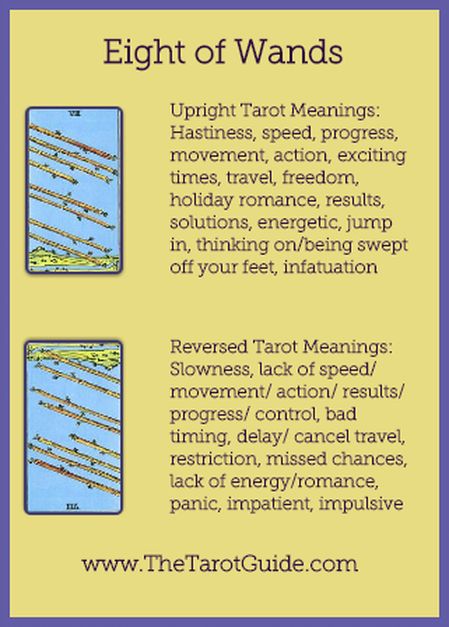
The “Eight of Wands” is a card shrouded in movement, vibrancy, and rapid progress. Yet, when reversed, its interpretation shifts significantly, casting shadows over its otherwise buoyant meanings. This transformation from upright to reversed can evoke intrigue and provoke thoughtful exploration, holding a mirror to complex situations and emotions. Understanding the reversed “Eight of Wands” offers a profound look at delays, miscommunication, and the nuances of action in our fast-paced lives.
When the “Eight of Wands” is reversed, the symbols of swiftness and energy morph into indications of stagnation. The card, initially interpreted as a harbinger of movement, when flipped, represents a standstill. This paradox highlights a common observation in many lives—while we may yearn for progress and fast-paced aspirations, external factors often hinder our journeys. Frustration brews in this context, as individuals find themselves waiting in the nexus of time without the advancement they desperately seek. A myriad of scenarios could elicit such inertia, including personal, professional, or even spiritual realms.
One striking interpretation of the reversed “Eight of Wands” is miscommunication. In a world dominated by instantaneous exchanges, misinterpretations can lead to profound delays. This card suggests that the desire to respond promptly or to act decisively may cloud one’s ability to convey messages clearly. An untransmitted thought or an ill-timed response can stifle potential outcomes, leaving intentions unfulfilled and relationships strained. Reflecting upon this, one acknowledges that our fast-paced environments can actually impede genuine connection—creating a paradox that feels particularly relevant in today’s society of digital immediacy.
Another essential aspect to consider is the notion of barriers. The reversed “Eight of Wands” may signify that travelers on their unique journeys encounter unexpected obstacles. These hurdles may manifest as external forces—such as economic downturns, unforeseen personal circumstances, or opposing opinions that challenge one’s motives—or they could be internal, surfacing as self-doubt or fear. The portrayal of missed opportunities resonates deeply, inviting contemplation on whether the barriers exist externally or are self-imposed. The duality of barriers invites individuals to introspect, encouraging them to challenge their perceptions of what is truly attainable.
Alongside barriers comes a sense of urgency often unfulfilled. Here lies a profound observation: the human desire for immediate gratification, commonly accentuated in modern society, can ironically breed discontent when juxtaposed with the slower rhythms of life. The reversal of the “Eight of Wands” serves as a reminder that meaningful progress often requires patience, yet the tension between desire and reality provokes a lingering frustration. Individuals may find themselves caught in a cycle of feeling impatient, resulting in impulsive decisions that lead to further complications.
The reversed “Eight of Wands” may also signal a period of reevaluation. In circumstances where one may feel stymied by external pressures or internal conflict, this card encourages a turning inward. Reflection and meditation become vital. When propelling forward drains energy rather than focuses it, it offers an opportunity to dissect goals, ambitions, and even moments of joy. What was once a straightforward trajectory may undergo a rich analysis, providing insight that reveals deeper-rooted motives and aspirations hidden beneath the surface.
Additionally, the reversed position can herald a moment to embrace strategic planning over impulsivity. In a world largely driven by speed, there lies wisdom in pause—and this card underscores that concept. By analyzing potential outcomes thoroughly, individuals can circumvent pitfalls that often accompany rapid actions, such as rushed judgments or fleeting enthusiasm. Creating a strategy fosters steadfast growth. The reversed “Eight of Wands” highlights the richness found in patience, the profundity of deliberate action in achieving sustainable success.
Furthermore, there exists a psychological angle to consider. Oftentimes, the stress of expectations weighs heavily on individuals. The reversed “Eight of Wands” emerges as a motif for anxiety bred from unrealistic timelines. Grappling with this perception, one may confront the liberating notion that it is acceptable to step back, reevaluate desires, and embrace the organic nature of growth. With the pressures of societal norms alienating individuals from their natural pacing, this card serves as a gentle prompt to rebalance, to find alignment not just in results, but in process and experience.
In summary, the reversed “Eight of Wands” is a complex card rich with implications. Its meanings extend far beyond mere delays; they offer a window into the intricacies of human behavior, the importance of communication, and the value of inner contemplation. The human condition is often characterized by a desire for immediate action, yet the reversed state of this card can empower individuals to slow down, reflect, and strategize, ultimately enriching their journeys toward fulfillment. This card encourages exploring life’s deeper currents rather than merely skimming the surface, prompting exploration, introspection, and, ultimately, a richer understanding of the self and the path ahead.
FAQ
What does the reversed Eight of Wands mean?
The reversed Eight of Wands indicates delays, miscommunication, and barriers to progress.
How can I deal with the challenges presented by the reversed Eight of Wands?
Focus on introspection, strategic planning, and be patient as you navigate obstacles.
Leave a Reply