Short Answer
Learning tarot meanings can feel overwhelming at first, but with the right approach, you can master the cards efficiently and confidently. This guide breaks down the best ways to learn tarot meanings, covering different types of content and resources to suit various learning styles. Whether you’re a visual learner, prefer structured guides, or enjoy hands-on practice, you’ll find actionable tips to accelerate your tarot journey.
Why Learning Tarot Meanings Matters
Tarot meanings form the foundation of accurate and insightful readings. Without a solid grasp of the cards’ symbolism, interpretations can become vague or inconsistent. By dedicating time to memorize and understand each card’s core message, you’ll build confidence in your readings and provide clearer guidance to others. This process also deepens your connection to the deck, making readings more intuitive over time.
Visual Learning: Posters and Cheat Sheets
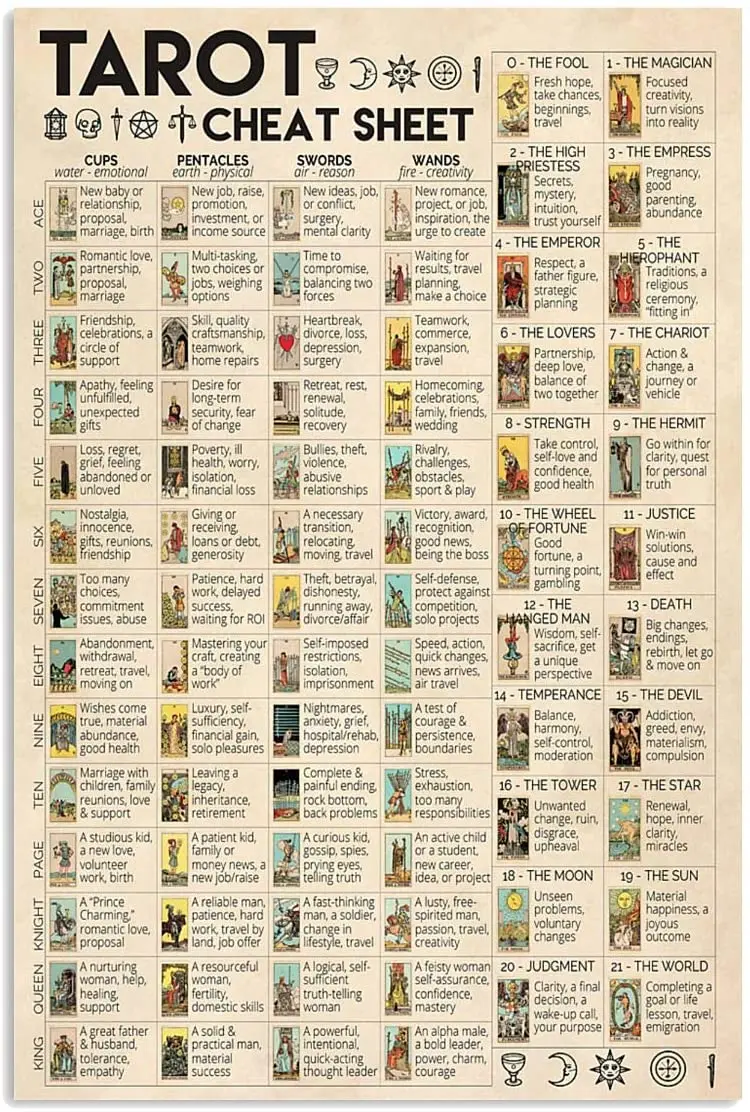
For those who absorb information through images, visual aids are invaluable. Posters and cheat sheets condense tarot meanings into easy-to-scan formats, often color-coded or organized by suit. These resources help reinforce memory by associating each card with its visual representation. For example, the Tarot Card Meanings Cheat Sheet linked in the data provides a compact overview of all 78 cards, making it perfect for quick reference during practice sessions.
To maximize effectiveness, place your cheat sheet in a visible spot, like your study area or near your tarot deck. Regular glances will help embed the meanings in your mind. Pair this with flashcards for active recall—cover the meaning, then check your answer against the sheet.
Structured Guides and PDFs
Written guides offer depth and context that visual aids can’t always provide. A well-organized PDF, like the Tarot Cards Meaning List pdf in the data, lists cards alphabetically or by suit, often including keywords, traditional interpretations, and reversed meanings. These documents are ideal for studying systematically, especially if you prefer taking notes or highlighting key points.
Look for guides that include practical exercises, such as journaling prompts or sample spreads. For instance, you might write out the meaning of each card in your own words or create a story around a card’s imagery to solidify your understanding. Over time, this active engagement will make the meanings second nature.

Interactive Online Resources
The internet is brimming with interactive tools to make learning tarot engaging. Websites and apps offer quizzes, memory games, and even AI-powered interpretations to test your knowledge. For example, platforms like Biddy Tarot or Labyrinthos provide structured lessons with interactive elements, such as drag-and-drop card matching or daily tarot challenges.
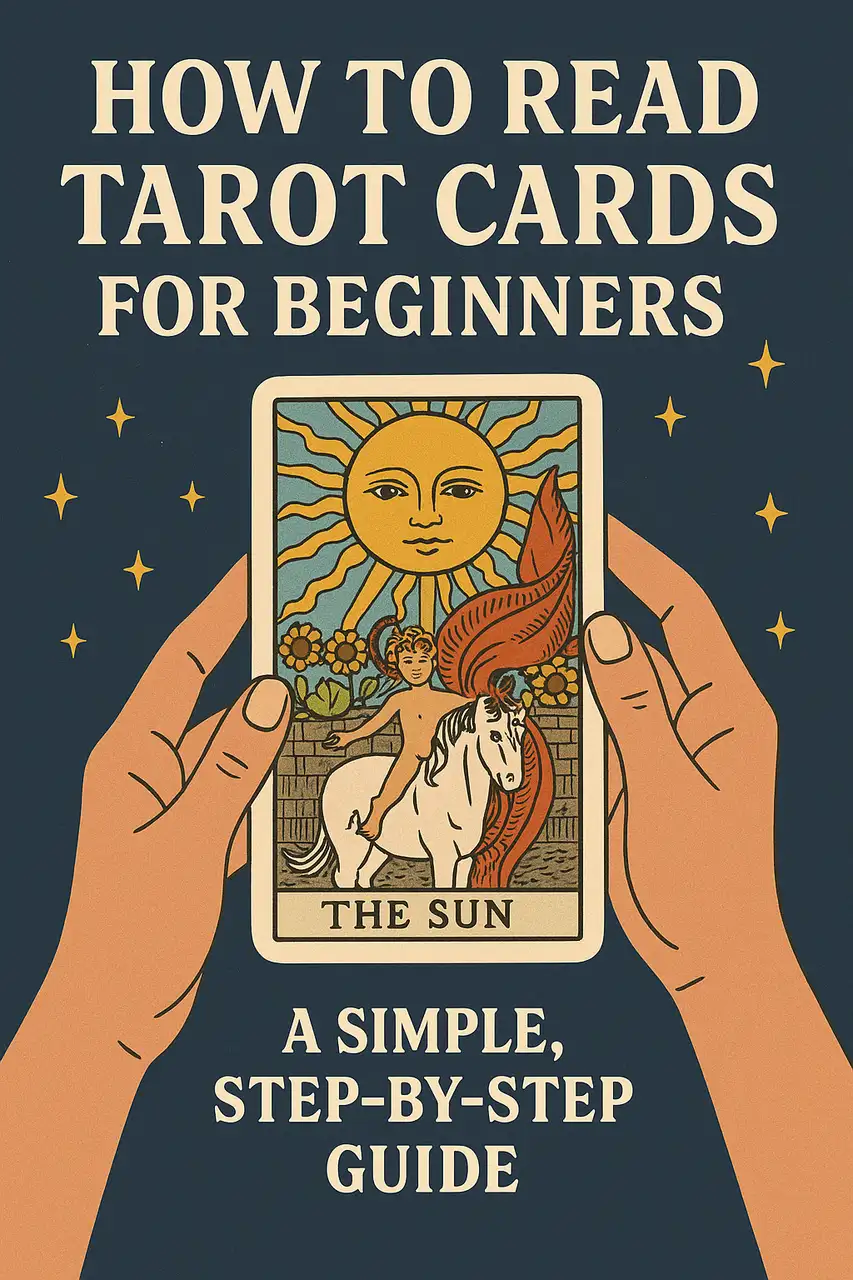
Another effective method is to follow tarot blogs or YouTube channels that break down card meanings in a conversational way. The How to Read Tarot Cards for Beginners: A Simple, Step-by-Step Guide linked in the data is a great example, offering a clear, beginner-friendly approach to learning. These resources often include real-life examples, helping you see how meanings apply in actual readings.
Memorization Techniques for Long-Term Retention
Memorizing 78 cards is no small feat, but specific techniques can make the process easier. One popular method is the Memory Palace, where you associate each card with a vivid image or story in a familiar location. For example, imagine the Fool card (card 0) as a person standing at the edge of a cliff, ready to leap—this image sticks in your mind better than abstract keywords.
Another technique is the Chunking Method, where you group cards by suit or number. Focus on one suit at a time, mastering its meanings before moving to the next. For instance, start with the Major Arcana, then tackle the Cups, Wands, Swords, and Pentacles in order. This reduces cognitive load and makes the task feel more manageable.
Repetition is key. Spend 10–15 minutes daily reviewing cards, and use spaced repetition apps like Anki to reinforce your memory over time. Combine this with real readings—even simple one-card pulls—to apply what you’ve learned in context.
Practical Application: Reading and Journaling
Theory alone won’t make you proficient; practice is essential. Start by doing daily one-card readings for yourself, then gradually work up to spreads like the Celtic Cross. After each reading, journal your interpretations and compare them to trusted sources. Note where you were accurate and where you missed the mark—this reflection sharpens your intuition.
Another practical exercise is to pull a card and write a short story or poem inspired by its imagery. This creative approach helps you internalize the card’s energy and meaning on a deeper level. Over time, you’ll notice patterns and connections between cards, which will enhance your readings.
Community and Accountability
Learning tarot doesn’t have to be a solo journey. Joining a tarot community—whether online or in-person—provides support, feedback, and fresh perspectives. Platforms like Reddit’s r/tarot or local meetups allow you to discuss interpretations, ask questions, and share your progress. Teaching others is also a powerful way to solidify your own knowledge.
Consider finding a study buddy or mentor who can review your readings and offer guidance. Accountability partners can keep you motivated and help you stay consistent with your practice. Plus, discussing tarot with others often reveals nuances you might have overlooked on your own.
Conclusion
Mastering tarot meanings is a journey that combines memorization, practice, and intuition. By leveraging visual aids, structured guides, interactive tools, and practical exercises, you can build a strong foundation in tarot. Remember that consistency is key—dedicate time each day to study and apply what you’ve learned. Over time, your confidence and accuracy will grow, and your readings will become more insightful and meaningful. Whether you’re drawn to posters, PDFs, online resources, or community learning, the best approach is the one that keeps you engaged and motivated. Start small, stay patient, and enjoy the process of uncovering the wisdom of the tarot.
FAQ
What is the best way to learn tarot card meanings?
The best way to learn tarot meanings combines visual aids, structured guides, interactive tools, memorization techniques, and regular practice to build confidence and intuition.
How can I memorize the meanings of all 78 tarot cards?
Techniques like the Memory Palace, chunking cards by suit, spaced repetition, and daily readings help effectively memorize and retain tarot card meanings.
Are there online resources to help learn tarot meanings?
Yes, interactive websites and apps like Biddy Tarot and Labyrinthos offer quizzes, lessons, and challenges to aid tarot learning.
Why is practicing tarot readings important?
Practice helps reinforce learning, develop intuition, and improve accuracy by applying card meanings in real reading contexts.
Can learning tarot be done alone, or should I join a community?
While self-study is possible, joining a tarot community provides support, feedback, and accountability, enhancing the learning experience.
Leave a Reply