Short Answer
Have you ever felt trapped by your own thoughts, as if invisible chains were holding you back from reaching your full potential? The Eight of Swords in tarot embodies this exact sensation—the mental cage we create for ourselves through fear, self-doubt, and limiting beliefs. This guide explores the deeper layers of this card, revealing why it resonates so strongly with people and how to break free from the illusions that bind you. You’ll learn to recognize the signs of self-imposed confinement, understand the psychological roots behind it, and discover actionable steps to reclaim your agency. Whether you’re a tarot enthusiast or someone seeking personal growth, this exploration will illuminate the path from paralysis to empowerment.
The Eight of Swords as a Mirror: Why This Card Strikes a Nerve
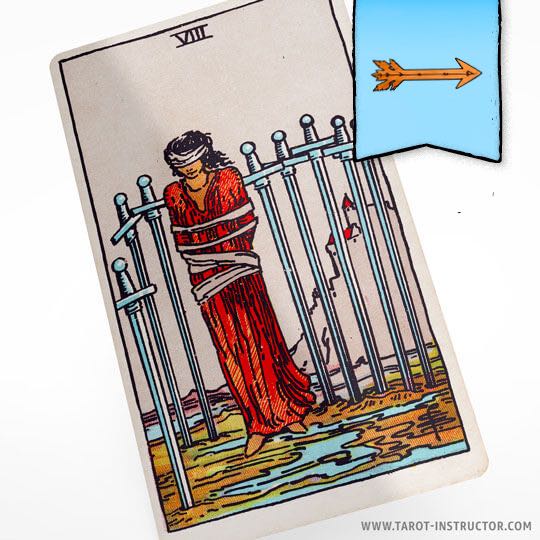
The Eight of Swords often feels like a personal wake-up call because it reflects a universal human experience: the tendency to overestimate our limitations. In the card’s imagery, a blindfolded figure stands surrounded by eight swords, seemingly trapped in a circle of their own making. Yet, a closer look reveals that the swords are not actually blocking the path—there’s ample space to step out. This paradox highlights how our minds construct barriers that don’t truly exist. The fascination with this card stems from its ability to articulate the gap between perceived and actual constraints, making it a powerful tool for self-reflection.
Psychologically, the Eight of Swords taps into the concept of cognitive distortions, where our brains amplify threats and downplay opportunities. For example, someone might avoid pursuing a career change due to an exaggerated fear of failure, even when evidence suggests they’re capable. The card’s imagery forces us to confront these distortions, asking: What if the cage is an illusion? This question alone can be a catalyst for change, as it challenges the narratives we’ve accepted as truth.
Breaking Down the Symbolism: What the Eight of Swords Represents
The Eight of Swords is rich with symbolism that underscores its themes of mental confinement and liberation. Here’s a breakdown of its key elements:
- The Blindfold: Represents denial, avoidance, or a refusal to see the truth. It suggests that the person is ignoring their own agency or the reality of their situation.
- The Swords: Traditionally associated with intellect, conflict, and decision-making, the swords here symbolize the overuse of logic to justify inaction. They’re not physical barriers but mental constructs.
- The Barren Landscape: The empty, desolate background emphasizes isolation and stagnation. It reflects a state of emotional or mental depletion, where growth feels impossible.
- The Path Forward: Despite the apparent trap, there’s always an opening in the circle of swords. This signifies that escape is possible, but it requires a shift in perspective or action.
Together, these symbols paint a picture of a mind that has become its own prison. The card doesn’t just describe feeling stuck—it reveals the mechanisms behind that feeling, such as catastrophizing, black-and-white thinking, or the fear of making the wrong choice. Recognizing these patterns is the first step toward dismantling them.
The Psychological Roots: Why We Build Mental Cages
The Eight of Swords isn’t just about feeling trapped; it’s about understanding why we create traps for ourselves. Several psychological theories and phenomena explain this tendency:
- Learned Helplessness: Coined by psychologist Martin Seligman, this occurs when a person believes they have no control over their situation, even when opportunities exist. The Eight of Swords mirrors this by showing a figure who hasn’t tried to move.
- Imposter Syndrome: Many people feel like frauds in their own lives, convinced they don’t deserve success or happiness. This aligns with the card’s theme of self-sabotage through overthinking.
- Fear of the Unknown: Change is inherently risky, and the mind often prefers the illusion of safety over the uncertainty of growth. The blindfold in the card symbolizes this aversion to facing the unfamiliar.
- Perfectionism: The desire to avoid mistakes can paralyze action. The Eight of Swords reflects this paralysis, where the fear of imperfection keeps someone from moving forward.
These psychological underpinnings explain why the card resonates so deeply. It’s not just about being stuck—it’s about the internal battles that lead to stagnation. By identifying which of these patterns apply to your life, you can begin to challenge them.
From Illusion to Action: How to Step Out of the Cage
Recognizing the Eight of Swords in your life is only the beginning. The real power lies in taking steps to break free. Here’s a practical approach to transforming this card’s energy from paralysis to empowerment:
1. Challenge Your Assumptions
Ask yourself: What evidence do I have that I’m truly trapped? Often, the barriers we perceive are based on assumptions rather than facts. Write down the thoughts that keep you stuck and examine them critically. For example, if you’re avoiding a new project because you fear failure, ask: What’s the worst that could happen, and how would I handle it?
2. Reframe Your Language
Words shape our reality. Replace phrases like “I can’t” with “I’m choosing not to” or “I’ll try” with “I’ll do.” This subtle shift acknowledges your agency and reduces the sense of helplessness. The Eight of Swords thrives on passive language; active language dismantles it.
3. Take Small, Symbolic Steps
You don’t need to make a grand gesture to escape the cage. Start with tiny actions that contradict your limiting beliefs. If the card represents procrastination, commit to working on a task for just five minutes. If it’s about social anxiety, send one message to a friend. These small steps build momentum and prove to your mind that the cage isn’t as solid as it seems.
4. Seek External Perspectives
Sometimes, we’re too close to our own situations to see the truth. Talk to someone you trust about your feelings of being trapped. They might offer insights or encouragement that you hadn’t considered. Alternatively, journaling can help you articulate your thoughts and identify patterns you’re overlooking.
5. Embrace Discomfort
The Eight of Swords often appears when we’re on the cusp of growth but hesitate due to fear. Remind yourself that growth rarely happens in comfort zones. Discomfort is a sign that you’re expanding, not failing. The more you lean into it, the weaker the mental cage becomes.
When the Eight of Swords Appears in Readings: What It’s Trying to Tell You
The Eight of Swords can show up in various contexts, each with its own nuance. Here’s how to interpret its message in different scenarios:
- In Career Readings: It may indicate feeling stuck in a job or industry due to self-doubt or fear of change. The card urges you to assess whether the cage is real or imagined.
- In Relationships: It could reflect a situation where you feel trapped by expectations, guilt, or unresolved conflicts. The message is to question whether these feelings are justified or self-imposed.
- In Personal Growth Readings: The card might highlight a mental block, such as perfectionism or avoidance, that’s hindering your progress. It’s a call to confront these patterns head-on.
- In Decision-Making: If you’re overanalyzing a choice, the Eight of Swords suggests that you’re creating unnecessary obstacles. Trust your intuition and take action.
Regardless of the context, the Eight of Swords is a reminder that you hold the key to your own liberation. The cage is not a life sentence—it’s an invitation to see things differently.
Conclusion: The Cage Was Never Locked
The Eight of Swords is one of the most poignant cards in the tarot deck because it doesn’t just describe a problem—it offers a path to resolution. It teaches that the mental cages we build are often made of smoke and mirrors, sustained by our own fears and insecurities. The first step to freedom is recognizing that the locks were never real to begin with.
This card’s power lies in its ability to shift perspective. When you see the Eight of Swords in a reading or in your life, ask yourself: What would happen if I stepped out of this circle? The answer is almost always that you’d find the world waiting for you—open, full of possibilities, and far less intimidating than your mind had led you to believe.
Breaking free from the Eight of Swords isn’t about force or drastic change. It’s about softening your grip on the illusions that bind you, one small step at a time. The cage was never locked. The door was always open. All you had to do was turn the handle.
FAQ
What does the Eight of Swords represent?
The Eight of Swords represents feelings of being trapped by one’s own thoughts and limiting beliefs, highlighting the mental barriers we create.
How can I overcome the limitations represented by the Eight of Swords?
To overcome these limitations, challenge your assumptions, reframe your language, take small steps, seek external perspectives, and embrace discomfort.

Leave a Reply