Short Answer
Embarking on a journey through the world of tarot can feel overwhelming at first. With 78 unique cards, each carrying its own symbolism, imagery, and meaning, it’s easy to feel lost in the intricate web of interpretations. Whether you’re a beginner seeking clarity or a seasoned reader looking for a refresher, this comprehensive guide breaks down every tarot card and its meaning into one easy-to-follow list. By organizing the cards by their suits and positions, you’ll gain a deeper understanding of their individual messages and how they interact within a reading. This guide also addresses a common observation: why tarot continues to captivate people across cultures and centuries. The answer lies in its ability to reflect the human experience—our struggles, triumphs, fears, and hopes—through universal archetypes and timeless symbols.
The Major Arcana: The Journey of the Soul
The Major Arcana consists of 22 cards that represent significant life themes, spiritual lessons, and karmic influences. These cards often appear in readings to signify pivotal moments or deep transformations. They follow a narrative arc, much like a hero’s journey, guiding you through stages of personal growth and self-discovery.
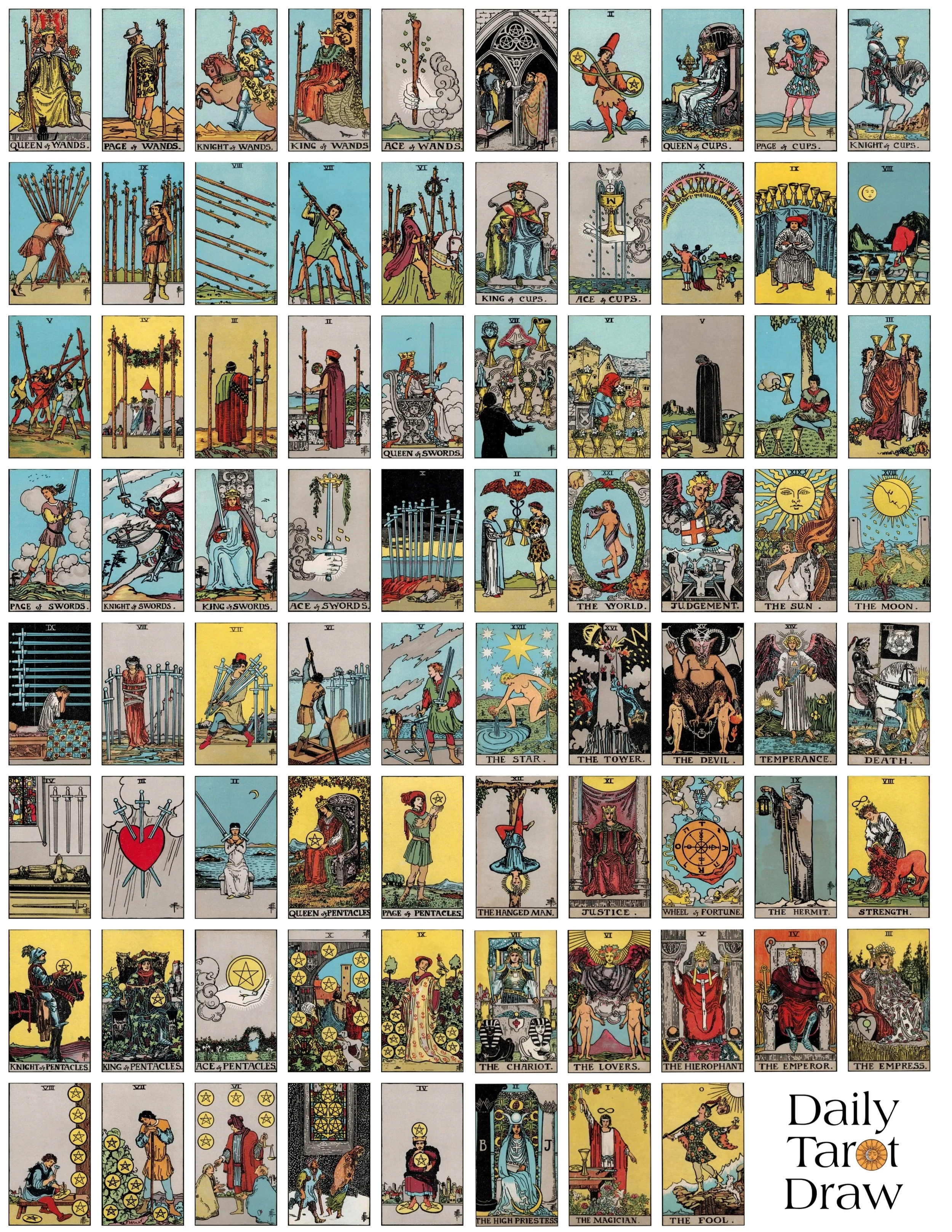
The Fool (0) – A symbol of new beginnings, spontaneity, and taking a leap of faith. The Fool represents innocence, curiosity, and the start of a journey without overthinking the destination.
The Magician (I) – This card embodies manifestation, resourcefulness, and harnessing your skills to create change. It suggests that you have all the tools needed to achieve your goals.
The High Priestess (II) – A card of intuition, mystery, and hidden knowledge. She encourages you to trust your inner wisdom and explore the subconscious mind.
The Empress (III) – Represents nurturing, abundance, and creativity. She is the mother figure, symbolizing growth, fertility, and the natural world.
The Emperor (IV) – The embodiment of structure, authority, and leadership. This card signifies stability, control, and the ability to make firm decisions.
The Hierophant (V) – A card of tradition, spirituality, and seeking guidance from established systems. It may indicate a need to connect with your beliefs or a mentor.
The Lovers (VI) – More than just romance, this card represents choices, harmony, and alignment with your values. It may also signify a union of opposites or a significant relationship.
The Chariot (VII) – A symbol of determination, willpower, and overcoming obstacles. This card suggests victory through focus and perseverance.
Strength (VIII) – Represents inner strength, courage, and compassion. Unlike external power, this card highlights the strength found in gentleness and self-mastery.
The Hermit (IX) – A card of introspection, solitude, and seeking answers within. The Hermit carries a lantern, symbolizing the search for truth and wisdom.
Wheel of Fortune (X) – A card of cycles, change, and destiny. It reminds you that life is full of ups and downs, and fortune can shift in an instant.
Justice (XI) – Represents fairness, truth, and cause and effect. This card often appears when karmic balance is at play or a decision needs to be made with integrity.
The Hanged Man (XII) – A card of surrender, new perspectives, and letting go. It suggests that sometimes, inaction or a change in viewpoint can lead to breakthroughs.
Death (XIII) – Contrary to popular belief, this card rarely signifies literal death. Instead, it represents transformation, endings, and rebirth in a new form.
Temperance (XIV) – A card of balance, patience, and moderation. It encourages you to find harmony between opposing forces and take things one step at a time.
The Devil (XV) – Represents bondage, materialism, and unhealthy attachments. This card warns against toxic habits, dependencies, or situations that limit your freedom.
The Tower (XVI) – A card of sudden upheaval, chaos, and revelation. It signifies that what was built on unstable foundations will crumble, making way for something new.
The Star (XVII) – A card of hope, inspiration, and healing. It encourages you to have faith in the universe and trust that better days are ahead.
The Moon (XVIII) – Represents illusion, intuition, and the subconscious. This card may indicate confusion, hidden fears, or the need to trust your gut feeling.
The Sun (XIX) – A card of joy, success, and vitality. It symbolizes clarity, positivity, and the warmth of life’s blessings.
Judgement (XX) – A card of awakening, redemption, and a call to action. It suggests a moment of reckoning where you must rise to your higher purpose.
The World (XXI) – Represents completion, fulfillment, and wholeness. This card signifies the end of a cycle and the achievement of a long-term goal.
The Minor Arcana: The Details of Daily Life
The Minor Arcana consists of 56 cards divided into four suits: Wands, Cups, Swords, and Pentacles. Each suit corresponds to a different aspect of life—creativity, emotions, intellect, and material world—and includes numbered cards (Ace through 10) and court cards (Page, Knight, Queen, King). While the Major Arcana deals with grand themes, the Minor Arcana focuses on everyday experiences and challenges.
Wands: Passion, Creativity, and Ambition
Wands are associated with fire, energy, and inspiration. They represent ambition, drive, and the spark of new ideas. When Wands appear in a reading, they often signal a time of growth, adventure, or creative projects.

Ace of Wands – A burst of inspiration, new opportunities, or a creative spark. It’s time to take action on a bold idea.
Two of Wands – Planning, decisions, and weighing options. This card suggests looking ahead and considering future possibilities.
Three of Wands – Expansion, foresight, and waiting for results. It indicates progress and the need to trust the journey.
Four of Wands – Celebration, joy, and milestones. This card often appears during happy occasions like weddings or achievements.
Five of Wands – Competition, conflict, or challenges. It suggests a need to stand your ground or navigate disagreements.
Six of Wands – Victory, recognition, and success. This card celebrates your achievements and the admiration of others.
Seven of Wands – Defensiveness, perseverance, and standing up for yourself. It indicates a time to protect your boundaries.
Eight of Wands – Speed, movement, and rapid progress. This card suggests fast-moving events or the need to act quickly.
Nine of Wands – Resilience, grit, and pushing through challenges. It’s a reminder to keep going despite fatigue.
Ten of Wands – Burden, responsibility, and feeling overwhelmed. This card warns against taking on too much.
Page of Wands – Enthusiasm, exploration, and new ideas. A young, energetic energy that’s eager to learn.
Knight of Wands – Adventure, impulsiveness, and a free spirit. This card represents someone who acts on passion without hesitation.
Queen of Wands – Confidence, independence, and charisma. A nurturing yet strong-willed leader who inspires others.
King of Wands – Visionary leadership, boldness, and entrepreneurial spirit. This card embodies someone who takes charge and motivates others.
Cups: Emotions, Relationships, and Intuition
Cups correspond to water, representing emotions, intuition, and connections. These cards delve into matters of the heart, love, and personal relationships. They often reflect your inner feelings and how you relate to others.
Ace of Cups – New love, emotional fulfillment, or the start of a creative project. A card of overflowing joy and compassion.
Two of Cups – Partnership, mutual love, and harmony. This card often signifies a deep connection or a romantic union.
Three of Cups – Celebration, friendship, and joyful gatherings. It represents community, camaraderie, and shared happiness.
Four of Cups – Apathy, contemplation, or feeling uninspired. This card suggests a need to reevaluate your priorities.
Five of Cups – Loss, regret, or focusing on the negative. It’s a reminder to acknowledge pain but not dwell on it.
Six of Cups – Nostalgia, childhood memories, and innocence. This card often brings up past experiences and simpler times.
Seven of Cups – Choices, illusions, and daydreaming. It warns against indecision or chasing unrealistic fantasies.
Eight of Cups – Walking away, emotional detachment, and seeking deeper meaning. This card signifies leaving behind what no longer serves you.
Nine of Cups – Wishes fulfilled, contentment, and satisfaction. A card of joy and gratitude for life’s blessings.
Ten of Cups – Family harmony, emotional security, and deep fulfillment. It represents love, unity, and a sense of belonging.
Page of Cups – Sensitivity, intuition, and emotional messages. A gentle, artistic energy that’s in touch with feelings.
Knight of Cups – Romance, charm, and emotional pursuits. This card represents someone who acts from the heart but may be idealistic.
Queen of Cups – Compassion, intuition, and emotional intelligence. A nurturing, empathetic leader who guides with love.
King of Cups – Emotional mastery, wisdom, and balance. This card embodies someone who is in control of their feelings and leads with empathy.
Swords: Intellect, Conflict, and Communication
Swords are tied to air, symbolizing the mind, logic, and communication. These cards often deal with thoughts, decisions, and conflicts—both internal and external. They can highlight challenges in communication or the need for clear thinking.
Ace of Swords – Clarity, breakthroughs, and mental power. A new idea or the ability to cut through confusion.
Two of Swords – Stalemate, indecision, and avoiding confrontation. This card suggests a need to make a choice despite uncertainty.
Three of Swords – Heartbreak, betrayal, or painful truth. It represents emotional wounds and the need to heal.
Four of Swords – Rest, recovery, and contemplation. This card advises taking a break to recharge and reflect.
Five of Swords – Conflict, tension, and winning at a cost. It warns against aggression or manipulation.
Six of Swords – Transition, moving on, and leaving behind troubles. This card signifies a journey toward calmer waters.
Seven of Swords – Deception, strategy, and sneaky behavior. It may indicate a need to be cautious or reconsider your approach.
Eight of Swords – Feeling trapped, self-imposed limitations, and confusion. This card suggests breaking free from mental constraints.
Nine of Swords – Anxiety, worry, and sleepless nights. It’s a reminder to address fears rather than let them consume you.
Ten of Swords – Rock bottom, endings, and painful conclusions. This card signifies the final straw before a necessary transformation.
Page of Swords – Curiosity, new ideas, and communication. A youthful, intellectual energy that’s eager to learn and share.
Knight of Swords – Directness, assertiveness, and impulsive action. This card represents someone who charges ahead without hesitation.
Queen of Swords – Independence, sharp intellect, and honesty. A no-nonsense leader who values truth and fairness.
King of Swords – Authority, logic, and strategic thinking. This card embodies a wise, decisive leader who values justice.
Pentacles: Money, Work, and Material World
Pentacles are linked to earth, representing the physical world, finances, and practical matters. These cards focus on stability, resources, and the tangible aspects of life. They often appear in readings about career, money, and long-term goals.

Ace of Pentacles – New opportunities, financial growth, or a solid foundation. A card of prosperity and potential.
Two of Pentacles – Balance, adaptability, and juggling responsibilities. This card suggests managing multiple tasks with ease.
Three of Pentacles – Teamwork, collaboration, and skill-building. It represents learning, craftsmanship, and dedication.
Four of Pentacles – Security, control, and holding onto resources. This card may indicate a fear of loss or greed.
Five of Pentacles – Financial struggle, hardship, or feeling left out in the cold. It’s a reminder to seek help when needed.
Six of Pentacles – Generosity, charity, and sharing resources. This card represents fairness in giving and receiving.
Seven of Pentacles – Patience, long-term investments, and waiting for results. It suggests assessing your progress before moving forward.
Eight of Pentacles – Hard work, dedication, and mastery. This card signifies a focus on skill development and craftsmanship.
Nine of Pentacles – Abundance, self-sufficiency, and enjoying the fruits of labor. A card of luxury and independence.
Ten of Pentacles – Legacy, family wealth, and generational blessings. It represents stability, tradition, and long-term security.
Page of Pentacles – Learning, opportunity, and practical ideas. A studious, reliable energy that’s eager to grow.
Knight of Pentacles – Reliability, diligence, and slow progress. This card represents someone who is methodical and dependable.
Queen of Pentacles – Nurturing, abundance, and practical wisdom. A caring, resourceful leader who values comfort and security.
King of Pentacles – Wealth, business acumen, and leadership. This card embodies success, stability, and the ability to build empires.
Why Tarot Continues to Fascinate
The enduring allure of tarot lies in its ability to mirror the human experience. Unlike other divination tools, tarot doesn’t just predict the future—it offers a framework for understanding the present and navigating life’s complexities. Each card acts as a mirror, reflecting back the struggles and triumphs we all face. The Major Arcana, with its archetypal journey, resonates with the universal quest for meaning, while the Minor Arcana grounds these themes in everyday situations, making the wisdom accessible to everyone.
Another reason for tarot’s popularity is its adaptability. Whether you’re seeking guidance on love, career, or personal growth, there’s a card (or combination of cards) that speaks to your situation. The imagery—rich with symbolism—invites interpretation, allowing each reader to connect with the cards on a personal level. This flexibility ensures that tarot remains relevant across cultures and generations, evolving with the times while retaining its ancient roots.
Finally, tarot’s fascination stems from its role as a tool for self-reflection. In a world filled with noise and distractions, pulling a card and contemplating its message can be a meditative practice. It encourages mindfulness, introspection, and a deeper connection to one’s intuition. Whether used for entertainment or serious guidance, tarot invites you to slow down, listen to your inner voice, and trust the journey—even when the path isn’t clear.
Conclusion
Tarot is more than just a deck of cards—it’s a gateway to self-discovery, a tool for navigating life’s challenges, and a mirror reflecting the human experience in all its complexity. By understanding the meanings of each card, you gain insight into your own journey, recognizing patterns, embracing growth, and making empowered choices. Whether you’re drawn to the Major Arcana’s grand themes or the Minor Arcana’s everyday lessons, tarot offers a language to articulate your hopes, fears, and aspirations.
As you explore the cards, remember that their power lies not in fortune-telling, but in their ability to illuminate your path. Trust your intuition, stay open to interpretation, and let the wisdom of the tarot guide you toward clarity and purpose. The cards are always ready to speak—are you ready to listen?
FAQ
What is the difference between Major and Minor Arcana cards?
Major Arcana cards represent significant life themes and spiritual lessons, while Minor Arcana cards focus on daily life experiences and challenges.
How many cards are in a tarot deck?
A standard tarot deck contains 78 cards, divided into 22 Major Arcana cards and 56 Minor Arcana cards.
What does the Fool card symbolize?
The Fool represents new beginnings, innocence, spontaneity, and taking a leap of faith.
Can tarot cards predict the future?
Tarot cards are tools for guidance and reflection, helping to explore possibilities and personal insights rather than absolute future predictions.
Leave a Reply