Short Answer
The world of tarot is vast and mysterious, often leaving seekers both intrigued and slightly overwhelmed. With 78 unique cards—each holding layers of symbolism, history, and meaning—it’s no wonder that tarot has captivated minds for centuries. Whether you’re a beginner dipping your toes into the world of divination or an experienced reader looking to deepen your understanding, this guide will serve as your comprehensive companion. Here, you’ll uncover the meanings of every card in the Major and Minor Arcana, explore their historical roots, and discover why these ancient symbols continue to resonate so deeply in modern times. By the end, you’ll not only know what each card represents but also how to interpret them in readings, unlocking the wisdom they hold.
The Structure of the Tarot: Major vs. Minor Arcana
The tarot deck is divided into two primary sections: the Major Arcana and the Minor Arcana. The Major Arcana consists of 22 cards, each representing significant life events, spiritual lessons, or karmic influences. These cards often depict archetypal figures and universal themes, such as The Fool’s journey toward enlightenment or The Tower’s sudden upheaval. In contrast, the Minor Arcana contains 56 cards, organized into four suits—Cups, Pentacles, Swords, and Wands—each corresponding to different aspects of daily life. While the Major Arcana speaks to grand narratives, the Minor Arcana delves into the nuances of everyday experiences, emotions, and challenges. Together, they form a complete picture of the human experience, offering insights into both the extraordinary and the ordinary.
Major Arcana: The Soul’s Journey Unveiled
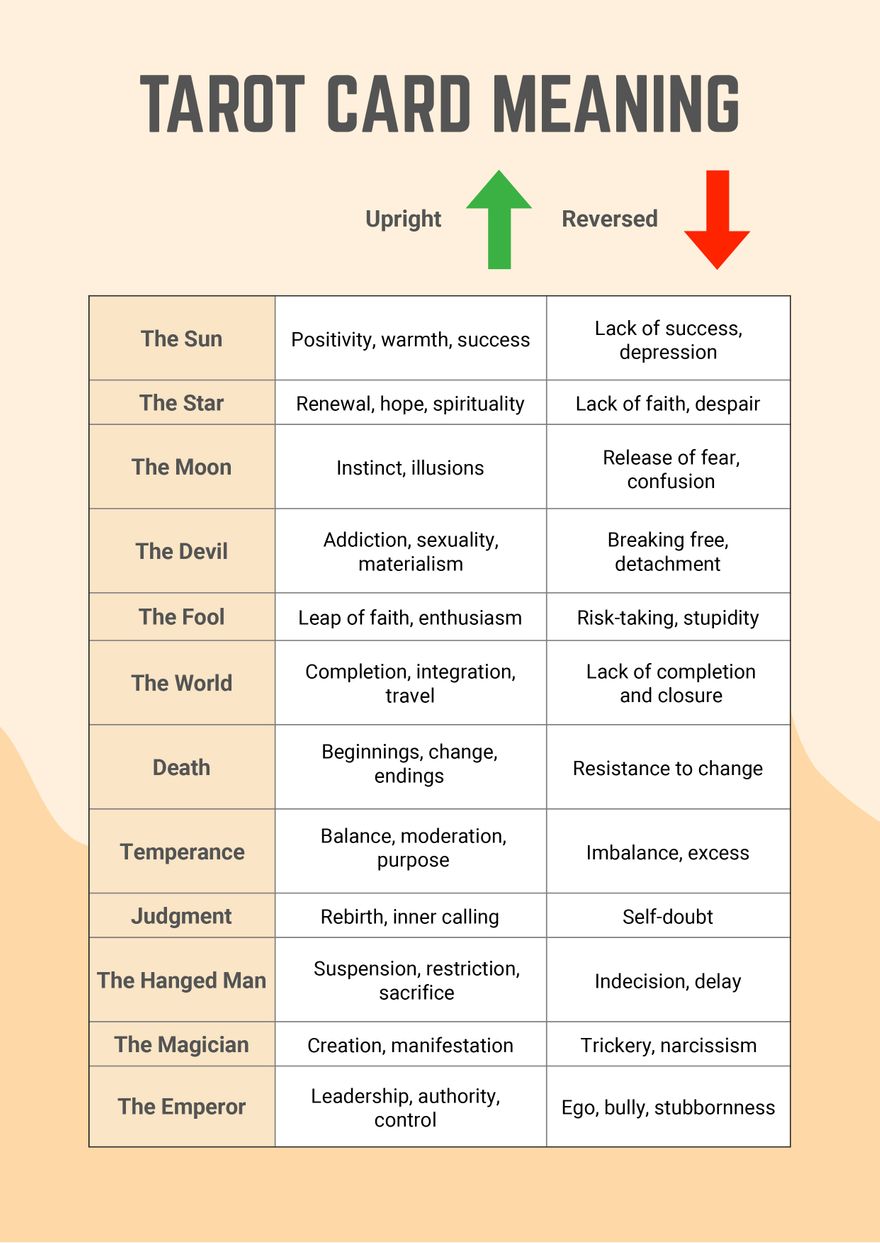
The Major Arcana cards are often seen as the heart of the tarot deck, each representing a pivotal moment in the Fool’s journey—a metaphorical path of spiritual growth and self-discovery. Starting with The Fool (Card 0), which symbolizes new beginnings, spontaneity, and a leap of faith, the journey progresses through cards like The Magician (Card I), representing manifestation and resourcefulness, and The High Priestess (Card II), embodying intuition and hidden knowledge. Cards such as The Lovers (Card VI) and Justice (Card XI) explore relationships and moral decisions, while Death (Card XIII) and The Tower (Card XVI) signify transformation and sudden change. The final card, The World (Card XXI), represents completion and fulfillment. Each of these cards carries a profound message, inviting reflection on life’s most significant themes.
Minor Arcana: Navigating Everyday Life
The Minor Arcana is where the tarot becomes deeply personal, offering guidance on the intricacies of daily life. Divided into four suits, each suit corresponds to an element and a facet of human experience:
- Cups (Water): Emotions, relationships, and intuition. Cards like the Three of Cups celebrate joy and friendship, while the Five of Cups reflects loss and regret.
- Pentacles (Earth): Material wealth, career, and practical matters. The Ace of Pentacles signals new financial opportunities, while the Ten of Pentacles represents legacy and family.
- Swords (Air): Intellect, conflict, and communication. The Two of Swords depicts indecision, while the Seven of Swords warns of deception or strategic maneuvering.
- Wands (Fire): Passion, creativity, and ambition. The King of Wands embodies charisma and leadership, while the Eight of Wands suggests swift movement and progress.
Each suit contains 14 cards—Ace through 10, plus four court cards (Page, Knight, Queen, King)—allowing for nuanced interpretations of life’s ups and downs. Whether you’re facing a career dilemma, a romantic challenge, or a creative block, the Minor Arcana provides a mirror to your experiences.

Reversed Cards: Uncovering Hidden Truths
While upright cards typically represent straightforward interpretations, reversed cards add complexity by highlighting blocked energy, internal struggles, or alternative perspectives. For example, the Three of Cups reversed might indicate gossip or unresolved tension in a friendship, while the Chariot reversed could suggest a lack of direction or control. Reversals invite deeper introspection, urging you to examine what’s holding you back or what lessons are yet to be learned. However, interpretations vary among readers—some see reversals as negative omens, while others view them as opportunities for growth. The key is to trust your intuition and consider the context of the reading.
Tarot and Psychology: Why These Symbols Resonate
The enduring fascination with tarot isn’t merely about fortune-telling; it’s rooted in psychology and archetypal storytelling. Carl Jung’s theories on the collective unconscious and archetypes align closely with tarot symbolism. Cards like The Empress and The Emperor embody nurturing and authoritative energies, respectively, mirroring universal human experiences. The tarot acts as a psychological tool, helping individuals explore their subconscious, confront fears, and visualize paths forward. Its imagery—whether the serene moon of The High Priestess or the chaotic lightning of The Tower—taps into primal emotions, making it a powerful medium for self-reflection and healing.
How to Use This Guide for Readings
Whether you’re pulling a single card for daily guidance or conducting a full spread, this guide can enhance your interpretations. Start by familiarizing yourself with each card’s core meaning, then observe how they interact in a spread. For example, if The Lovers appears alongside The Two of Cups, it might emphasize harmony in relationships, while The Hermit paired with The Eight of Swords could suggest a need for solitude to escape mental constraints. Keep a journal to track recurring cards and themes, noting how their meanings evolve with your life circumstances. Over time, you’ll develop a personal lexicon of symbols that resonate uniquely with you.
Conclusion
The tarot is more than a deck of cards—it’s a mirror to the soul, a guide through life’s labyrinth, and a tool for unlocking hidden truths. By understanding the meanings of all 78 cards, you gain access to a language that transcends words, speaking directly to the subconscious. Whether you’re drawn to the Major Arcana’s grand narratives or the Minor Arcana’s everyday wisdom, each card offers a piece of the puzzle that is human existence. As you deepen your practice, remember that tarot is a conversation between you and the universe, one that evolves with every shuffle of the deck. Embrace the mystery, trust your intuition, and let the cards illuminate your path.

Leave a Reply