Short Answer
In this comprehensive guide, you’ll discover how to learn tarot online for free, even if you’re a complete beginner. You’ll explore the basics of tarot cards, how to interpret their meanings, and practical steps to start reading for yourself or others. Whether you’re drawn to tarot for self-reflection, spiritual growth, or creative inspiration, this guide will help you build a strong foundation without spending a dime. By the end, you’ll have the tools to confidently shuffle your deck, understand card positions, and trust your intuition as you uncover deeper insights.
Why Learn Tarot Online for Free?
Many people are fascinated by tarot because it offers a unique blend of psychology, symbolism, and spirituality. Unlike traditional divination methods, tarot doesn’t require rigid beliefs—it adapts to your perspective. Online resources make it easier than ever to access free guides, printable decks, and interactive tutorials that cater to all skill levels. The digital format also allows you to learn at your own pace, revisit concepts, and connect with a global community of tarot enthusiasts. Whether you’re curious about the cards’ historical roots or eager to use them for daily guidance, free online learning removes financial barriers and empowers you to explore tarot on your terms.
Getting Started: Essential Tools for Free Tarot Learning
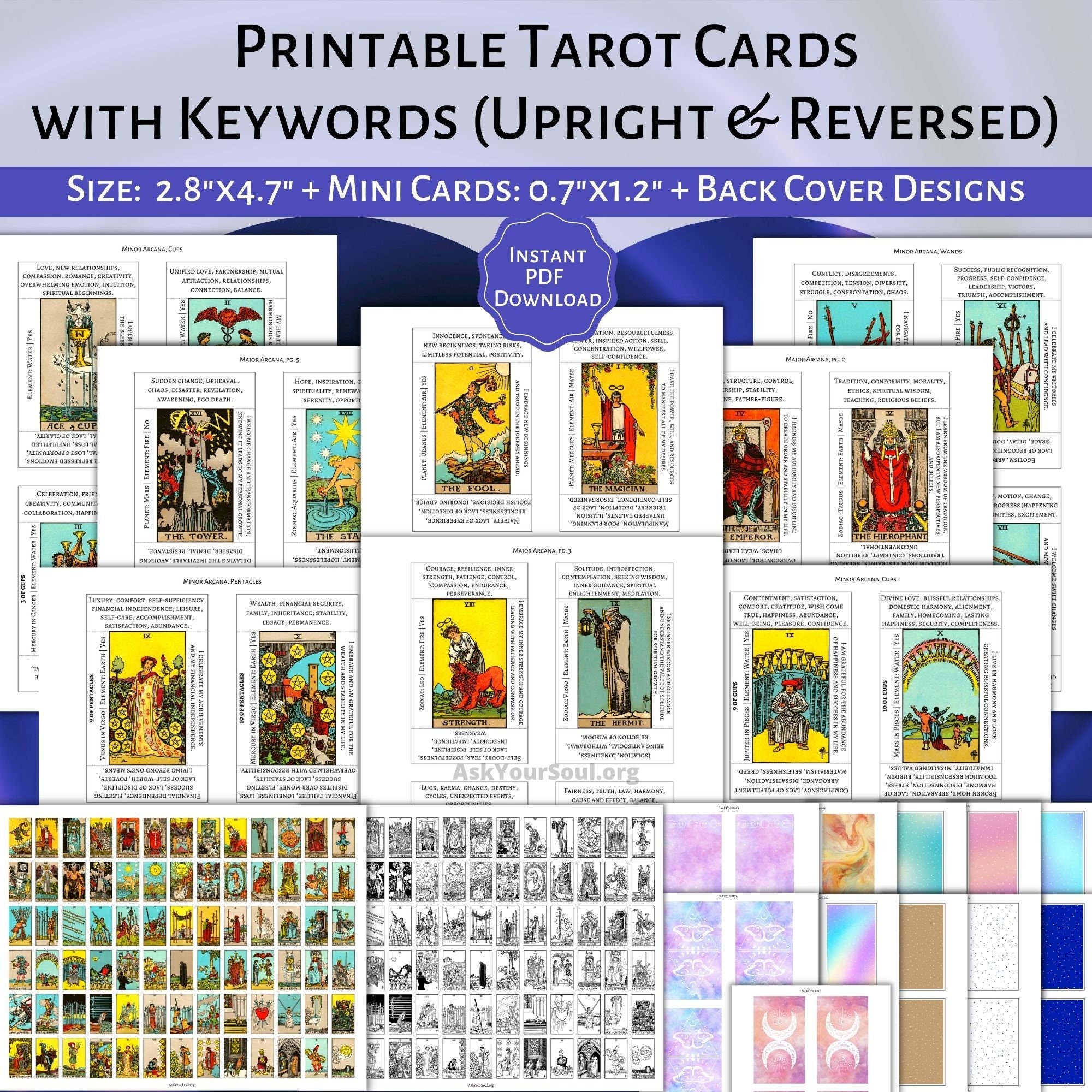
Before diving into readings, gather a few key tools to enhance your practice. First, download a free printable tarot deck—many websites offer high-quality PDFs you can print at home. Pair this with a journal to record your interpretations, observations, and personal reflections. A quiet space and an open mind are equally important; tarot thrives in environments where you feel relaxed and receptive. If you prefer digital tools, apps like Labyrinthos or Golden Thread Tarot provide interactive decks and guides without cost. These resources help you familiarize yourself with the cards’ imagery and meanings before committing to a physical deck.
Understanding the Tarot Deck: Structure and Meanings
A standard tarot deck consists of 78 cards divided into two main groups: the Major Arcana and the Minor Arcana. The Major Arcana (22 cards) represents significant life themes, such as The Fool (new beginnings) or Death (transformation). The Minor Arcana (56 cards) mirrors a traditional deck of playing cards, with four suits—Cups, Pentacles, Swords, and Wands—each reflecting different aspects of daily life. Each suit contains numbered cards (Ace through 10) and four court cards (Page, Knight, Queen, King). Learning these categories helps you recognize patterns and themes in your readings. Start by memorizing the Major Arcana first, as their archetypal energy provides a strong foundation for interpreting the Minor Arcana’s more nuanced messages.
Step-by-Step Guide to Your First Tarot Reading
Begin with a simple three-card spread to ease into readings. This layout—representing past, present, and future—helps you focus on one question or area of your life. Shuffle your deck while concentrating on your query, then lay out the cards face-down. Flip them over one by one, noting your immediate impressions before consulting guidebooks or online resources. Trust your gut reactions; tarot is as much about intuition as it is about memorization. For example, if you draw The Lovers in the present position, you might interpret it as a call to prioritize relationships or make a heartfelt decision. Practice with neutral topics (e.g., career choices) to build confidence before tackling more personal or complex questions.
Interpreting Cards: Beyond the Guidebook
While guidebooks offer structured meanings, tarot’s magic lies in personal connection. Pay attention to colors, symbols, and emotions evoked by each card. For instance, The Tower might traditionally signify sudden upheaval, but your interpretation could shift if the card’s imagery resonates with a recent challenge you’ve faced. Combine traditional meanings with your intuition—ask yourself: *What does this card say to me right now?* Over time, you’ll develop a unique lexicon of symbols that align with your experiences. Keep a record of your readings to track recurring themes and notice how your interpretations evolve as you grow.
Common Mistakes to Avoid as a Beginner
One of the biggest pitfalls is over-reliance on memorized meanings without engaging with the cards’ energy. Avoid rigid interpretations or treating tarot as a fortune-telling tool—it’s better suited for reflection and guidance. Another mistake is reading for others before mastering your own practice; your interpretations will be sharper once you’re comfortable with your deck. Additionally, don’t dismiss reversed cards (upside-down positions) as “bad.” Reversals often highlight blocked energy, internal struggles, or alternative perspectives. Lastly, resist the urge to seek “perfect” answers; tarot is a conversation, not a prediction. Embrace ambiguity and use the cards as a mirror for your thoughts and feelings.
Advanced Techniques to Deepen Your Practice
Once you’re comfortable with basic spreads, experiment with more complex layouts, such as the Celtic Cross or a 12-card zodiac spread. These layouts provide deeper insights into timing, hidden influences, and subconscious patterns. You can also incorporate tarot into daily rituals, like pulling a single card each morning for inspiration or journaling about its relevance to your day. For those interested in tarot’s esoteric side, explore numerology (e.g., card numbers) or elemental correspondences (fire, water, air, earth) to add layers to your readings. Joining online tarot communities or attending virtual workshops can further expand your knowledge and expose you to diverse perspectives.
Conclusion
Learning tarot online for free opens doors to self-discovery, creative expression, and spiritual exploration. By starting with the basics—understanding the deck, practicing simple spreads, and trusting your intuition—you’ll build a practice that feels authentic and meaningful. Remember, tarot is a tool for insight, not a crystal ball; its power lies in how it reflects your inner world. As you grow, your interpretations will become more nuanced, and your connection to the cards will deepen. Whether you’re seeking clarity, inspiration, or a deeper understanding of life’s twists, tarot offers a pathway to explore without cost or pressure. Embrace the journey, stay curious, and let the cards guide you.
FAQ
What is tarot?
Tarot is a deck of 78 cards used for divination, self-reflection, and guidance, with each card having its own meanings and symbolism.
How can I learn tarot for free?
You can learn tarot for free through online resources, printable decks, and interactive apps that provide tutorials and guides.
What are the major arcana cards?
The major arcana consists of 22 cards that represent significant life themes and spiritual lessons.
Leave a Reply