Short Answer
Tarot interpretation is an ancient practice that blends symbolism, intuition, and psychology to offer insights into life’s challenges and opportunities. Whether you’re a beginner or an experienced reader, having a reliable guide at your fingertips can make all the difference in unlocking the deeper meanings of each card. This comprehensive PDF guide is designed to equip you with the foundational knowledge and advanced techniques needed to interpret tarot spreads with confidence. From understanding the Major and Minor Arcana to mastering card combinations and intuitive readings, this resource will help you navigate the complexities of tarot with clarity and precision.
Why a Tarot Interpretation PDF is Essential Before You Read
Many aspiring tarot readers dive into readings without a solid understanding of the cards’ meanings, leading to confusion or misinterpretation. A dedicated PDF guide serves as a structured reference, ensuring you grasp the core symbolism, numerology, and elemental associations of each card. Unlike scattered online resources, a well-organized PDF consolidates this information into one accessible document, allowing you to study at your own pace. Additionally, it often includes practical exercises, sample spreads, and historical context, which are crucial for developing a holistic approach to tarot reading. Without this foundation, even the most intuitive readers may struggle to connect the dots between cards, resulting in vague or inconsistent interpretations.
The Structure of a Tarot Deck: Major vs. Minor Arcana
A standard tarot deck consists of 78 cards divided into two main sections: the Major Arcana and the Minor Arcana. The Major Arcana (22 cards) represents significant life themes and spiritual lessons, such as The Fool’s journey or The Tower’s upheaval. These cards often indicate major turning points or karmic influences. In contrast, the Minor Arcana (56 cards) mirrors a traditional deck of playing cards, divided into four suits—Wands, Cups, Swords, and Pentacles—each tied to an element (Fire, Water, Air, Earth) and aspects of daily life. Understanding this structure is vital because it helps you differentiate between overarching life lessons (Major Arcana) and everyday situations (Minor Arcana). A good PDF guide will break down each suit’s meanings, court cards, and numerological significance to deepen your comprehension.
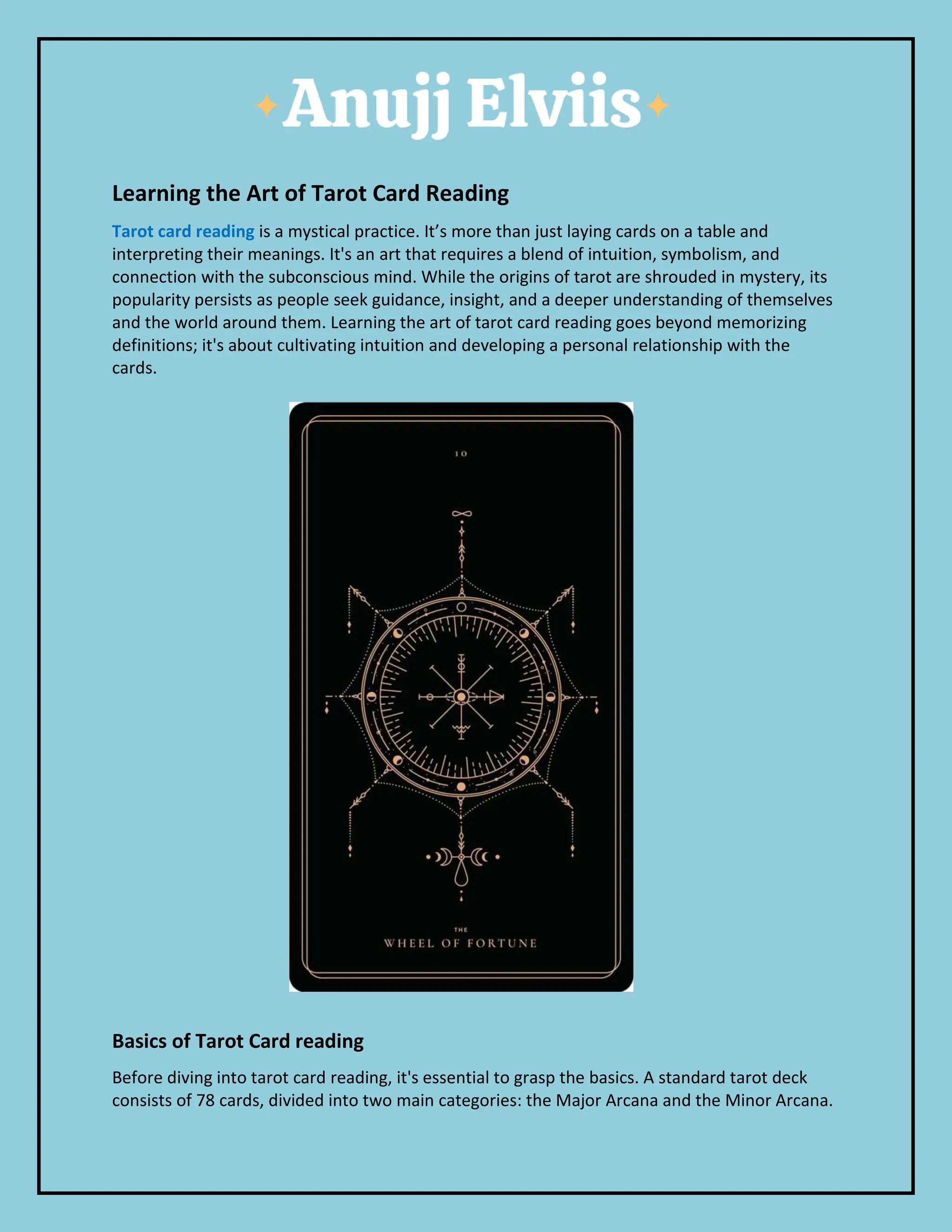
Decoding Card Imagery: Symbolism and Intuition
Tarot cards are rich in symbolism, from the colors and objects depicted to the poses and expressions of the figures. For example, The High Priestess often features a crescent moon and a book, symbolizing intuition and hidden knowledge, while The Emperor is associated with authority and structure, represented by a throne and scepter. While traditional guidebooks provide interpretations, developing your own intuitive connection to these symbols is equally important. A PDF guide can teach you how to analyze imagery systematically—such as identifying recurring motifs (e.g., animals, celestial bodies, or geometric shapes)—and how to blend this with your intuition. Over time, this skill allows you to craft personalized readings that resonate with your querent’s unique situation.
Common Pitfalls in Tarot Interpretation and How to Avoid Them
One of the most frequent mistakes in tarot reading is relying solely on memorized keywords without considering the card’s context within a spread. For instance, The Three of Swords often signifies heartbreak, but its meaning shifts dramatically if it appears in a career spread versus a relationship reading. Another pitfall is ignoring reversed cards, which can indicate blocked energy, internal struggles, or the need for introspection. A comprehensive PDF guide will address these nuances, offering frameworks for interpreting reversals and emphasizing the importance of card positions (e.g., past, present, future in a Celtic Cross spread). Additionally, it will warn against confirmation bias—where readers subconsciously select interpretations that align with their expectations—by encouraging objective analysis and cross-referencing with other cards.

Advanced Techniques: Card Combinations and Timing
Beyond individual card meanings, advanced tarot interpretation involves analyzing how cards interact within a spread. For example, pairing The Magician (manifestation) with The Empress (nurturing) suggests a creative project coming to fruition, while The Devil followed by The Star may indicate breaking free from toxic patterns. Timing is another layer of complexity; some readers use numerology (e.g., The Wheel of Fortune’s number 10 often signifies cycles of 10 months or years) or astrological associations (e.g., The Chariot’s Cancer influence) to provide temporal insights. A PDF guide tailored to intermediate and advanced readers will include exercises for practicing these techniques, such as creating your own “card dictionary” or experimenting with time-based spreads like the “Horary” method.
Ethical Considerations in Tarot Reading
Tarot is a tool for reflection, not a definitive answer to life’s problems. Ethical readers avoid making absolute predictions about health, finances, or relationships, instead framing their interpretations as possibilities or guidance. A responsible PDF guide will emphasize consent (ensuring the querent is comfortable with the reading), confidentiality (protecting their privacy), and boundaries (avoiding unsolicited advice). It should also discuss the role of free will versus fate, reminding readers that tarot reveals influences—not fixed outcomes. By adhering to these principles, you foster trust and ensure your readings are both empowering and respectful.
Conclusion
Mastering tarot interpretation requires more than memorizing card meanings; it demands a deep engagement with symbolism, intuition, and ethical practice. This guide, available as a downloadable PDF, serves as your roadmap to becoming a confident and insightful tarot reader. By understanding the deck’s structure, decoding imagery, avoiding common mistakes, and exploring advanced techniques, you’ll unlock the tarot’s full potential as a tool for self-discovery and guidance. Whether you’re reading for yourself or others, the key lies in continuous learning and an open mind. Download this guide today and take the first step toward a more profound connection with the cards.
FAQ
What is a Tarot Interpretation PDF?
A Tarot Interpretation PDF is a comprehensive guide that offers insights into the meanings of tarot cards, their symbolism, and techniques for effective reading.
Why is understanding card meanings important in tarot?
Understanding card meanings is crucial for accurate interpretations, helping readers avoid misinterpretations and connect the cards’ messages to the querent’s situation.
Leave a Reply