Short Answer
In this comprehensive guide, you’ll discover how to combine the intuitive guidance of tarot with the precision of a pendulum. Whether you’re a beginner or an experienced reader, you’ll learn how to ask your tarot cards for deeper insights and then use a pendulum to clarify or confirm the messages you receive. By integrating these two divination tools, you’ll enhance your ability to interpret tarot spreads with greater accuracy and confidence. Prepare to unlock a new layer of spiritual clarity as you master the art of asking the card, then asking the swing.
Understanding the Basics: What Is Pendulum Tarot?
Pendulum tarot is a hybrid divination practice that merges the symbolic imagery of tarot cards with the kinetic energy of a pendulum. The tarot provides a visual and thematic foundation, offering archetypal messages through card positions and combinations. The pendulum, typically a weighted crystal or metal object suspended on a chain, acts as a conduit for yes/no or directional answers, helping to refine or validate the tarot’s guidance. This method is especially useful when tarot readings yield ambiguous or layered interpretations. By using the pendulum to “ask the card” for specific clarifications—such as timing, hidden influences, or emotional undercurrents—you bridge the gap between intuition and concrete insight.
The pendulum operates on the principle of dowsing, where its movements (swinging back and forth, side to side, or in circles) correspond to predetermined answers like “yes,” “no,” or “neutral.” When paired with tarot, the pendulum can answer follow-up questions that arise from the cards, such as “Is this the core issue?” or “Should I focus on the present or future aspect of this situation?” This dual approach transforms a standard tarot reading into a dynamic, interactive dialogue with the universe.
Choosing Your Tools: Pendulums and Tarot Decks
Selecting the right pendulum is essential for accurate communication. Pendulums come in various materials—crystal (clear quartz, amethyst, or rose quartz), wood, or metal—each believed to carry distinct energetic properties. For instance, a clear quartz pendulum is often favored for its amplifying and clarifying abilities, while a black tourmaline pendulum may be chosen for protection against negative energies. The shape and weight of the pendulum also matter; a heavier pendulum tends to swing more slowly, providing clearer, more deliberate answers, while a lighter one may respond more sensitively to subtle energies.
When it comes to tarot decks, the choice depends on your personal connection to the imagery and symbolism. Traditional decks like the Rider-Waite-Smith or Thoth tarot are popular for their rich, archetypal illustrations, which lend themselves well to pendulum interactions. However, any deck—whether modern, themed, or oracle-based—can be used as long as you feel intuitively aligned with its energy. Some readers prefer decks with bold, easily interpretable symbols, while others opt for decks with abstract or minimalist designs that leave room for personal interpretation. Ultimately, the deck should resonate with your intuition and the questions you intend to explore.
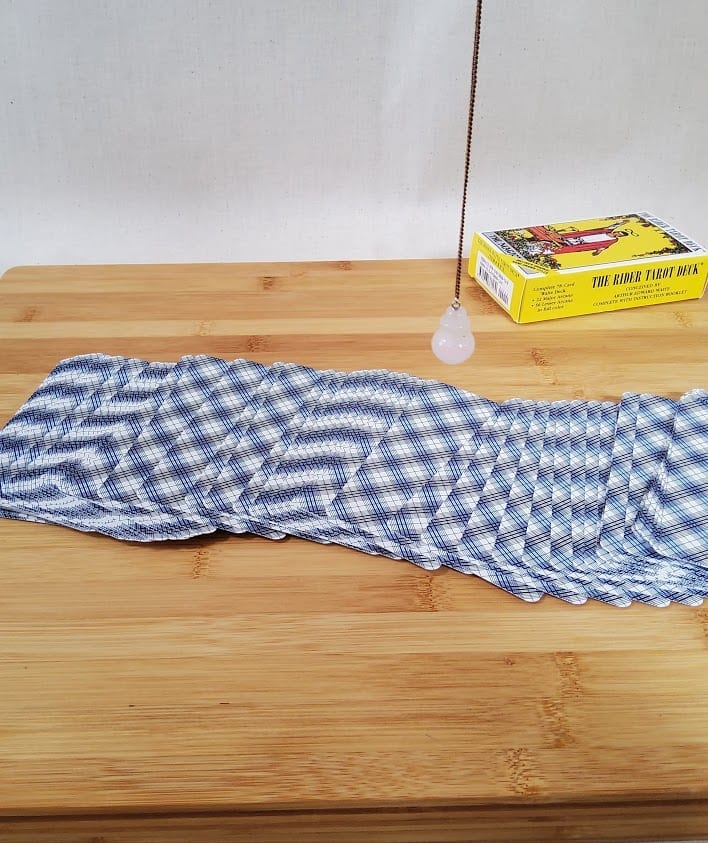
Setting Up Your Sacred Space for Pendulum Tarot
Creating a sacred space is crucial for ensuring your pendulum tarot session is focused and free from distractions. Begin by cleansing your space with smoke (sage, palo santo, or incense), sound (bells or singing bowls), or visualization techniques to remove stagnant energy. Arrange your tarot deck and pendulum on a clean, clutter-free surface, ideally facing north or east to align with natural energies. You may also incorporate elements like candles, crystals, or a small altar to enhance the spiritual ambiance.
Before starting, ground yourself by taking deep breaths and centering your energy. Hold your pendulum in your dominant hand, allowing it to hang freely. Establish a connection by asking it to show you its “yes” and “no” responses—typically, a forward-and-backward swing indicates “yes,” side-to-side means “no,” and a circular motion may signify “neutral” or “needs more clarity.” Some pendulums may have unique responses, so always verify these signals at the beginning of each session to avoid miscommunication.
Step-by-Step: How to Perform a Pendulum Tarot Reading
To perform a pendulum tarot reading, start with a clear intention or question. For example, you might ask, “What do I need to know about my current career path?” or “Is there a hidden challenge in this relationship?” Draw a single card or lay out a spread (such as a three-card past-present-future layout) and observe the imagery, symbols, and emotions it evokes. Before interpreting the card, use your pendulum to ask specific follow-up questions that refine the message.
For instance, after drawing the Three of Cups, you might ask the pendulum: “Is this card highlighting a joyful celebration in my life?” or “Does this card suggest a need for deeper emotional connection?” The pendulum’s responses can confirm or expand on the card’s meaning. You can also ask directional questions like, “Should I focus on the emotional aspect of this situation?” or “Is there a person influencing this outcome?” The pendulum’s clarity can help you prioritize areas of focus or uncover subconscious influences that the tarot alone might not reveal.
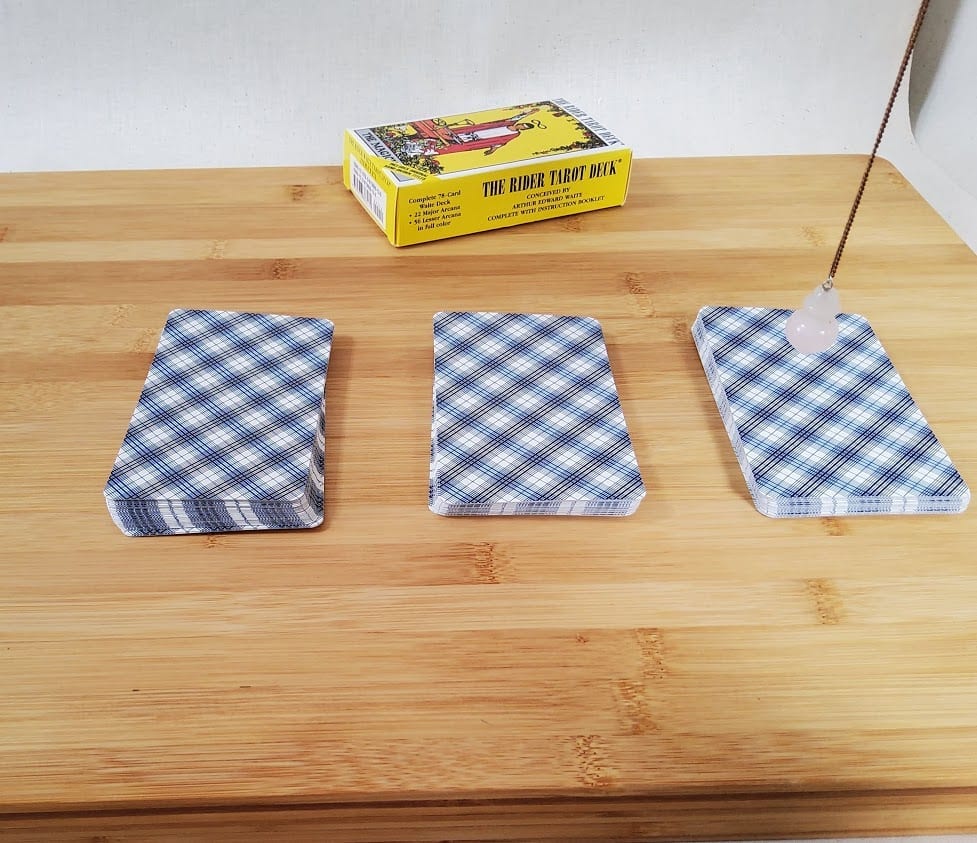
For more advanced readings, combine multiple cards with pendulum questions. For example, in a Celtic Cross spread, you might ask the pendulum to clarify the relationship between the “past” and “present” cards or to identify which card holds the most significant energy for your question. This layered approach allows you to dissect complex situations with precision, making your readings more actionable and insightful.
Interpreting Pendulum Responses in Context
Interpreting pendulum responses requires a balance of intuition and logic. While the pendulum provides binary or directional answers, your role is to interpret these responses within the context of the tarot cards and your question. For example, if the pendulum swings “yes” to the question, “Is this card about a past event?” but the card (e.g., The Tower) suggests sudden change, you might infer that the event was transformative rather than merely historical.
It’s also important to consider the pendulum’s neutrality. If the pendulum swings erratically or gives unclear responses, it may indicate that the question is too vague, your energy is scattered, or the question itself lacks clarity. In such cases, rephrase your question or take a moment to ground yourself before proceeding. Additionally, some readers use a “neutral” response to signal that the answer is not yet clear or that the question needs refinement.
Another layer of interpretation involves tracking patterns in the pendulum’s responses. For instance, if the pendulum consistently swings “yes” for questions related to a specific suit (e.g., Cups) or card (e.g., The Lovers), it may highlight a recurring theme in your life, such as emotional patterns or relationship dynamics. Over time, you’ll develop a personal lexicon of pendulum responses that align with your intuitive language.
Common Questions and How to Ask Them
When using a pendulum with tarot, the key is to ask questions that are specific, open-ended, or binary in nature. Binary questions (those answerable with “yes” or “no”) are ideal for quick clarifications, such as:
- “Is this card representing a challenge I need to address?”
- “Does this card suggest a positive outcome for my question?”
- “Is there a hidden message in this card that I’m overlooking?”
Open-ended questions can also yield valuable insights when framed correctly. For example:
- “What energy does this card bring to my current situation?”
- “How can I best apply the lesson of this card in my life?”
- “What aspect of this card should I focus on for deeper understanding?”
Avoid asking overly complex or multi-part questions, as these can confuse the pendulum and dilute the clarity of the response. Instead, break down complex inquiries into smaller, focused questions that build upon each other. For example, if you’re seeking guidance on a career decision, you might first ask the pendulum, “Is this career path aligned with my highest good?” and then follow up with, “What is the primary lesson I need to learn in this role?”
Enhancing Your Practice: Tips for Deeper Insights
To deepen your pendulum tarot practice, consider keeping a journal to track your sessions. Record the cards drawn, the questions asked, the pendulum’s responses, and any intuitive insights that arose during the reading. Over time, you’ll notice patterns in the pendulum’s behavior and the tarot’s messages, which can reveal recurring themes or guidance tailored to your spiritual journey.
Another tip is to experiment with different pendulum materials and tarot decks to see which combinations resonate most strongly with your energy. Some readers find that certain crystals amplify the pendulum’s accuracy, while others prefer the simplicity of a metal or wooden pendulum. Similarly, exploring diverse tarot decks can introduce fresh perspectives and interpretations that enrich your readings.
Meditation and visualization can also enhance your practice. Before a reading, take a few moments to quiet your mind and set a clear intention. Visualize the pendulum as a tool of divine connection, and invite the tarot cards to reveal their truths with honesty and clarity. Trusting your intuition is paramount—even if the pendulum’s responses initially seem counterintuitive, they may hold deeper wisdom that unfolds over time.
Conclusion
Pendulum tarot is a powerful fusion of two divination tools, offering a unique way to deepen your spiritual practice and gain clearer insights. By combining the symbolic richness of tarot with the direct, kinetic guidance of a pendulum, you create a dynamic dialogue that transcends the limitations of traditional readings. Whether you’re seeking validation, clarification, or a new layer of understanding, this method empowers you to ask the card and then ask the swing, unlocking layers of wisdom that might otherwise remain hidden.
As with any divination practice, consistency and trust are key. The more you work with your pendulum and tarot deck, the more attuned you’ll become to their combined language. Embrace the process with an open heart and mind, and allow the synergy between these tools to guide you toward greater clarity, confidence, and spiritual growth. The answers you seek are already within you—pendulum tarot is simply the key that unlocks them.
FAQ
What is Pendulum Tarot?
Pendulum Tarot is a hybrid divination practice that combines the intuitive guidance of tarot cards with the directional answers provided by a pendulum.
How do I perform a Pendulum Tarot reading?
Begin with a clear intention or question, draw a tarot card, and use the pendulum to clarify the meaning of the card with specific follow-up questions.
What materials are best for pendulums?
Pendulums can be made from various materials including crystal, wood, and metal, each offering distinct energetic properties.
Leave a Reply