Short Answer
Embark on a journey through the intricate world of Celtic crosses and their symbolic placements, where ancient artistry meets profound meaning. This guide will unravel the mysteries behind the Celtic Cross itself, explore how its elements interact with one another, and reveal the captivating metaphors woven into its design. Whether you’re drawn to its spiritual resonance, historical depth, or aesthetic allure, you’ll discover why this iconic symbol continues to inspire awe across centuries and cultures.
The Celtic Cross: A Tapestry of Faith and Geometry
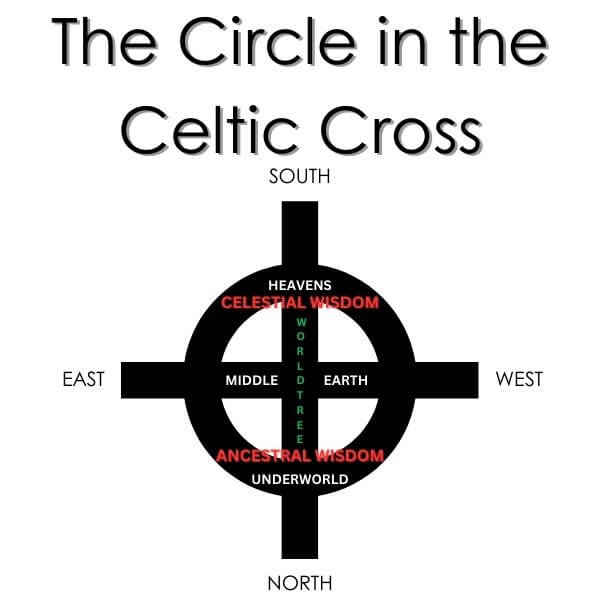
The Celtic Cross stands as a testament to the fusion of Christian symbolism and pre-Christian Celtic artistry. At its core, the cross represents the four cardinal directions—north, south, east, and west—while the intersecting circle, often called the “ring,” symbolizes eternity, unity, and the cyclical nature of life. This marriage of vertical and horizontal lines with the eternal circle creates a visual metaphor for the intersection of the divine (vertical) and the earthly (horizontal), bound together by the unending cycle of existence.
The vertical line of the cross is traditionally seen as a connection between heaven and earth, with the horizontal arms representing the earthly realm. The circle, encircling the intersection, is not merely decorative but carries deep significance. It embodies the concept of wholeness, protection, and the idea that all things are interconnected within the cosmic order. This design choice reflects the Celtic worldview, where spirituality and nature were inseparable, and every element of creation held sacred meaning.

Placement Meanings: The Dance of Symbols
The placement of elements within the Celtic Cross is not arbitrary; each position carries its own metaphorical weight. The top of the cross, where the vertical and horizontal lines meet the circle, is often associated with the divine or spiritual realm. This apex represents enlightenment, aspiration, and the bridge between the mortal and the immortal. It is the point where heaven and earth kiss, where the finite meets the infinite.
The arms of the cross extend outward in the four cardinal directions, each holding its own symbolic significance. The east, associated with the rising sun, symbolizes new beginnings, hope, and rebirth. The west, linked to the setting sun, represents endings, reflection, and the passage of time. The north and south, often tied to the earth’s poles, embody stability, endurance, and the balance of opposing forces. Together, these arms create a compass of life, guiding the observer through the cycles of existence.
The circle, encircling the intersection, acts as a unifying force, binding the arms and vertical line into a cohesive whole. It is the eternal witness to the dance of life, a reminder that all things are part of a greater, unbroken tapestry. The circle’s placement ensures that the cross is not just a static symbol but a dynamic one, where movement and stillness coexist in perfect harmony.
The Intricate Knotwork: Weaving Eternity into Form
Beyond its geometric structure, the Celtic Cross often features intricate knotwork, a hallmark of Celtic art. These endless loops, known as “endless knots” or “love knots,” symbolize the eternal cycle of life, death, and rebirth. The unbroken lines represent the interconnectedness of all things, where no beginning or end exists—only an infinite continuum. This knotwork is not merely decorative; it is a visual meditation on the nature of existence itself.
The knotwork within the Celtic Cross can also be seen as a metaphor for the soul’s journey. Each twist and turn of the knot mirrors the twists and turns of life, where challenges and triumphs are woven together into a single, unending thread. The absence of a clear starting or ending point in the knots reflects the Celtic belief in the cyclical nature of time, where the past, present, and future are eternally intertwined.
Celtic Cross to Each Other: The Language of Connection
The relationship between the elements of the Celtic Cross is a language of connection, where each part speaks to the other in a silent dialogue of meaning. The vertical line reaching toward the circle above it is a gesture of aspiration, while the horizontal arms stretch outward to embrace the world. The circle, in turn, cradles the intersection, ensuring that the cross does not stand alone but is part of a greater whole.
This interplay of elements can be seen as a metaphor for human relationships. The vertical line may represent the individual, reaching upward toward the divine or their higher self, while the horizontal arms symbolize their connections to others—family, community, and the broader world. The circle, then, is the shared space of these relationships, the unifying force that binds them together. In this way, the Celtic Cross becomes a mirror for the human experience, reflecting our individual journeys and our collective bonds.
The knotwork within the cross further emphasizes this theme of connection. The endless loops suggest that our lives are not isolated but part of a vast, interconnected web. Every action, every choice, is linked to the actions and choices of others, creating a tapestry of shared existence. This idea resonates deeply in Celtic culture, where community and kinship were central to life.
Why the Celtic Cross Resonates: A Timeless Appeal
The enduring appeal of the Celtic Cross lies in its ability to convey complex ideas through simple, elegant forms. Its design is both ancient and universal, speaking to the human desire for meaning, connection, and transcendence. The cross’s geometric precision and symbolic depth make it a powerful emblem, whether used in religious contexts, as a personal talisman, or as a decorative motif.
Moreover, the Celtic Cross transcends cultural and religious boundaries. While it is deeply rooted in Christian symbolism, its origins predate Christianity, and its motifs can be found in various cultures around the world. This universality allows the symbol to resonate with people of diverse backgrounds, each finding their own meaning in its intricate design. Whether as a symbol of faith, heritage, or personal growth, the Celtic Cross continues to inspire and captivate.
Conclusion
The Celtic Cross is far more than a decorative emblem; it is a living symbol, rich with meaning and history. From its geometric precision to its intricate knotwork, every element of the cross tells a story of connection, eternity, and the interplay between the divine and the earthly. Its placement meanings—whether representing the cardinal directions, the cycles of life, or the bonds of human relationships—offer a profound language of symbolism that transcends time and culture.
As you encounter the Celtic Cross, whether in art, jewelry, or architecture, take a moment to reflect on its layers of meaning. Let it remind you of the eternal dance between the finite and the infinite, the individual and the collective, the past and the future. In its silent eloquence, the Celtic Cross speaks to the heart of what it means to be human—connected, enduring, and eternally seeking meaning.
FAQ
What is the significance of the Celtic Cross in tarot?
The Celtic Cross is a tarot spread that provides insights into various aspects of a person’s life, with each position representing different elements such as past influences, present situations, and future outcomes.
How do the placements in the Celtic Cross relate to each other?
Each placement in the Celtic Cross interacts symbolically, reflecting a dialogue between the divine, earthly connections, and the cyclical nature of life.
Leave a Reply