Short Answer
Ever held a deck of playing cards in your hands and felt a whisper of mystery? At first glance, they seem like simple tools for games—yet beneath their familiar faces lies a hidden language of symbols, stories, and divination. Tarot cards, on the other hand, are often seen as the mystical cousins of playing cards, draped in esoteric imagery and ritualistic purpose. But what if we told you that the two are more alike than different? That the same cards you shuffle for a game of poker could just as easily be read for insight? In this guide, we’ll explore the fascinating parallels between playing cards and tarot, uncovering how they share the same DNA but wear different masks. You’ll discover the unique appeal of each, the metaphors they share, and how one can transform into the other with a shift in perspective.
The Shared Deck: A Family of Symbols
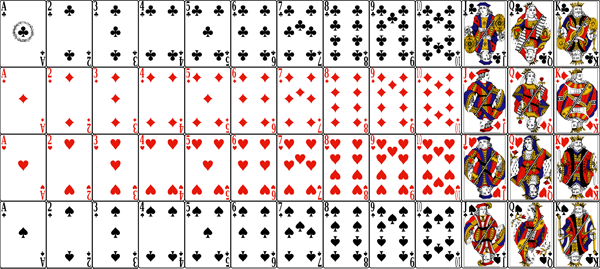
At their core, both playing cards and tarot cards are decks of symbolic imagery designed to convey meaning. A standard deck of 52 playing cards contains four suits—hearts, diamonds, clubs, and spades—each with its own visual language. Tarot, meanwhile, expands this concept with 78 cards: 22 Major Arcana and 56 Minor Arcana, which mirror the four suits of playing cards but with richer, more detailed illustrations. The Minor Arcana in tarot even uses the same four suits as playing cards, albeit with names like Cups, Pentacles, Swords, and Wands.

The connection runs deeper than mere structure. The Ace of Spades in playing cards, often seen as ominous or powerful, parallels the Death card in tarot—not because it signifies literal death, but because it represents transformation and endings. The Queen of Hearts, a symbol of nurturing and emotion, finds its counterpart in the Queen of Cups, a tarot card embodying intuition and compassion. This shared ancestry reveals that both decks are tools for storytelling, whether the story is a game of chance or a journey of self-discovery.
The Language of Cards: Structure and Suit
The suits in both decks are more than just decorative elements—they’re the building blocks of narrative. In playing cards, hearts and diamonds represent the emotional and material worlds, while clubs and spades delve into action and intellect. Tarot’s suits follow a similar logic: Cups (hearts) govern emotions, Pentacles (diamonds) relate to finances and practicality, Swords (spades) deal with conflict and intellect, and Wands (clubs) symbolize creativity and passion. The parallel is unmistakable, suggesting that both decks were designed to explore the same fundamental aspects of human experience.
Where tarot diverges is in its use of court cards—kings, queens, knights, and pages—each representing different archetypes or personalities. Playing cards simplify this with just three face cards per suit (Jack, Queen, King), but the principle remains: these cards embody roles we play in life. A Jack of Clubs might signify a creative young person, while the Knight of Wands could represent a bold, adventurous spirit. The tarot’s court cards merely expand this idea, offering a more nuanced cast of characters to interact with.
This structural similarity underscores a profound truth: both decks are mirrors held up to life’s stages. Whether you’re counting points in a game or interpreting a spread, you’re engaging with a language that transcends the cards themselves—a language of symbols that speaks to the human condition.
From Game to Oracle: The Shift in Perspective
The most intriguing aspect of playing cards and tarot is their dual nature. A deck of playing cards can be a tool for divination just as easily as it can be for poker. The difference lies not in the cards themselves, but in the intention of the person holding them. When you play a game, the cards are subject to chance, their meanings dictated by rules and outcomes. But when you lay them out for a reading, they become a canvas for intuition, a way to tap into the subconscious and explore questions beyond the table’s edge.
Consider the Ace of Diamonds. In a game of poker, it might be a high card, a symbol of wealth or luck. In a tarot reading, it could signify new beginnings in material matters, a burst of financial opportunity, or a moment of clarity. The card hasn’t changed—only the context has. This fluidity is what makes both decks so versatile. They are chameleons, adapting to the needs of the moment. A tarot deck can be used for games (like tarot-based solitaire or tarock), and playing cards can be read as a simplified form of tarot, often called “cartomancy.”

The Art of Interpretation: Intuition vs. Rules
One of the most compelling differences between playing cards and tarot lies in their approach to meaning. Tarot relies heavily on structured symbolism, with each card carrying a set of traditional interpretations. The Fool, for example, is universally associated with new beginnings and spontaneity, while the Ten of Swords often signifies betrayal or rock bottom. These meanings are rooted in centuries of esoteric tradition, providing a framework for readers to work within.
Playing cards, by contrast, are more fluid. Their meanings are often derived from numerology, astrology, or personal associations rather than fixed symbolism. The Three of Clubs might be seen as a card of teamwork or collaboration in one context, while in another, it could represent a minor setback. This lack of rigid interpretation makes playing cards more accessible to beginners, as they invite the reader to project their own intuition onto the cards. It’s a reminder that divination is as much about the reader as it is about the cards.
Yet, this flexibility can also be a double-edged sword. Without a clear guide, it’s easy to fall into the trap of over-interpretation or vague generalities. Tarot’s structured symbolism, while limiting in some ways, provides a safety net for those who need it. The key is balance: using the rules as a foundation while leaving room for personal insight to flourish. Whether you’re working with tarot’s deep lore or playing cards’ open-ended nature, the goal remains the same—to uncover truths that resonate with your soul.
The Ritual of the Draw: Why It Matters
There’s a magic in the act of drawing cards that transcends their individual meanings. Whether you’re dealing a hand in blackjack or pulling a spread in tarot, the ritual of the draw creates a moment of pause—a sacred space where the mundane meets the mystical. In a game, the shuffle is a mechanical process, but in a reading, it becomes a meditation. The way the cards fall, the order in which they’re drawn, even the physical sensation of touching them—all of these elements contribute to the experience.
This ritualistic aspect is why both decks have endured for centuries. They offer more than just entertainment or guidance; they provide a tangible connection to something larger than ourselves. A tarot spread can feel like a conversation with the universe, while a game of cards can be a microcosm of life’s unpredictability. The cards become a bridge between the conscious and unconscious mind, a way to externalize thoughts and emotions that might otherwise remain buried.
Consider the difference between drawing a card for a tarot reading and flipping over a card in a game of solitaire. In the former, you might ask, “What do I need to know about my career?” and receive an answer in the form of the Eight of Pentacles, suggesting diligence and skill-building. In the latter, the same card might simply mean you need to move a specific suit to a foundation pile. The card hasn’t changed, but the context has transformed it from a symbol of guidance into a piece of a puzzle. This duality is what makes both decks so endlessly fascinating.
Conclusion
Playing cards and tarot may wear different faces, but they share the same heart. They are siblings in the world of symbolism, each offering a unique lens through which to view life’s mysteries. One is a tool for games and chance, the other a guide for introspection and divination—but both are vessels for storytelling, connection, and meaning. Whether you’re a skeptic who sees them as mere paper and ink or a believer who finds solace in their whispers, there’s no denying their power to captivate and inspire.
The next time you hold a deck of cards in your hands, take a moment to consider their potential. They are more than just tools; they are mirrors, teachers, and companions on the journey of life. The difference between playing cards and tarot isn’t in the cards themselves, but in the attitude with which you approach them. So shuffle, draw, and listen—the cards are speaking, if only you’re willing to hear.
FAQ
What is the main difference between playing cards and tarot?
The main difference lies in their purpose; playing cards are primarily used for games, while tarot cards are used for divination and self-reflection.
Can playing cards be used for divination?
Yes, playing cards can be used for divination, often referred to as cartomancy, utilizing the same symbols and meanings as tarot cards.
Leave a Reply