Short Answer
Welcome to your ultimate guide on Quick-Learn techniques and the power of mnemonics! In the following sections, you’ll discover how to supercharge your memory, retain information effortlessly, and transform learning into an engaging adventure. Whether you’re a student, professional, or lifelong learner, these strategies will help you absorb knowledge faster and recall it with precision. By the end, you’ll have a toolkit of creative techniques to make learning not just quick, but unforgettable.
The Magic of Quick-Learn: Why Speed Matters in Learning
Quick-Learn isn’t just about cramming information—it’s about optimizing your brain’s ability to absorb and retain knowledge efficiently. Our brains are wired to process patterns, stories, and visuals far better than raw data. When you leverage these natural inclinations, learning becomes a dynamic process rather than a tedious chore. The key lies in understanding how memory works and using techniques that align with its mechanics. For instance, breaking complex topics into smaller, digestible chunks allows your brain to process and store information more effectively. Additionally, quick-learning strategies emphasize active engagement, such as self-quizzing or teaching concepts aloud, which reinforces memory retention. By adopting a Quick-Learn mindset, you’re not just memorizing facts; you’re training your brain to think critically and creatively, making future learning even faster and more intuitive.
Mnemonics: The Brain’s Secret Weapon for Effortless Recall
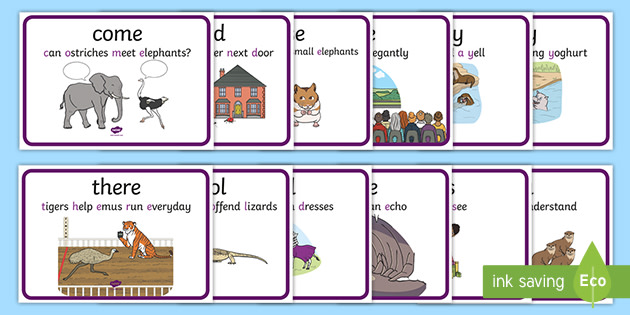
Imagine your brain as a vast library, filled with shelves of books you’ve read. Now, picture trying to find a specific book without a catalog system—chaotic, right? Mnemonics act as that catalog, organizing information into memorable patterns. These memory aids come in various forms, from acronyms and rhymes to vivid imagery and stories. For example, the acronym “ROYGBIV” helps you remember the colors of the rainbow: Red, Orange, Yellow, Green, Blue, Indigo, Violet. Mnemonics work because they tap into the brain’s love for patterns and emotional connections. By associating new information with something familiar or intriguing, you create mental hooks that make recalling details effortless. Whether you’re memorizing a list of historical dates or the steps of a complex process, mnemonics turn abstract data into tangible, easy-to-access knowledge.

Metaphors: Painting Pictures with Words to Boost Memory
Metaphors are the artist’s brushstrokes in the canvas of learning. They transform dry, abstract concepts into vivid, relatable images that your brain can’t ignore. For instance, comparing the human heart to a pump helps you understand its function in seconds. When learning about electricity, envisioning electrons as tiny, hyperactive workers zipping through wires makes the concept tangible. The power of metaphors lies in their ability to create emotional and sensory connections, which are far more memorable than plain facts. To use metaphors effectively, start by identifying the core idea you want to convey. Then, brainstorm a familiar scenario or object that shares key characteristics with your topic. The more unexpected or humorous the metaphor, the stronger the memory imprint. For example, describing the solar system as a giant merry-go-round with the sun as the center and planets as riders helps visualize orbital mechanics in a fun, intuitive way.
Intriguing Metaphors That Make Learning Stick
Let’s dive into some creative metaphors that can revolutionize how you learn and remember:
- DNA as a Twisted Ladder: Picture a spiral staircase where each step is a rung made of genetic code. This metaphor simplifies the structure of DNA, making it easier to recall its double-helix shape and base-pairing rules.
- Atoms as Solar Systems: Imagine a tiny universe where electrons orbit a nucleus like planets around a sun. This analogy bridges the gap between quantum mechanics and familiar celestial movements, making atomic structure less intimidating.
- Synapses as Bridges: Think of your brain’s connections as rickety bridges between islands. The more you use a bridge (or synapse), the stronger and more reinforced it becomes—a perfect metaphor for how learning strengthens neural pathways.
- Time as a River: Envision time flowing like a river, carrying events along its current. This metaphor helps you grasp concepts like cause and effect, as well as the fluidity of historical timelines.
These metaphors don’t just make learning enjoyable; they embed information into your long-term memory by creating vivid, multi-sensory associations. The more bizarre or personal the metaphor, the better it sticks. Don’t be afraid to invent your own—your brain thrives on uniqueness!

Quick-Learn Techniques to Supercharge Your Study Sessions
Combining mnemonics and metaphors with practical study techniques can turn your learning sessions into high-octane, results-driven marathons. Here are some proven methods to integrate into your routine:
- The Feynman Technique: Named after physicist Richard Feynman, this method involves explaining a concept in simple terms as if teaching it to a child. If you stumble, revisit the material until you can break it down effortlessly. This technique forces you to identify gaps in your understanding and reinforces memory through verbalization.
- Spaced Repetition: Instead of cramming, spread out your study sessions over time. Tools like Anki or Quizlet use algorithms to show you flashcards just as you’re about to forget them, optimizing long-term retention. Pair this with mnemonics to make each review session more effective.
- Chunking: Break large pieces of information into smaller, manageable “chunks.” For example, memorizing a phone number as 555-123-4567 is easier than remembering 5551234567. Apply this to complex topics by grouping related ideas together.
- Mind Mapping: Create visual diagrams that connect ideas hierarchically. Use metaphors to label branches, making abstract concepts more concrete. For instance, map out the branches of a tree where each limb represents a different aspect of a topic.
- Active Recall: Test yourself regularly without peeking at your notes. This could be through practice quizzes, self-generated questions, or even teaching the material aloud. Active recall forces your brain to retrieve information, strengthening memory pathways.
Real-World Applications: Mnemonics in Action
Mnemonics aren’t just for students—they’re used by professionals, athletes, and even medical experts to master complex information. Here’s how different fields leverage these techniques:
- Medicine: Doctors use mnemonics like “On Old Olympus’ Towering Tops, A Finn And German Viewed Some Hops” to remember the cranial nerves (Olfactory, Optic, Oculomotor, etc.). This turns a list of 12 nerves into a rhythmic, memorable phrase.
- Law: Lawyers memorize case law using the “Issue-Rule-Application-Conclusion” (IRAC) framework, a mnemonic that structures their analysis of legal problems.
- Language Learning: Language learners use mnemonics to associate new vocabulary with familiar words or images. For example, the Spanish word “caballo” (horse) can be remembered by picturing a “cab” (taxi) pulling a “llama” (a playful twist on the word).
- Music: Musicians use mnemonics to remember scales or chord progressions. The “Every Good Boy Deserves Fruit” acronym helps recall the notes on the lines of the treble clef (E, G, B, D, F).
These examples prove that mnemonics are versatile tools adaptable to any field. The key is to tailor them to your specific needs and make them personal—your brain will thank you for the custom-fit associations!
Overcoming Common Learning Barriers with Mnemonics
Even the most motivated learners face obstacles like information overload, distractions, or lack of engagement. Mnemonics can help you bypass these barriers by making learning more intuitive and enjoyable. For instance, if you struggle with focus, use a mnemonic to create a ritual around your study sessions. Associate a specific scent, like peppermint, with deep focus, and inhale it whenever you study. Over time, your brain will link the scent to concentration, helping you dive into work more efficiently. If you’re overwhelmed by complex topics, break them down using metaphors. Compare the Krebs cycle in biology to a bustling kitchen where ingredients (molecules) are transformed into energy (ATP) through a series of steps. By framing abstract ideas in relatable terms, you reduce cognitive load and make learning feel like a puzzle rather than a chore.
Conclusion: Your Journey to Effortless Learning Starts Now
Quick-Learn and mnemonics are more than just tools—they’re gateways to a smarter, faster, and more enjoyable learning experience. By harnessing the power of metaphors, acronyms, and vivid imagery, you’re not just memorizing information; you’re rewiring your brain to think more creatively and retain knowledge effortlessly. Start small: pick a topic you’ve struggled with and craft a unique mnemonic or metaphor for it. Experiment with spaced repetition and active recall to solidify your understanding. Remember, the goal isn’t perfection but progress. Each time you use a mnemonic or metaphor, you’re strengthening your brain’s ability to learn, adapt, and grow. So, embrace the art of Quick-Learn, and watch as your memory transforms from a leaky sieve into an unshakable vault of knowledge. Your future self will thank you for every byte of wisdom you’ve tucked away—easily, quickly, and memorably.
FAQ
What are mnemonics and how do they help in learning?
Mnemonics are memory aids that organize information into memorable patterns such as acronyms, rhymes, or vivid imagery. They help by creating mental hooks that make recalling information easier and more efficient.
What is the Feynman Technique and how can it improve learning?
The Feynman Technique involves explaining a concept in simple terms as if teaching it to a child, which helps identify gaps in understanding and reinforces memory by verbalizing ideas.
How does spaced repetition enhance memory retention?
Spaced repetition spreads out study sessions over time, using algorithms to present information just before it is forgotten, which optimizes long-term retention.
Can mnemonics be applied beyond academic learning?
Yes, mnemonics are used in professional fields such as medicine, law, music, and language learning to master complex information efficiently.
Leave a Reply