Short Answer
The Celtic Cross Tarot spread is one of the most iconic and widely used layouts in tarot reading. Its rich symbolism and deep structure offer profound insights into life’s challenges, relationships, and personal growth. Whether you’re a beginner or an experienced reader, understanding each position in the Celtic Cross can unlock layers of meaning in your readings. In this guide, you’ll discover the origins of the spread, a detailed breakdown of all ten positions, practical tips for interpretation, and variations to suit different questions. By the end, you’ll feel confident in performing and analyzing Celtic Cross readings with clarity and depth.
The History and Significance of the Celtic Cross Spread
The Celtic Cross is a traditional tarot spread that traces its roots to ancient Celtic symbolism and medieval divination practices. While its exact origins are debated, the spread gained popularity in the early 20th century through influential tarot decks like the Rider-Waite-Smith deck. The name “Celtic Cross” likely refers to the cross-like arrangement of the cards, which mirrors the symbolic cross used in Celtic art and spirituality.
This spread is particularly revered because it balances structure with flexibility. The ten positions provide a comprehensive overview of a situation, covering past influences, present challenges, subconscious motivations, and potential outcomes. The central cross formation—comprising six cards—is surrounded by a four-card “staff” that adds depth and context. This design allows the reader to explore both the visible and hidden aspects of a question, making it ideal for complex or multi-layered inquiries.
In modern tarot practice, the Celtic Cross remains a go-to choice for professional readers and enthusiasts alike. Its versatility makes it suitable for personal readings, career guidance, relationship analysis, and spiritual exploration. By mastering this spread, you gain a powerful tool for self-reflection and intuitive insight.
Understanding the Layout: How the Celtic Cross is Structured
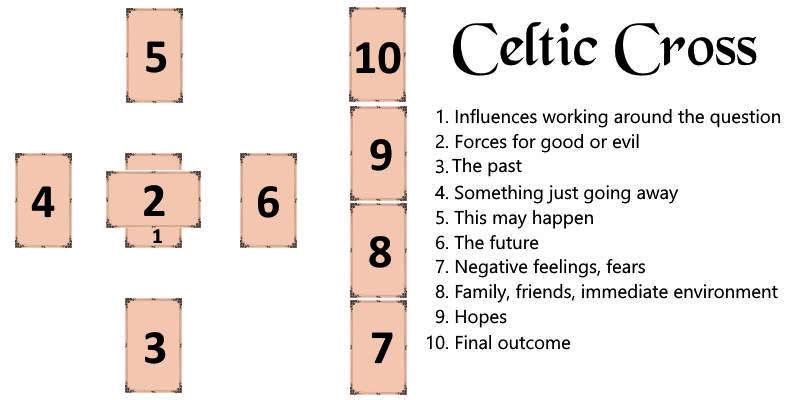
The Celtic Cross is arranged in a specific pattern that creates a cross and a staff, symbolizing the interplay between fate, free will, and external influences. The spread consists of ten cards, each occupying a distinct position with its own meaning. Here’s how the layout is typically structured:
- Card 1 (The Present): Represents the current situation or the heart of the matter.
- Card 2 (The Challenge): Indicates the immediate obstacle or opposing force.
- Card 3 (The Subconscious): Reveals hidden influences or underlying emotions.
- Card 4 (The Past): Reflects past events that have shaped the current situation.
- Card 5 (The Conscious): Shows the querent’s conscious thoughts or aspirations.
- Card 6 (The Near Future): Provides insight into what is likely to unfold soon.
- Card 7 (The Self): Represents the querent’s inner self or personal qualities.
- Card 8 (External Influences): Highlights people, environments, or circumstances affecting the situation.
- Card 9 (Hopes/Fears): Explores the querent’s deepest desires or anxieties.
- Card 10 (Final Outcome): Offers a glimpse into the potential resolution or long-term result.
The first six cards form the central cross, while the last four extend outward like a staff. This arrangement encourages a holistic view of the situation, allowing the reader to weave together different threads of meaning. The symmetry of the layout also makes it visually intuitive, aiding in both memorization and interpretation.
Detailed Breakdown: Every Position Explained
To perform an accurate Celtic Cross reading, it’s essential to understand the nuanced meanings of each position. Below is a deep dive into every card’s role, including its traditional interpretations and practical applications.
Card 1: The Present (The Heart of the Matter)
This card serves as the foundation of the reading, representing the core issue or the current state of affairs. It answers the question, “What is the essence of this situation?” For example, if the card is The Tower, it may indicate sudden upheaval or a breakdown of old structures. The Present card sets the tone for the entire reading, so pay close attention to its energy and imagery.
Card 2: The Challenge (The Immediate Obstacle)
Positioned to the right of Card 1, this card highlights the primary obstacle or opposition the querent faces. It’s not necessarily a negative card but rather a force that must be acknowledged or overcome. For instance, Five of Swords might suggest conflict or competition, while The Hermit could point to isolation or introspection as a barrier. Understanding this card helps the querent address what’s holding them back.
Card 3: The Subconscious (Hidden Influences)
Beneath Card 1, this position delves into the unconscious mind, revealing buried emotions, fears, or motivations. It’s often where intuition and instinct reside. A card like The Moon here might indicate deception or confusion lurking beneath the surface, while Eight of Cups could suggest a subconscious desire to walk away from a situation. This card encourages the querent to explore their inner landscape.
Card 4: The Past (Root Causes)
To the left of Card 1, this card examines the historical context of the situation. It answers, “What events or decisions led to this point?” For example, Ten of Pentacles might reflect a family legacy or financial history, while Three of Swords could point to past heartbreak. Understanding the Past card provides clarity on how current circumstances have evolved.
Card 5: The Conscious (Querent’s Aspirations)
Above Card 1, this position reveals the querent’s conscious thoughts, goals, or self-perception. It’s where their ego and desires come to the forefront. A card like The Chariot here might indicate determination and control, while The Star could signify hope and inspiration. This card often contrasts with the Subconscious card, highlighting the gap between what the querent thinks and what they truly feel.
Card 6: The Near Future (Imminent Developments)
To the right of Card 2, this card offers a glimpse into what’s likely to unfold in the coming weeks or months. It’s not set in stone but provides a directional guide. For instance, Ace of Wands might suggest a new opportunity or creative spark, while Nine of Cups could indicate emotional fulfillment. The Near Future card helps the querent prepare for what’s ahead.
Card 7: The Self (Inner Qualities)
Beneath Card 2, this position focuses on the querent’s inner self, personality traits, or spiritual state. It answers, “What aspects of myself are influencing this situation?” A card like Strength here might highlight patience and compassion, while Knight of Swords could point to impulsiveness or assertiveness. This card is a mirror, reflecting the querent’s true nature.
Card 8: External Influences (People or Circumstances)
To the right of Card 7, this card represents outside forces affecting the situation—people, environments, or societal pressures. For example, The Empress might symbolize nurturing support, while Three of Wands could indicate collaboration or expansion. Understanding external influences helps the querent navigate relationships and external dynamics.
Card 9: Hopes and Fears (Deepest Desires and Anxieties)
Beneath Card 7, this position explores the querent’s subconscious hopes, fears, or unresolved emotions. It’s often where the most personal and vulnerable aspects of the reading emerge. A card like The Sun here might reflect optimism and joy, while The Tower could reveal deep-seated fears of chaos. This card is crucial for uncovering hidden motivations.
Card 10: Final Outcome (Long-Term Resolution)
To the right of Card 9, this card offers insight into the potential long-term outcome of the situation. It’s not a definitive prediction but a probable direction based on current energies. For instance, The World here might indicate completion and fulfillment, while Five of Pentacles could suggest hardship. The Final Outcome card encourages the querent to reflect on their path forward.
Interpreting the Celtic Cross: Tips for Accurate Readings
Performing a Celtic Cross reading requires more than just memorizing the positions—it demands intuition, flexibility, and a deep connection to the cards. Here are some practical tips to enhance your interpretations:
- Look for Patterns: Pay attention to recurring themes, suits, or numbers across the spread. For example, multiple Cups cards might indicate emotional themes, while several Swords could point to mental conflicts.
- Consider Card Interactions: The cards don’t exist in isolation. A Major Arcana card like The Lovers next to a Three of Cups might suggest a romantic relationship, while The Devil paired with Five of Pentacles could indicate toxic financial patterns.
- Trust Your Intuition: While traditional meanings are valuable, your gut feeling about a card’s message is equally important. If a card resonates strongly with you, explore that connection.
- Ask Open-Ended Questions: The Celtic Cross works best for broad, open-ended questions rather than yes/no inquiries. Focus on “how” and “why” to uncover deeper layers of meaning.
- Use Reversed Cards Wisely: Reversals can add nuance, but they’re not mandatory. If you choose to use them, consider whether the reversed energy is blocked, internalized, or manifesting in a different way.
Common Variations and Adaptations
While the traditional Celtic Cross is a powerful tool, there are several ways to adapt it to suit different needs. Here are a few popular variations:
- Simplified Celtic Cross: For beginners, reduce the spread to six or seven cards, focusing on the central cross. This makes it easier to interpret while retaining the core structure.
- Relationship Spread: Modify the positions to focus on dynamics between two people. For example, replace “The Self” with “Their Perspective” and “External Influences” with “Shared Environment.”
- Career or Goal-Oriented Spread: Tailor the positions to address professional growth. For instance, “The Challenge” could become “Workplace Obstacles,” and “Final Outcome” might focus on career milestones.
- Timing-Based Spread: Assign time frames to certain positions. For example, “The Near Future” could represent the next month, while “Final Outcome” might look ahead a year or more.
Experimenting with variations can help you personalize the Celtic Cross to fit your unique style and the querent’s needs. Don’t be afraid to modify the layout as long as you maintain the spread’s core intention: balance, depth, and insight.
Conclusion
The Celtic Cross Tarot spread is a timeless and versatile tool that offers profound insights into life’s complexities. By understanding each position’s meaning and learning to interpret the cards holistically, you can unlock deeper layers of understanding in your readings. Whether you’re exploring a personal dilemma, seeking guidance on a relationship, or navigating a career challenge, the Celtic Cross provides a structured yet flexible framework for clarity.
Remember, the true power of the Celtic Cross lies not just in memorizing the positions but in developing your intuition and connection to the cards. As you practice, you’ll find that the spread reveals not only answers but also new questions—inviting you to explore the ever-evolving tapestry of life. With patience and practice, the Celtic Cross becomes more than a reading tool; it becomes a gateway to self-discovery and wisdom.
FAQ
What is the Celtic Cross Tarot spread?
The Celtic Cross Tarot spread is a traditional tarot layout consisting of ten cards that provide insights into various aspects of a situation, including the present, challenges, subconscious influences, and potential outcomes.
How many cards are in the Celtic Cross spread?
The Celtic Cross spread is composed of ten cards, each representing a different position and meaning.
What does the Present card signify in the Celtic Cross?
The Present card represents the current situation or the heart of the matter, setting the tone for the entire reading.
Leave a Reply