Short Answer
Welcome to your ultimate guide on Cheat Sheet PDFs—your go-to resource for quick, concise, and actionable information across a variety of topics. Whether you’re a student, professional, or lifelong learner, a well-designed cheat sheet can save you time, reinforce key concepts, and serve as a handy reference whenever you need it. In this guide, we’ll explore the different types of cheat sheet PDFs available, their benefits, and how to use them effectively. By the end, you’ll know exactly where to find high-quality cheat sheets and how to integrate them into your learning or work routine.
What Is a Cheat Sheet PDF?
A cheat sheet PDF is a compact, printable document that summarizes essential information about a specific subject. Unlike lengthy textbooks or dense manuals, cheat sheets distill complex topics into bullet points, tables, formulas, or visual aids. They are designed for quick reference and are especially useful for reviewing before exams, preparing for presentations, or refreshing your memory on a topic. Cheat sheets come in various formats—some are text-heavy, while others rely on diagrams, charts, or infographics. The key advantage is their portability: you can print them, save them to your device, or even share them with colleagues or classmates.
Types of Cheat Sheet PDFs You Can Print
Cheat sheets cover an incredibly wide range of subjects. Below are some of the most common types you’ll encounter, each tailored to different needs and audiences.
1. Academic Cheat Sheets
Students often rely on academic cheat sheets to summarize course material, formulas, or historical events. These can include:
- Math & Science: Formulas for algebra, calculus, physics equations, or periodic table elements.
- History & Literature: Timelines, key dates, character lists, or literary themes.
- Languages: Grammar rules, vocabulary lists, or verb conjugations for learning a new language.
For example, a math cheat sheet might include Pythagorean theorem, quadratic formula, and trigonometric identities in one glanceable page.
2. Programming & Tech Cheat Sheets
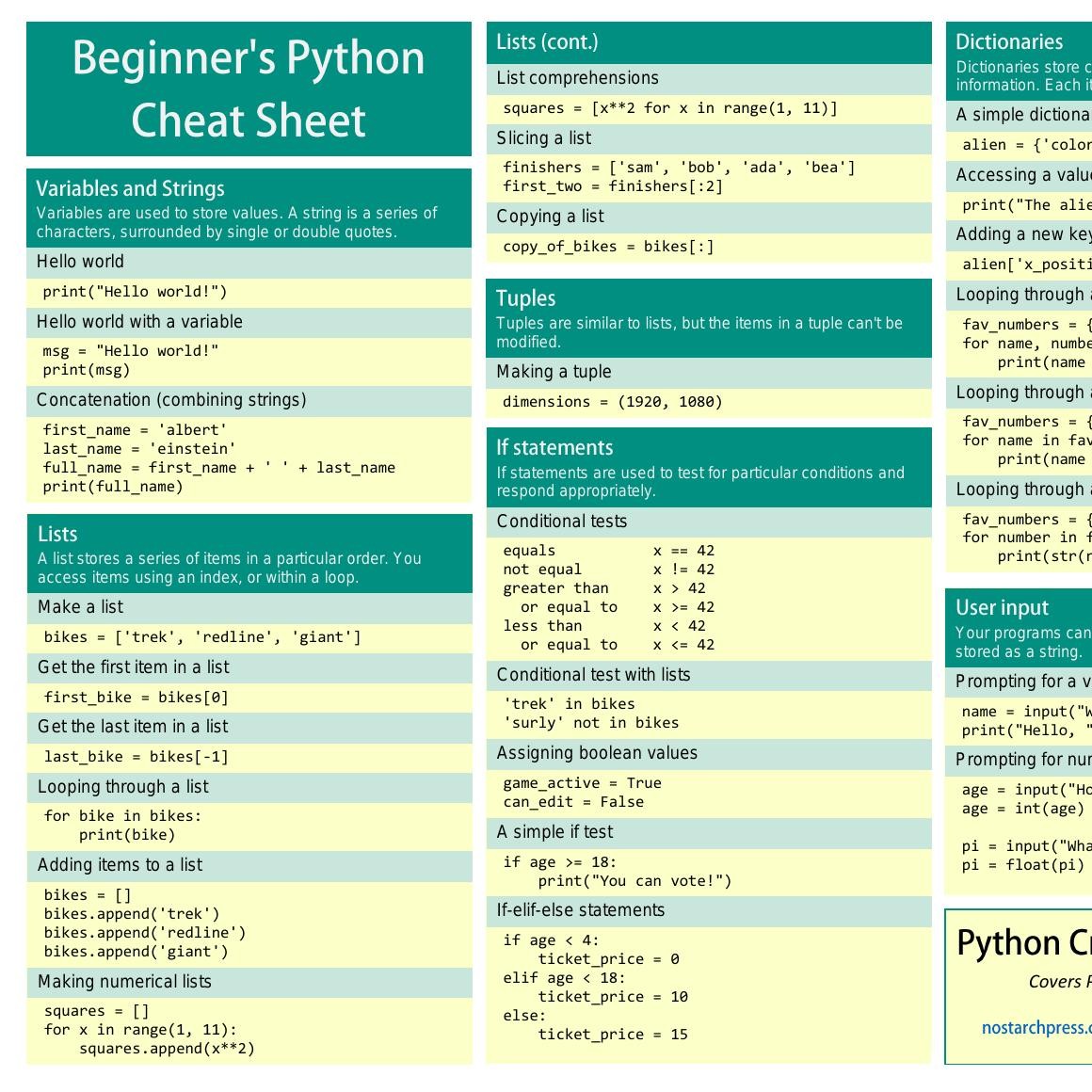
Developers and IT professionals frequently use cheat sheets to remember syntax, commands, or best practices. Common programming cheat sheets include:
- Python: List comprehensions, common libraries, or data structure operations.
- SQL: Query syntax, joins, and aggregation functions.
- Linux Commands: Essential terminal commands for file management, permissions, and system monitoring.
- Web Development: HTML tags, CSS properties, or JavaScript methods.
These cheat sheets are invaluable during coding interviews, project work, or when learning a new programming language.
3. Business & Productivity Cheat Sheets
Professionals in business, marketing, or project management use cheat sheets to streamline workflows and recall important processes. Examples include:
- Excel & Google Sheets: Keyboard shortcuts, pivot table setups, or VLOOKUP formulas.
- Project Management: Agile methodologies, Gantt chart templates, or risk assessment frameworks.
- Marketing: Social media posting schedules, SEO best practices, or email campaign metrics.
These cheat sheets help professionals work more efficiently and reduce errors in repetitive tasks.
4. Design & Creative Cheat Sheets
Designers, writers, and creatives often use cheat sheets to maintain consistency and inspiration. Examples include:
- Color Palettes: Hex codes for popular color schemes or accessibility-compliant combinations.
- Typography: Font pairings, hierarchy rules, or web-safe fonts.
- Writing Guides: Grammar rules, tone guidelines, or storytelling structures.
These cheat sheets ensure that creative projects adhere to professional standards and brand guidelines.
5. Health & Wellness Cheat Sheets
Even in personal development, cheat sheets can be useful. Health and wellness cheat sheets might include:
- Nutrition: Daily calorie intake, macronutrient breakdowns, or meal prep ideas.
- Fitness: Workout routines, stretching guides, or muscle group targeting.
- Mental Health: Mindfulness exercises, stress management techniques, or sleep hygiene tips.
These cheat sheets help individuals stay on track with their health goals without overwhelming them with information.
How to Use a Cheat Sheet PDF Effectively
Simply having a cheat sheet isn’t enough—you need to use it strategically to maximize its benefits. Here’s how:
1. Print and Display
Print your cheat sheet and place it in a visible location, such as near your workspace, study area, or gym. Seeing it regularly reinforces the information through passive exposure. For example, a programming cheat sheet taped to your monitor can help you internalize commands over time.
2. Customize It
Don’t hesitate to modify the cheat sheet to fit your needs. Highlight key points, add personal notes, or reorganize sections to better suit your learning style. Many cheat sheets are editable PDFs, allowing you to annotate directly on the document.
3. Use It as a Study Aid
Before exams or important presentations, use your cheat sheet to quiz yourself. Cover sections and try to recall the information from memory. This active recall technique strengthens your understanding and retention.
4. Share with Others
Cheat sheets are great for collaborative learning. Share them with classmates, colleagues, or friends who might benefit from the summarized information. You can also find communities online where users exchange cheat sheets for specific subjects.
5. Digital Alternatives
While printed cheat sheets are convenient, digital versions offer flexibility. Save them on your phone, tablet, or cloud storage for quick access on the go. Some apps even allow you to create interactive cheat sheets with clickable links or embedded videos.
Where to Find High-Quality Cheat Sheet PDFs
Finding reliable cheat sheets is easier than ever, thanks to online repositories and educational platforms. Here are some top sources:
1. Educational Websites
Websites like Cheatography, GitHub, and Khan Academy host extensive collections of cheat sheets across various subjects. These platforms often allow users to rate and review cheat sheets, ensuring quality and relevance.
2. University & School Resources
Many educational institutions provide cheat sheets as supplementary materials for their courses. Check your school’s website, library, or student forums for subject-specific cheat sheets created by professors or teaching assistants.
3. Professional Organizations
Industry-specific organizations often publish cheat sheets for certifications or best practices. For example, the Project Management Institute (PMI) offers cheat sheets for PMP exam preparation, while Google Analytics provides guides for digital marketing metrics.
4. Community Forums & Blogs
Online communities like Reddit, Stack Overflow, or Quora are treasure troves for cheat sheets. Users frequently share their own creations or link to high-quality resources. Blogs focused on productivity, coding, or design also curate and review cheat sheets regularly.
5. Create Your Own
If you can’t find a cheat sheet that meets your needs, consider creating one. Tools like Canva, Microsoft Word, or Google Docs make it easy to design visually appealing cheat sheets. Start by outlining the key points, organizing them logically, and using visuals to enhance understanding.
Conclusion
Cheat sheet PDFs are powerful tools for learning, productivity, and quick reference. Whether you’re a student cramming for an exam, a developer recalling a command, or a professional streamlining a workflow, a well-designed cheat sheet can make all the difference. By understanding the different types of cheat sheets available and how to use them effectively, you can turn information overload into clarity and efficiency. Start exploring cheat sheets today—print one out, customize it, and integrate it into your daily routine. With the right cheat sheet in hand, you’ll be better prepared, more organized, and ready to tackle any challenge that comes your way.
FAQ
What is a cheat sheet PDF?
A cheat sheet PDF is a concise document summarizing essential information for quick and easy reference.
How do cheat sheets help with learning?
They distill complex information into manageable summaries, aiding memory retention and quick review.
Can cheat sheets be customized?
Yes, many cheat sheets are editable PDFs that you can annotate or reorganize to suit your preferences.
Are digital cheat sheets useful?
Yes, they offer portability, easy access, and interactive features like clickable links.
Where can I find cheat sheets?
Online repositories, educational institutions, professional organizations, and community forums are good sources.
Leave a Reply