Short Answer
Card Overview
The Death tarot card, despite its ominous name, primarily signifies transformation, endings, and the clearing away of the old to make way for the new. It embodies the natural cycles of change and rebirth rather than physical death. Emotionally, it can evoke feelings of uncertainty or apprehension, but it also offers the promise of renewal, growth, and liberation from outdated patterns. In tarot readings, Death plays a crucial role as a marker of significant transitions, urging the querent to embrace change and release what no longer serves them to progress forward.
Upright Meaning
When appearing upright, the Death card indicates the end of a phase or situation, making space for new opportunities and beginnings. It suggests a shedding of old habits, beliefs, or relationships that are hindering personal growth. This card often encourages acceptance of inevitable change and letting go of attachments that prevent transformation. It can highlight a time when major shifts are necessary for progress, urging the individual to embrace transformation with courage and openness.
Reversed Meaning
In the reversed position, the Death card may reflect resistance to change, delays, or an inability to move forward. It can indicate feelings of stagnation, denial, or fear of the unknown, causing a blockage in the natural process of transformation. The reversed Death card suggests the need to confront internal conflicts or emotional baggage that is holding one back. It may call for patience and self-reflection to identify what must be released in order to achieve healing and growth.
Love Meaning
In the context of love and relationships, the Death card symbolizes transformation and renewal. For singles, it may indicate the end of old patterns or past emotional baggage, clearing the way for a new relationship or deeper self-awareness. For those in relationships, it can represent a transformative phase—such as overcoming challenges, redefining commitments, or ending an unhealthy dynamic. While it can herald the conclusion of a relationship, it also offers hope for new beginnings and emotional evolution, emphasizing growth and healing over finality.
Career Meaning
Within a career or professional setting, the Death card signifies significant change or transformation. This might involve leaving a current job, changing career paths, or undergoing personal development that impacts professional life. It can indicate the end of outdated methods, roles, or projects, encouraging adaptability and openness to new opportunities. The card suggests that embracing necessary endings will ultimately lead to growth and renewed ambition.
Money Meaning
Regarding finances, the Death card may imply the need to reassess spending habits, investments, or financial strategies. It can indicate the end of a financial cycle, such as paying off debts or closing accounts, allowing for a fresh start. This card encourages letting go of limiting beliefs about money and being open to new approaches to financial stability and abundance. Caution is advised against clinging to old financial patterns that no longer serve one’s best interests.
Spiritual Meaning
Spiritually, the Death card represents profound personal transformation and the shedding of illusions or ego attachments. It invites the seeker to embrace inner growth, karmic lessons, and the cycle of death and rebirth on a metaphysical level. The card often signals a spiritual awakening or the need to release outdated beliefs to attain higher wisdom and self-awareness. It encourages deep introspection, healing, and the acceptance of impermanence as part of the spiritual journey.
Yes or No Meaning
As a yes-or-no answer, the Death card generally suggests a conditional or evolving ‘maybe.’ It indicates that change is necessary before a clear affirmative or negative outcome can be realized. The card advises allowing transformation to occur and cautions against expecting immediate answers. Therefore, the response depends on the querent’s willingness to embrace endings and new beginnings inherent in the situation.
Symbolism
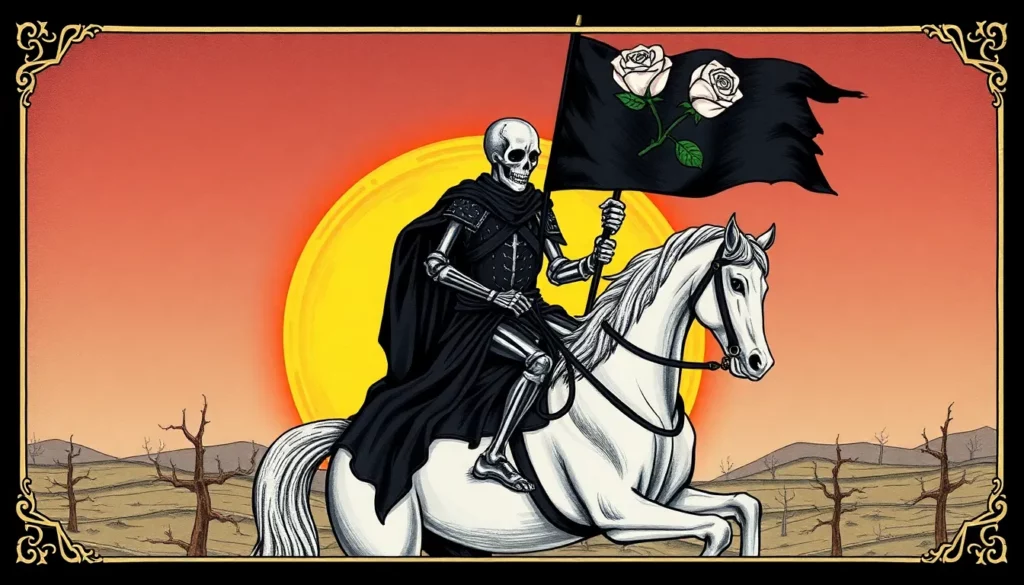
The Death card typically features a skeletal figure often riding a horse, symbolizing the inevitability and impartiality of change. Imagery includes a black flag adorned with a white rose, representing purity, transformation, and the promise of new life. The setting may include a rising sun, signaling rebirth and hope after darkness. The number XIII (13) is associated with transformation and upheaval. Colors like black and white emphasize duality and the cycle of life and death, encouraging the reader to understand that transformation is a natural and necessary process.
Card Combinations
When combined with other cards, the Death card’s meaning can be nuanced or intensified. Paired with The Tower, it may indicate sudden, disruptive change leading to transformation. With The Lovers, it can suggest the end of a relationship or a transformative choice in love. In combination with the Ace of Cups, it may point to emotional renewal following an ending. When appearing alongside court cards, such as the Queen of Cups or King of Pentacles, it might represent personal growth or transformation in emotional or material areas. These combinations help clarify whether change will be challenging, healing, or liberating.
FAQ
Does the Death card always mean physical death?
No, the Death card rarely signifies physical death. Instead, it symbolizes transformation, endings, and new beginnings in various areas of life.
Can the Death card indicate positive change in a relationship?
Yes, it often points to necessary endings or shifts that lead to healthier dynamics, personal growth, or renewal within a relationship.
What should I do if the Death card appears reversed in my reading?
A reversed Death card suggests resistance to change or delays. It encourages self-reflection to identify what needs to be released and to gently embrace transformation.
Leave a Reply