Short Answer
In this comprehensive guide, you’ll explore the fascinating origins of the Etteilla Tarot, one of the earliest known decks in the history of tarot. You’ll uncover the historical context behind its creation, the symbolic meanings embedded in its cards, and why this deck continues to captivate enthusiasts and scholars alike. Whether you’re a seasoned tarot reader or a curious newcomer, this article will deepen your understanding of how Etteilla’s work laid the foundation for modern tarot interpretation.
The Historical Roots of the Etteilla Tarot
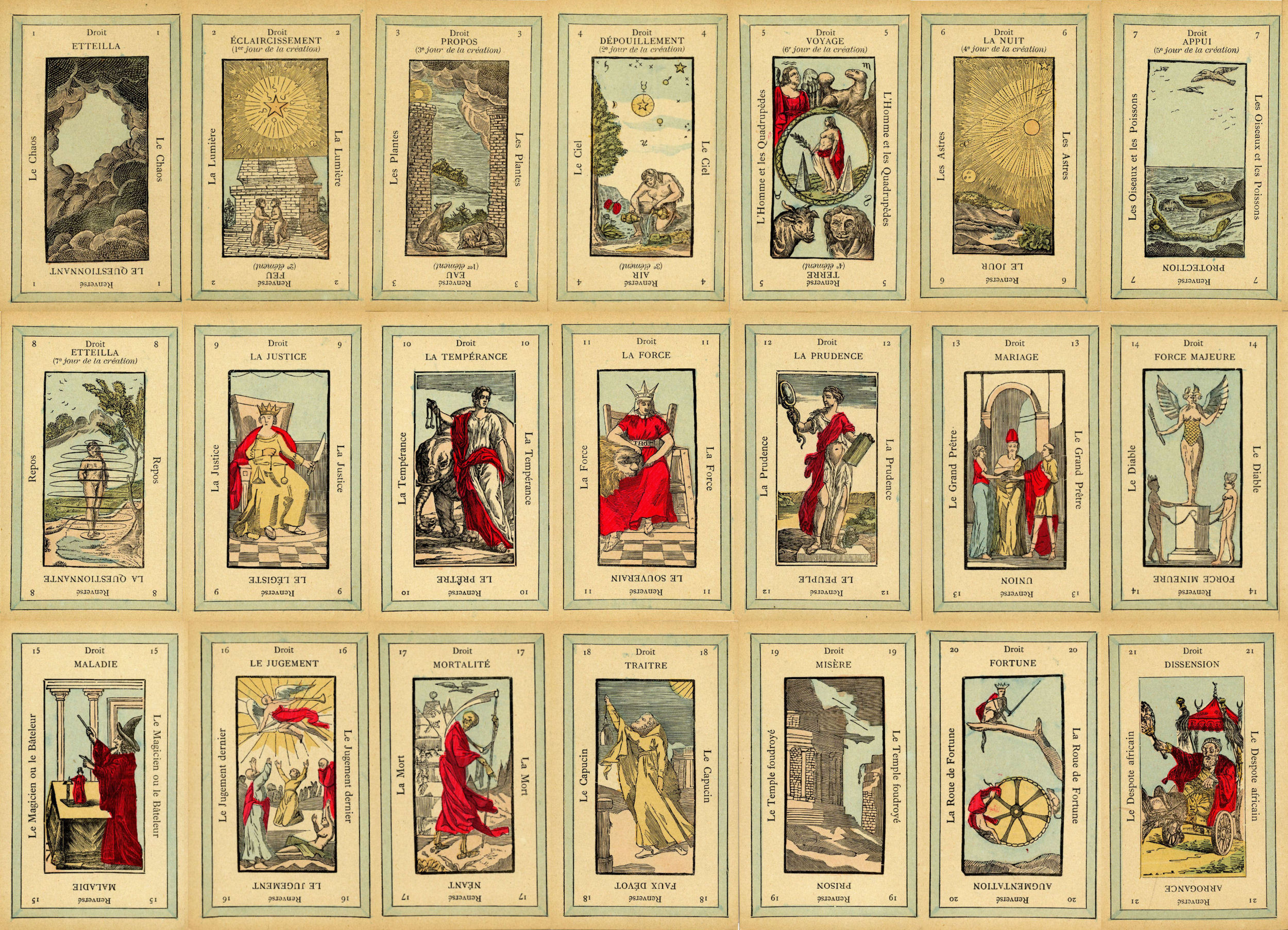
The Etteilla Tarot, named after its creator Jean-Baptiste Alliette (who went by the pseudonym “Etteilla”), emerged in 18th-century France as one of the first decks designed specifically for divination rather than gaming. Unlike earlier tarot decks, which were primarily used for games like Tarocchi, Etteilla’s deck was tailored for esoteric practices, blending astrological, alchemical, and numerological symbolism. This shift marked a turning point in tarot history, transforming it from a mere card game into a tool for spiritual insight and self-reflection.
Etteilla’s work was heavily influenced by the Hermetic tradition, which sought to uncover hidden knowledge through symbolic imagery. He drew inspiration from earlier occultists like Antoine Court de Gébelin, who famously claimed that tarot held ancient Egyptian wisdom—a theory that, while historically dubious, fueled the deck’s mystique. By the late 1700s, Etteilla had published several manuals on tarot divination, solidifying his reputation as a pioneer in esoteric tarot.
Key Features of the Etteilla Tarot Deck
The Etteilla Tarot consists of 78 cards, divided into the Major Arcana (22 cards) and Minor Arcana (56 cards), much like modern decks. However, its imagery and symbolism set it apart. The Major Arcana cards, for instance, feature titles like “The Magician” and “The High Priestess,” but their illustrations often incorporate astrological symbols and alchemical motifs. For example, The Fool is depicted as a wanderer with a staff, surrounded by zodiac signs—a nod to the deck’s astrological roots.
The Minor Arcana is structured differently from contemporary decks. Instead of the familiar suits of Cups, Swords, Wands, and Pentacles, Etteilla’s deck uses four elemental suits: Batons (Fire), Cups (Water), Swords (Air), and Coins (Earth). Each suit corresponds to a specific element, reinforcing the deck’s connection to natural forces and elemental magic. The court cards also reflect this elemental framework, with each figure representing a different aspect of the suit’s energy.
Symbolism and Esoteric Meanings
One of the most compelling aspects of the Etteilla Tarot is its rich symbolism, which serves as a bridge between the mundane and the mystical. The Major Arcana, in particular, is laden with layers of meaning. Take The Tower, for example—traditionally a card of sudden upheaval, Etteilla’s version often includes imagery of lightning striking a tower, symbolizing divine intervention or karmic justice. This reinforces the idea that tarot is not just a tool for prediction but a mirror for personal transformation.
The Minor Arcana cards are equally symbolic. The suit of Batons, for instance, is associated with fire and creativity, often depicted with images of burning torches or phoenixes. This aligns with the deck’s emphasis on elemental forces as a framework for understanding life’s challenges and opportunities. By studying these symbols, readers can gain deeper insights into the energies at play in their lives, whether in matters of love, career, or spiritual growth.
The court cards in the Etteilla Tarot also carry unique meanings based on their elemental associations. A Knight of Cups, for example, represents emotional intuition and romantic idealism, while a Queen of Swords embodies intellectual clarity and decisive action. These nuances make the deck a powerful tool for introspection, allowing users to explore their strengths, weaknesses, and potential paths forward.
Why the Etteilla Tarot Remains Fascinating Today
Despite its age, the Etteilla Tarot continues to intrigue modern tarot enthusiasts for several reasons. First, its historical significance cannot be overstated—it was one of the first decks to treat tarot as a serious divinatory tool, paving the way for later decks like the Rider-Waite-Smith. Second, its symbolic depth offers a rich tapestry for interpretation, appealing to those who seek more than just surface-level readings. Finally, the deck’s connection to astrology and alchemy resonates with contemporary interest in holistic spirituality and esoteric traditions.
Another reason for its enduring appeal is the deck’s adaptability. While Etteilla’s original designs are steeped in 18th-century symbolism, modern artists and readers have reinterpreted the cards to align with contemporary spiritual practices. This flexibility ensures that the Etteilla Tarot remains relevant, whether used for traditional divination or as a tool for creative exploration.

How to Use the Etteilla Tarot for Divination
Using the Etteilla Tarot for divination requires an understanding of its unique structure and symbolism. Unlike modern decks, which often rely on standardized interpretations, the Etteilla Tarot invites a more intuitive approach. Start by familiarizing yourself with the elemental associations of each suit, as this will provide a foundation for your readings. For example, a spread dominated by Cups may indicate emotional themes, while a prevalence of Swords could suggest a need for mental clarity.
When interpreting the cards, pay close attention to the imagery and any astrological or alchemical symbols present. Etteilla’s manuals often include detailed descriptions of each card’s meaning, but don’t hesitate to trust your intuition. The deck’s esoteric roots encourage a personal connection to the cards, allowing you to weave your own experiences into the reading. Whether you’re pulling a single card for daily guidance or conducting a full spread, the Etteilla Tarot rewards patience and curiosity.
Conclusion
The Etteilla Tarot stands as a testament to the enduring power of symbolism and the human desire to seek meaning in the unknown. From its historical origins in 18th-century France to its modern reinterpretations, this deck offers a window into the evolution of tarot as both an art form and a spiritual tool. By exploring its rich symbolism, elemental framework, and esoteric connections, you can unlock deeper layers of insight—whether for divination, self-reflection, or creative inspiration.
Whether you’re drawn to the Etteilla Tarot for its historical significance, its intricate designs, or its potential for personal growth, one thing is clear: this deck is more than just a relic of the past. It is a living tradition, one that continues to inspire and challenge those who engage with its mysteries. As you delve into its cards, remember that the true magic of tarot lies not just in the images on the cards, but in the stories you bring to them.
FAQ
What is the Etteilla Tarot?
The Etteilla Tarot is one of the earliest known tarot decks, designed for divination and esoteric practices, created by Jean-Baptiste Alliette in the 18th century.
How does the Etteilla Tarot differ from modern decks?
Unlike modern tarot decks that use suits like Cups and Swords, the Etteilla Tarot employs elemental suits such as Batons, Cups, Swords, and Coins, reflecting its unique symbolic framework.
What are the key themes of the Etteilla Tarot?
Key themes include the integration of astrological, alchemical, and numerological symbolism, as well as personal transformation and spiritual insight.

Leave a Reply