Short Answer
In this comprehensive guide, you will explore the timeless allure of the Fountain of Youth and its intriguing connection to the Four of Hearts in symbolism and mythology. Discover the historical roots, cultural significance, and deeper psychological reasons behind humanity’s enduring fascination with eternal youth. Learn how these themes manifest in art, literature, and modern media, and uncover the hidden meanings that make these concepts so compelling.
The Myth of the Fountain of Youth: Origins and Evolution
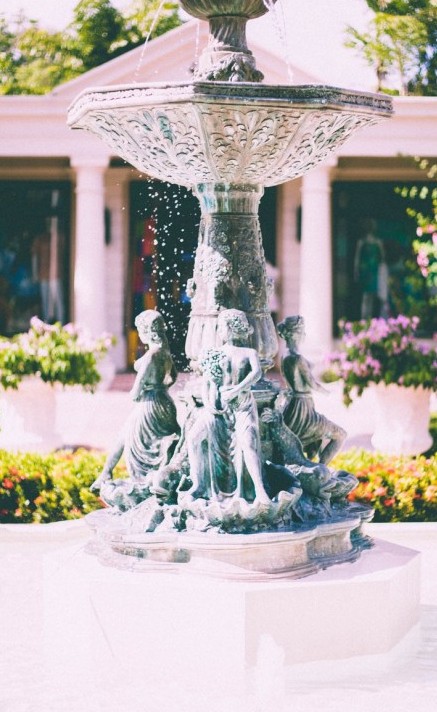
The Fountain of Youth is one of humanity’s most enduring legends, a myth that has captivated civilizations for centuries. The earliest recorded accounts trace back to ancient Greek and Roman texts, where figures like Herodotus and Pliny the Elder referenced springs said to restore vitality. However, the legend gained widespread prominence in the 16th century when Spanish explorer Juan Ponce de León allegedly searched for the fountain in Florida during his quest for gold and new lands.
The myth likely stems from a blend of cultural beliefs, including the idea of sacred waters in various traditions. In Hindu mythology, the Soma and Amrita are divine nectars that grant immortality, while in Norse lore, the well of Mímisbrunnr holds wisdom and rejuvenation. These stories reflect a universal human desire to transcend mortality—a theme that persists in modern narratives about aging and renewal.
Symbolism of the Four of Hearts: A Deeper Look
The Four of Hearts is a lesser-known but fascinating symbol often associated with themes of balance, stability, and emotional fulfillment. In tarot and playing card symbolism, the number four represents structure and foundation, while the heart suit embodies love, passion, and vitality. When combined, the Four of Hearts suggests a harmonious state where emotional and physical well-being are in sync—a concept that resonates with the Fountain of Youth’s promise of rejuvenation.
In some interpretations, the Four of Hearts is linked to the four seasons or the four elements (earth, air, fire, water), symbolizing a cyclical renewal akin to the fountain’s restorative powers. This connection hints at a deeper philosophical idea: true youthfulness isn’t just about defying time but achieving a state of equilibrium where body, mind, and spirit thrive in unison. The Four of Hearts, therefore, serves as a metaphor for the ideal conditions needed to unlock eternal vitality.
Cultural Depictions: From Art to Modern Media
The Fountain of Youth has been a recurring motif in art, literature, and film, often serving as a metaphor for the pursuit of perfection or the dangers of unchecked ambition. One of the most famous depictions is Lucas Cranach the Elder’s 1546 painting, The Fountain of Youth, which shows elderly figures plunging into a magical pool to regain their youth. This artwork underscores the Renaissance fascination with alchemy and the human desire to manipulate nature.
In modern times, the theme has evolved into sci-fi and fantasy genres. Films like Cocoon (1985) and The Curious Case of Benjamin Button (2008) explore the ethical and emotional complexities of reversing aging, while TV shows like Forever (2014–2015) question whether immortality would truly bring happiness. These stories often highlight a paradox: the more humans seek to cheat death, the more they confront existential dilemmas about purpose and legacy.

The Psychology Behind the Obsession with Eternal Youth
Why does the idea of the Fountain of Youth hold such a powerful grip on the human imagination? Psychologists suggest that the fascination stems from a primal fear of aging and death, coupled with a desire for control over one’s destiny. The myth offers a comforting narrative: if eternal youth exists, then mortality isn’t an absolute. This belief taps into our cognitive biases, such as the optimism bias (the tendency to believe we’re less likely to experience negative events) and the illusion of control (the belief that we can influence outcomes that are largely random).
Moreover, the Fountain of Youth symbolizes the human struggle against entropy—the natural decay of the body and mind. In a world where aging is often associated with decline, the fountain represents the ultimate rebellion against nature’s laws. This psychological tension fuels not only myths but also real-world pursuits like cosmetic surgery, anti-aging research, and even transhumanist movements that seek to merge biology with technology.
The Four of Hearts and the Alchemy of Renewal
When examining the Four of Hearts in the context of the Fountain of Youth, a compelling parallel emerges: both concepts revolve around the alchemy of transformation. In medieval alchemy, the philosopher’s stone was believed to transmute base metals into gold and grant immortality—a process mirroring the Four of Hearts’ emphasis on balance and harmony. Here, the four suits of the tarot (hearts, diamonds, clubs, spades) can be seen as the four pillars of human experience: emotion, material wealth, action, and intellect. Achieving youthfulness, then, isn’t just about physical renewal but aligning these four aspects of life.
This alchemical perspective also ties into the concept of individuation in Jungian psychology, where personal growth involves integrating disparate parts of the self. The Four of Hearts, in this light, becomes a symbol of inner completeness—a state where one’s passions (hearts), resources (diamonds), actions (clubs), and wisdom (spades) are in perfect harmony. The Fountain of Youth, in turn, represents the external manifestation of this inner renewal.
Modern Science and the Fountain of Youth: Fact vs. Fiction
While the Fountain of Youth remains a myth, modern science has made remarkable strides in understanding and potentially delaying aging. Research into senolytics (drugs that clear “zombie cells” that contribute to aging), telomere extension (preserving the protective caps on chromosomes), and epigenetic reprogramming (resetting cellular age) has brought us closer to the dream of extended youth. Companies like Altos Labs and Calico are investing billions in these technologies, fueled by the same ambition that drove Ponce de León centuries ago.
However, science also highlights the ethical dilemmas of such pursuits. Would eternal youth lead to overpopulation and resource depletion? Could it exacerbate social inequalities, creating a divide between those who can afford rejuvenation and those who cannot? These questions mirror the themes in stories like In Time (2011), where time itself is a currency, and the wealthy hoard it while the poor are left to age rapidly. The Four of Hearts, with its emphasis on balance, serves as a reminder that true renewal must be holistic—not just physical, but also ethical and societal.
Conclusion: The Timeless Allure of Youth and Renewal
The Fountain of Youth and the Four of Hearts, though originating from vastly different traditions, share a common thread: the human longing for renewal and wholeness. Whether through myth, symbolism, or scientific inquiry, these concepts reflect our deepest hopes and fears about time, mortality, and the meaning of life. The fascination with eternal youth isn’t merely about vanity; it’s a quest for control, a search for meaning, and a rebellion against the inevitability of decay.
As science inches closer to unlocking the secrets of aging, the philosophical questions remain: What does it mean to be young? Is youthfulness solely a physical state, or is it a state of mind? The Four of Hearts offers a clue—perhaps true youth is not found in a magical spring or a lab-grown elixir, but in the harmony of our inner and outer worlds. In the end, the Fountain of Youth may not be a place we find, but a state we create through balance, purpose, and the courage to embrace life in all its fleeting beauty.
FAQ
What is the Fountain of Youth?
The Fountain of Youth is a legendary spring that supposedly restores the youth of anyone who drinks from it.
What does the Four of Hearts symbolize in tarot?
The Four of Hearts symbolizes balance, stability, and emotional fulfillment.
Leave a Reply