Short Answer
The association between tarot cards and the zodiac can be an intriguing exploration, especially when viewed through the lens of Christian perspectives. Libra, known for its distinctive qualities of balance, harmony, and justice, presents an interesting case study within this framework. But have you ever pondered how the seraphic concept of balance aligns with Christian teachings? In this article, we’ll delve deep into the meaning of the Libra tarot card, scrutinized through a Christian lens, and formulate a compelling narrative that interlinks these two seemingly disparate realms.
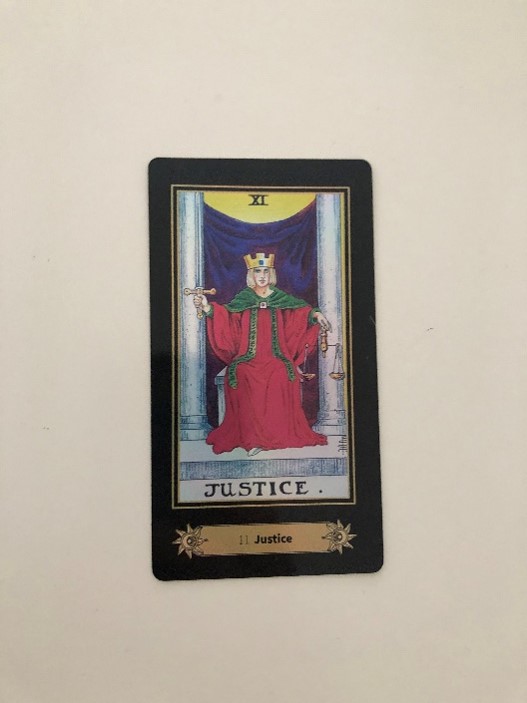
At the core, the tarot card that is connected to Libra is the Justice card. Justice, inherently linked to fairness and impartiality, mirrors the Christian value of righteousness. In Christianity, justice is not merely a secular concept but a divine attribute of God. The expectation for believers is to pursue justice, much like the scales depicted in the Libra tarot card. Both entail a sense of moral equilibrium and deliberation. This connection begs a question: How does one maintain such balance in a world rife with moral ambiguity?
The imagery of Libra often evokes thoughts of duality—the scales behind which each side is weighed meticulously. In a Christian context, the scales symbolize the balance between sin and virtue, light and darkness. Just as the scales of Libra strive for equality, Christians are called to find harmony within their faith, striving for righteousness while navigating the complexities of human existence. The pursuit of justice, then, is not merely about judgment but about understanding and compassion.
Beyond the scales, another crucial aspect of Libra is its association with relationships. Libras are known for their affinity for companionship and collaboration. From the Christian standpoint, this resonates deeply with the teachings of Jesus, who emphasized love, community, and fellowship. For instance, Jesus’ admonition to “love thy neighbor as thyself” reflects the fundamental Libra trait of prioritizing interpersonal relationships.
A potential challenge arises here: In striving for balance within relationships, how does one mitigate conflict, which is inevitable in human interactions? The journey toward achieving equilibrium in relationships offers rich material for reflection. In essence, one may draw upon scriptural wisdom, such as Proverbs 15:1, which states, “A gentle answer turns away wrath, but a harsh word stirs up anger.” This underscores the significance of maintaining calmness and reason when faced with discord, providing a practical tool to uphold the Libran ideal of balance.
Moreover, another layer is added when examining the aesthetic appreciation associated with Libra. Those born under this sign often have a keen eye for beauty and aesthetics—an inclination that aligns with the Christian belief in the divine artistry of creation. The magnificence of nature, the intricate design of the universe, and the depth of human relationships collectively reflect a Creator’s handiwork, characterized by harmony and order. In this regard, Libra invites us to reflect on the beauty of creation within the Christian paradigm, encouraging a sense of wonder and gratitude.
As we contemplate the symbolic associations of Libra further, the notion of justice emphasizes the weighty responsibility that accompanies it. The justice card serves as a reminder that with each decision comes significant ramifications. In a Christian context, the understanding of divine justice is pivotal. While God is loving and forgiving, He is also just. This duality is encapsulated in the doctrine of salvation, where grace is offered, yet the individual is also expected to recognize their moral compass and strive for righteousness.
The concept of accountability not only ties back to Libra’s traits but also serves as a call to action for Christians. To maintain balance in our lives, it is crucial to recognize our accountable role in both personal and communal contexts. How can one embody Christ’s teachings of love and compassion while ensuring that justice prevails? Striking this balance, although challenging, cultivates growth and paves the path toward spiritual enlightenment.
Furthermore, Libras are often viewed as peacemakers. Conflict resolution hinges on the understanding of differing viewpoints while fostering mutual respect. Such reconciliation is woven throughout Christian doctrine, from the Sermon on the Mount to Paul’s letters to the early churches, advocating for peace and unity among believers. Embracing this Libran characteristic promotes a life imbued with empathy—extending beyond personal relations and fostering a collective heart aimed at societal healing.
In conclusion, examining the Libra tarot card’s meaning through a Christian perspective enriches both its symbolic significance and practical applications in everyday life. The duality of justice, beauty, and relationships encapsulates an invitation for introspection and personal growth. Maintaining balance, especially in a world of contrasting values, encourages believers to embody justice as a reflection of divine principles. The challenge remains: How do we practice this harmony in our daily lives? By drawing on the lessons of Libra and fostering a deep-rooted commitment to justice and compassion, followers of Christ can indeed embrace a balanced life, echoing the teachings that promote love and unity.
FAQ
What tarot card corresponds to Libra?
The tarot card associated with Libra is the Justice card.
How does the Justice card relate to Christian teachings?
The Justice card reflects Christian values of righteousness, divine justice, and moral balance.
What qualities of Libra are emphasized through a Christian lens?
Balance, harmony, justice, relationships, beauty, and accountability are emphasized in relation to Christian virtues.
How can Libra's traits guide Christians in daily life?
By fostering justice, compassion, peace-making, and recognizing moral responsibility, aligning with Christ's teachings.
Leave a Reply